The Prague issue
Žižkov, Prague: the city’s scruffier, livelier uphill quarter
A walk through Prague’s beer-soaked, hill-climbing district of TV towers, wartime memory, late kitchens and pubs that keep the lights on long after the centre has gone polite.
By Tomáš HavelkaPrague past the Old Town
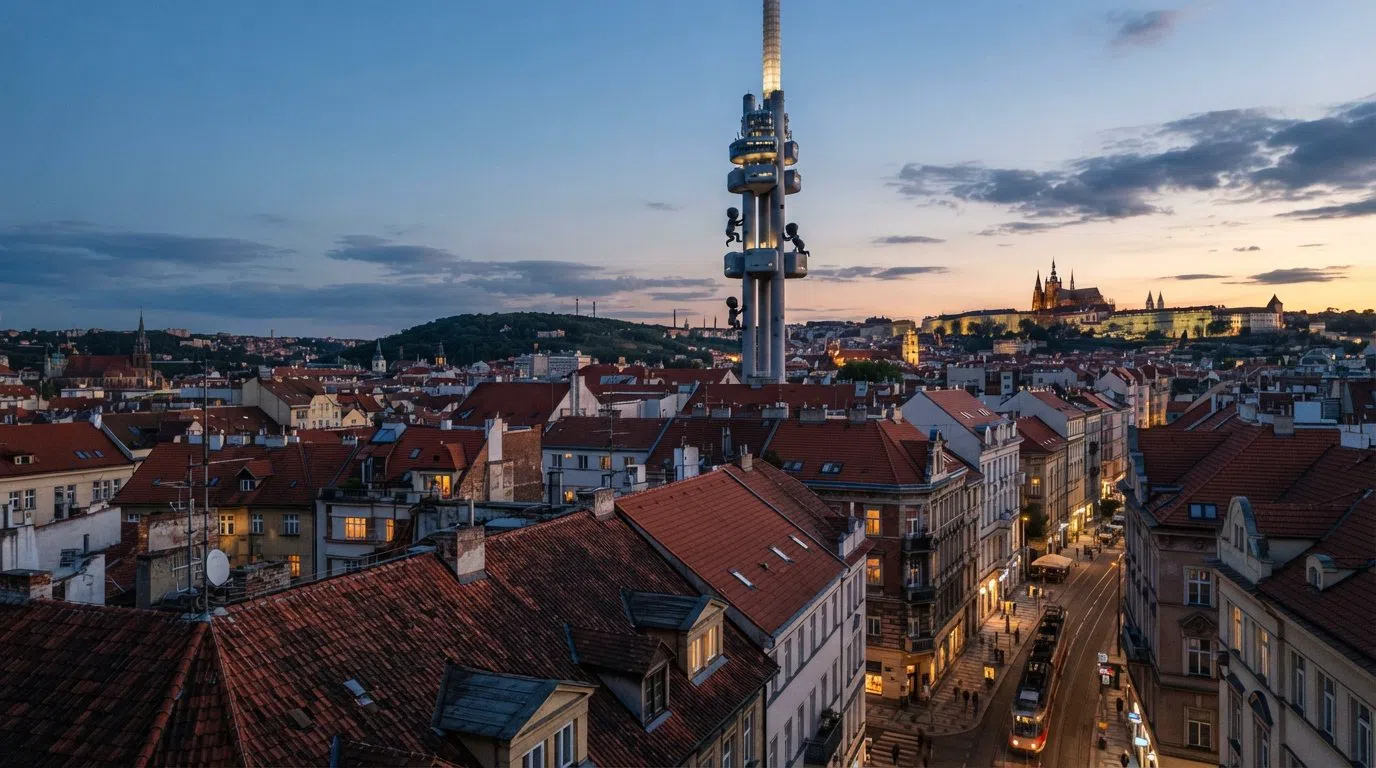
Žižkov announces itself the moment you get off the tram at Husinecká and start walking uphill. The pavements tilt, the tenements rise a little too high for comfort, and the first proper sign that you have crossed into another Prague is usually a pub door opening somewhere on the corner. This is the district that wears its scruffiness with conviction: working-class, left-leaning, proudly unpolished, and still more interested in a fresh tankovna lager than in being admired. If the Old Town is a stage set, Žižkov is where the actors go to smoke behind the curtain.
What Žižkov is known for
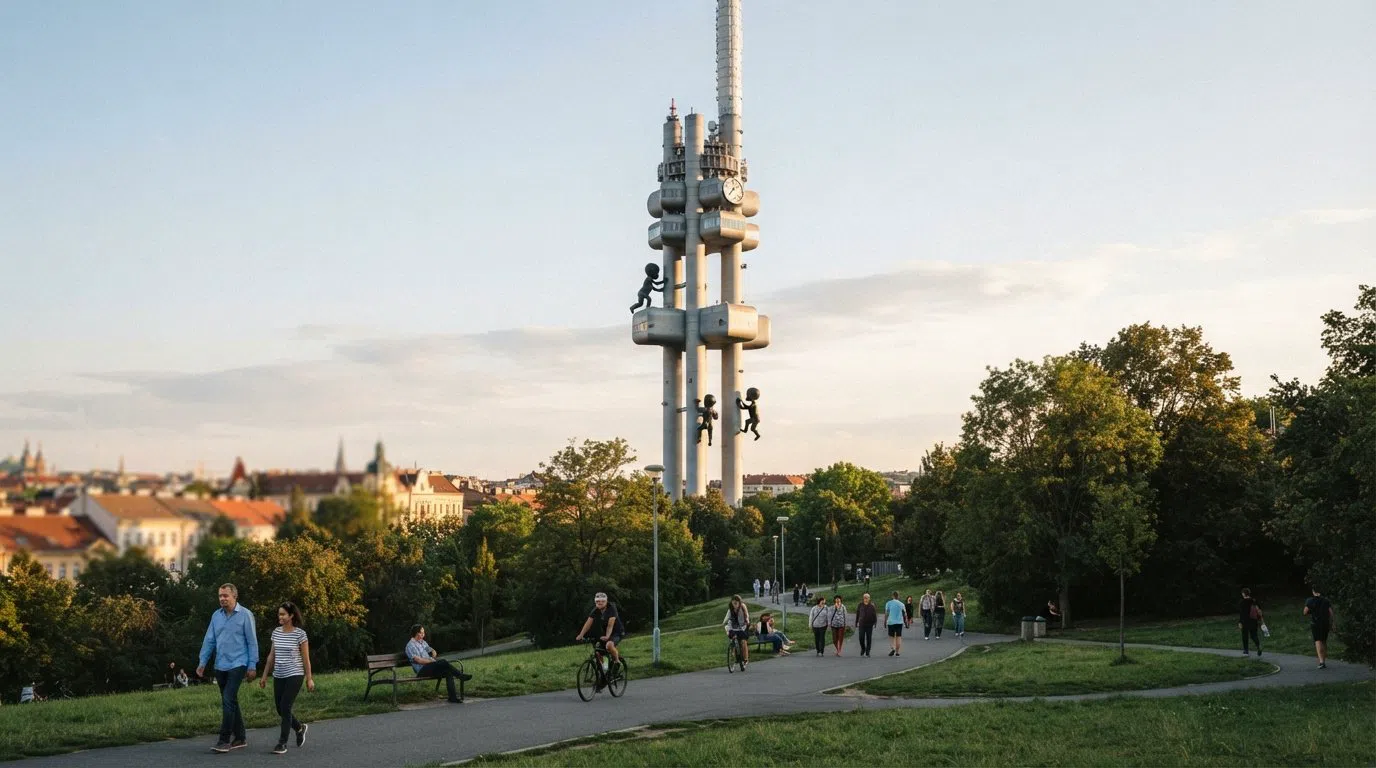
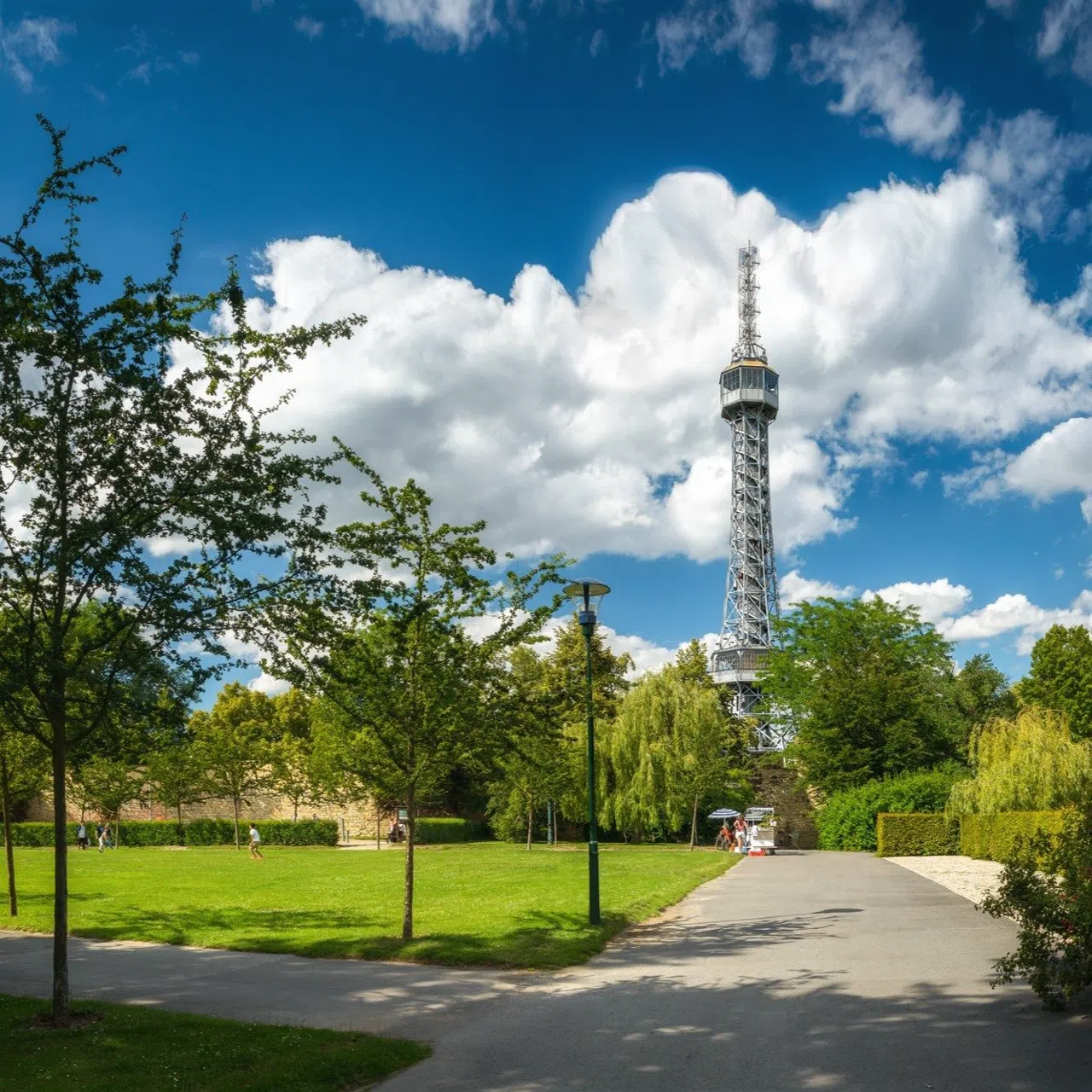
Two objects own the skyline here, and neither is trying to be agreeable. The first is the Žižkov Television Tower on Mahlerovy sady, a 216-metre steel rocket that is Prague’s tallest structure and still looks, to some, like a Cold War prank that never got called off. To others it is the city’s most lovable monster, which is fair enough. Since 2000, David Černý’s Miminka — ten faceless fibreglass babies crawling up and down the pylons — have made the tower even stranger. The originals were swapped for identical duplicates in 2019 after a structural check, because even Prague’s oddities need maintenance. You can ride up to the observation deck at 93 metres for a 360-degree sweep of the city.
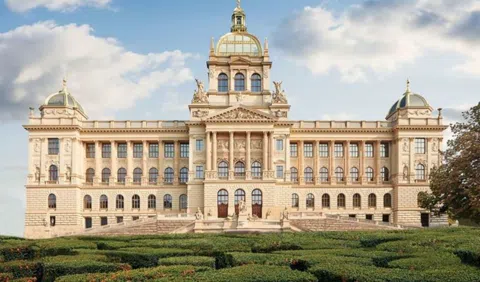
The second defining shape is older and more serious: Vítkov Hill, where Jan Žižka routed a crusader army on 14 July 1420 and gave the district its name. The hill still crowns the neighbourhood, topped by the National Monument on Vítkov and the huge bronze equestrian statue of Žižka himself, nine metres tall and cast by Bohumil Kafka. It is one of those Prague places that feels less like a monument than a statement. Žižkov likes its heroes one-eyed, stubborn and impossible to ignore.
The district’s deeper personality is easier to hear than to photograph. This is the Prague of cheap unfiltered lager poured until four in the morning, of secondhand shops on Seifertova, of students and artists and lifers sharing battered wooden tables without performance anxiety. There are no baroque squares here begging for your admiration. There is, instead, a genuine sense of having wandered into where Praguers actually live, drink and argue. The mood is convivial rather than clubby, loud rather than polished, and if that sounds like a complaint, it isn’t.
Plan your Prague trip
Live prices from our booking partners.
Free cancellation on many rooms. We may earn a commission when you book.
Where to eat & drink
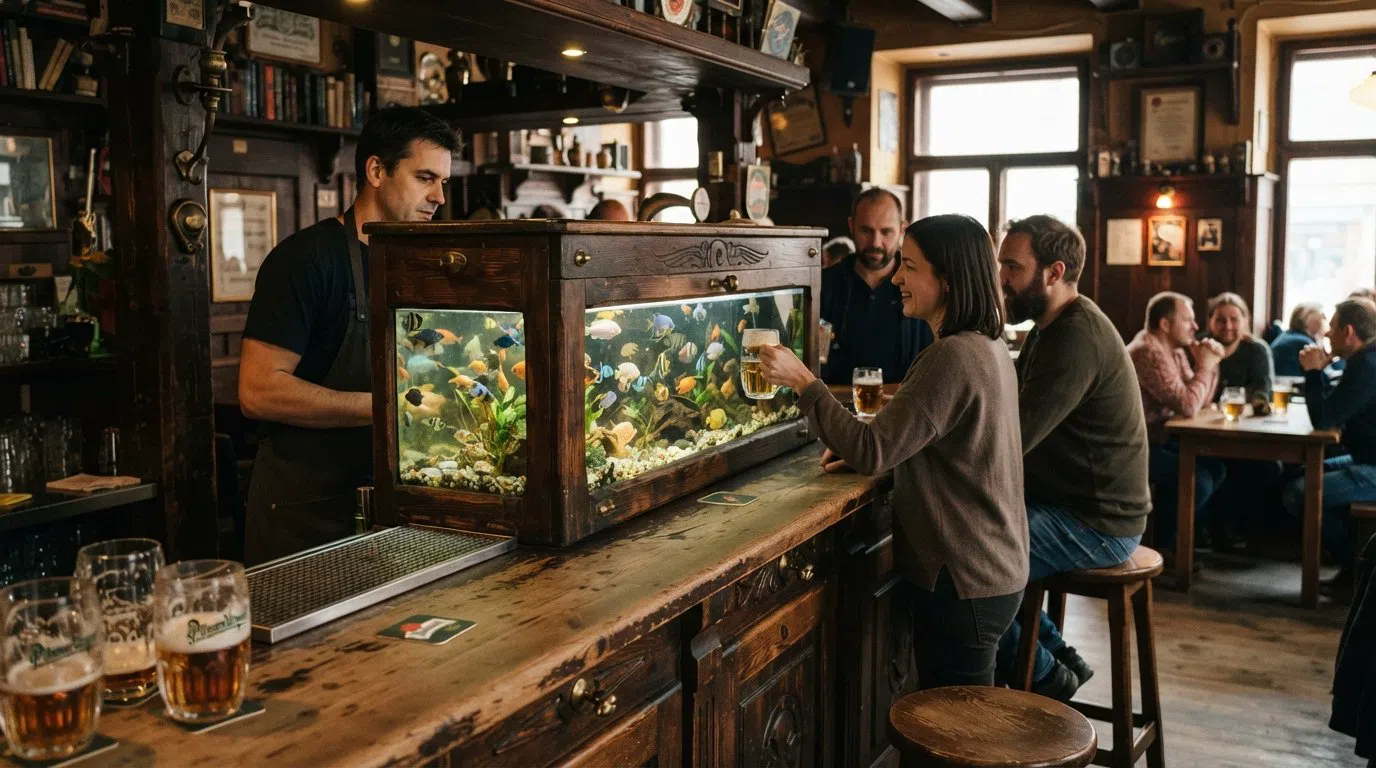
Start with the beer, because Žižkov does. U Vystřelenýho Oka, on U Božích bojovníků 3, is the district’s spiritual home: a multi-room pub with a fish-tank bar, Pilsner Urquell on tap, a hidden back beer garden for warm nights, and the occasional literary evening or gig. The name — “At the Shot-Out Eye” — is a wink at one-eyed Žižka, which feels exactly right for a neighbourhood that prefers its jokes dry and its beer cold. It is closed Sundays, which is the sort of fact that matters here because people plan around these things.
A few minutes away on Škroupovo náměstí 5, U Sadu has been pouring since 1929 under dark wood panelling crowded with memorabilia. Its unfiltered house lager, Sádek 11°, does not pretend to be anything other than what it is, and that is precisely the point. The kitchen runs into the early hours, which means the pub understands the district properly: here, dinner is often what happens after midnight, not before it.
If you want the oldest room in the room — or at least probably the oldest pub in the district — head to U Slovanské Lípy on Tachovské náměstí 6. The wallpaper is period, the hops are dried, and the taps rotate through Czech microbrews such as Matuška and Kocour across nine lines. It is the sort of place where the beer list has a little more curiosity than the average Žižkov pint, though not enough to become precious about it. That would be rude.
The kitchens have caught up with the drinking, which is useful unless your idea of a balanced meal is a sausage and an apology. Better Than Clasico — BTC to locals who like abbreviations with their dinner — is a Korean-Italian bistro that several local critics named opening of the year. It plates white ragù with Korean rice cakes alongside natural wine, which sounds like a theory until it lands on the table and makes complete sense. Nearby, Pivo a Párek on Bořivojova 56 keeps things more straightforward: a wide Czech beer list, hot dogs and sausages, and a non-smoking room, which in Žižkov can feel almost radical.
Going out
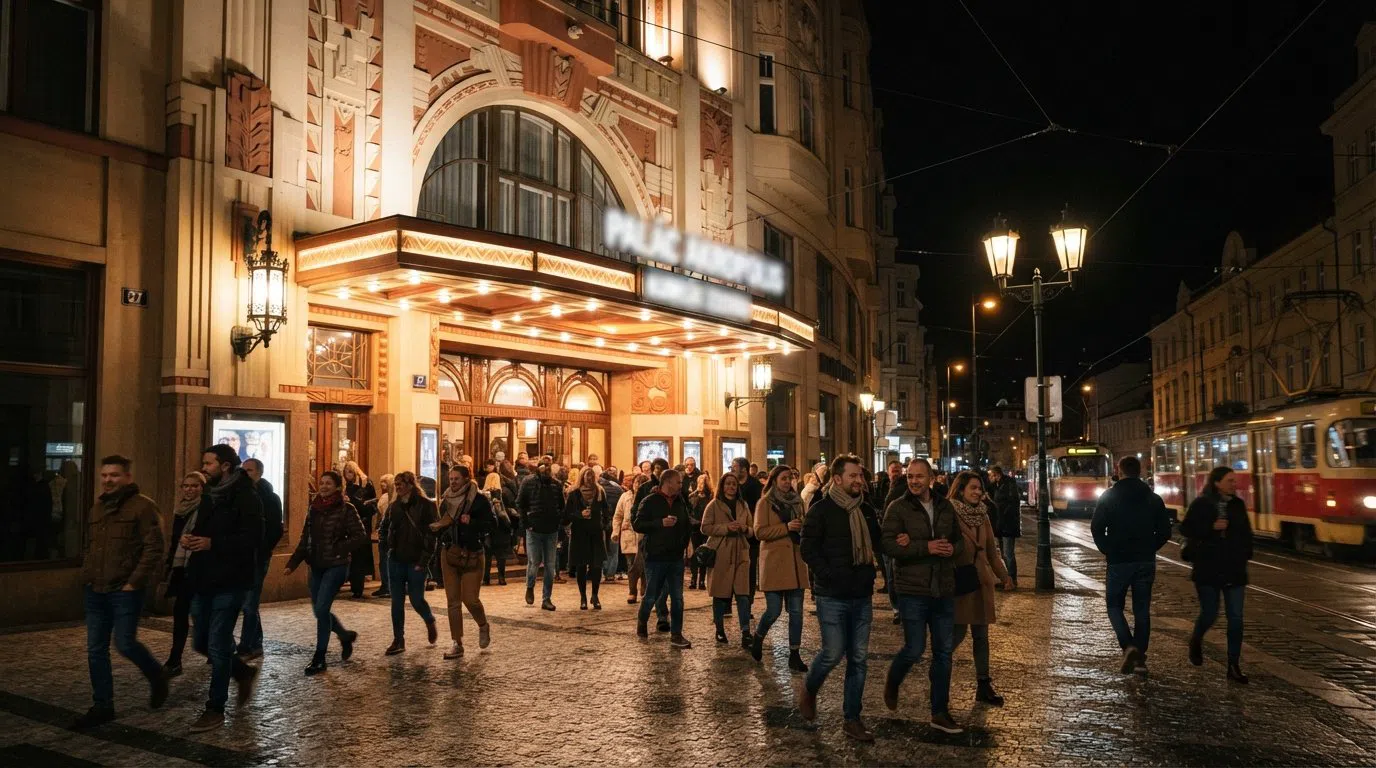
Žižkov’s nightlife is not a superclub circuit; it is a bar crawl with a pulse and a timetable that has been politely ignored. The anchor is Palác Akropolis on Kubelíkova 27, an Art Deco former community palace that now hosts something like a thousand concerts and DJ nights a year across its concert hall, music club, bars and restaurant. Reggae, hip-hop, world music, experimental acts — eventually everyone in town passes through. The building has the useful habit of making a good night feel like part of the neighbourhood rather than an intrusion upon it.
For cocktails among the beer taps, Bukowski’s Bar on Bořivojova 86 has been mixing drinks since 2008 in a dim, vintage room with a Charles Bukowski theme and no card machine. Bring cash. The cocktails are around 150 CZK, which by Prague standards is not exactly a robbery, though the room has enough atmosphere to make you suspect one might be happening somewhere in the background.
When the pub smoke gets to be too much, Tiki Taky on Seifertova 787/20 offers a different kind of escapism: Prague’s original tiki bar, open since 2006, with rum-forward South Pacific drinks in a snug, palm-fronded room that stays open late on weekends. Reserve if you can; it seats only about thirty, and the city’s appetite for novelty is large enough to fill it twice over.
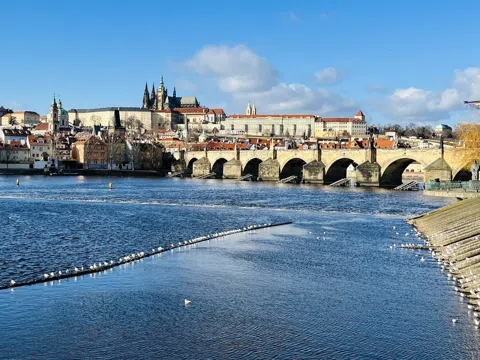
The real trick, though, is not any one venue. It is the street itself. Bořivojova, Seifertova, Kubelíkova — pick one and start walking. The pubs arrive in clusters, the conversations spill onto the pavement, and the beer price keeps you from becoming an economist about the evening. Beers run roughly 50–70 CZK here, which is about half what you will pay by Charles Bridge, where the city turns into a souvenir of itself.
Things to do / what to see
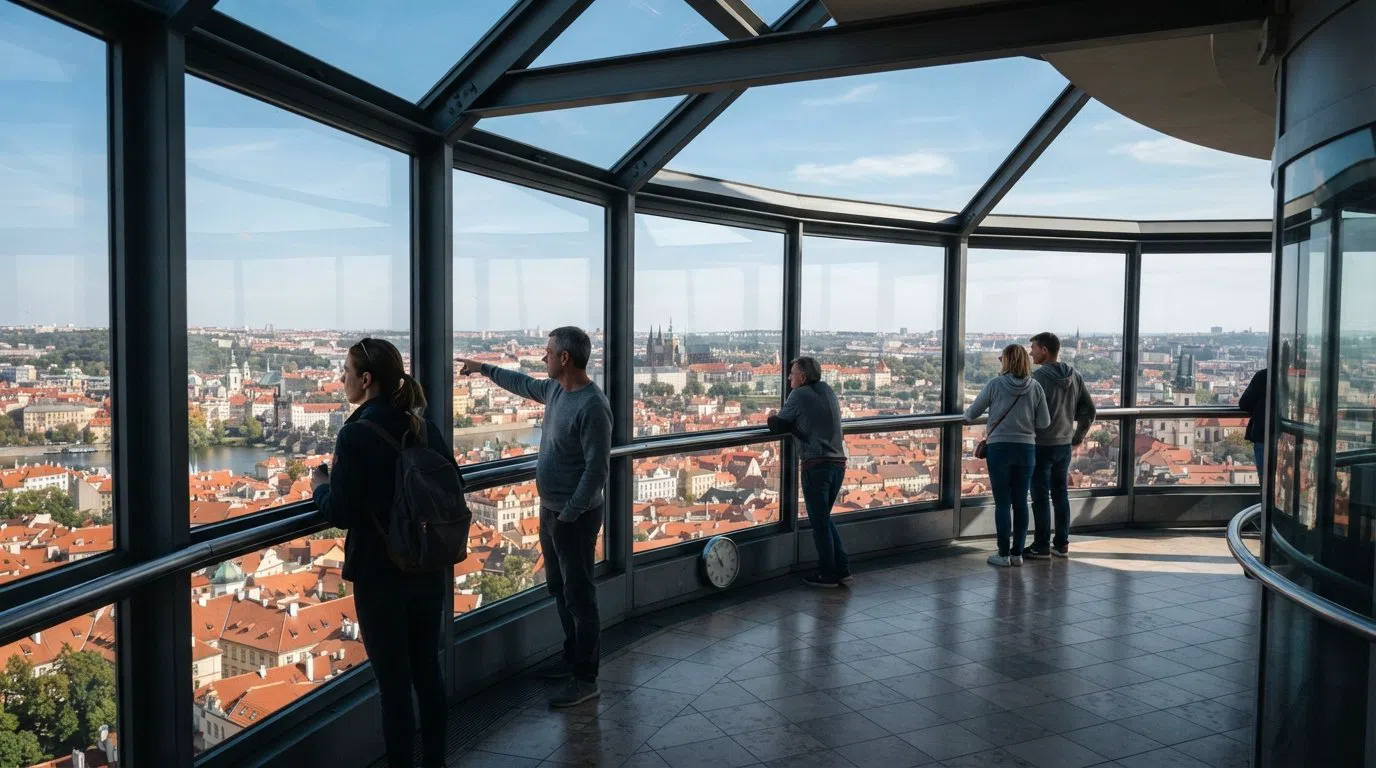
If Žižkov has a formal centre of gravity, it is the tower. Ride or drink at the Žižkov Television Tower: the observation deck at 93 metres gives the best 360-degree panorama in the city, and one floor up, Oblaca serves ambitious modern-Czech fine dining behind wraparound windows. Even for people who think towers are a bit of a municipal joke, this one earns its place by giving you Prague in all directions at once — the spires, the river bend, the hills, the whole city laid out like a map that has had a drink.
Then climb Vítkov Hill for the National Monument on Vítkov, which since September 2024 has been run by the Military History Institute. The Tomb of the Unknown Soldier, the vast Jan Žižka statue and the rooftop café turn the walk into a quiet reward, with views most visitors never find because they are usually elsewhere buying trdelník. The hill is one of the best places in Prague to feel the city’s scale without being crowded by it.
For film, Kino Aero on Biskupcova 31 is one of the oldest arthouse cinemas in the country, screening dozens of independent and repertory titles a month in a 1930s functionalist hall with its own bar and courtyard. It is the kind of cinema that reminds you Prague still knows how to treat a movie as an evening rather than a product.
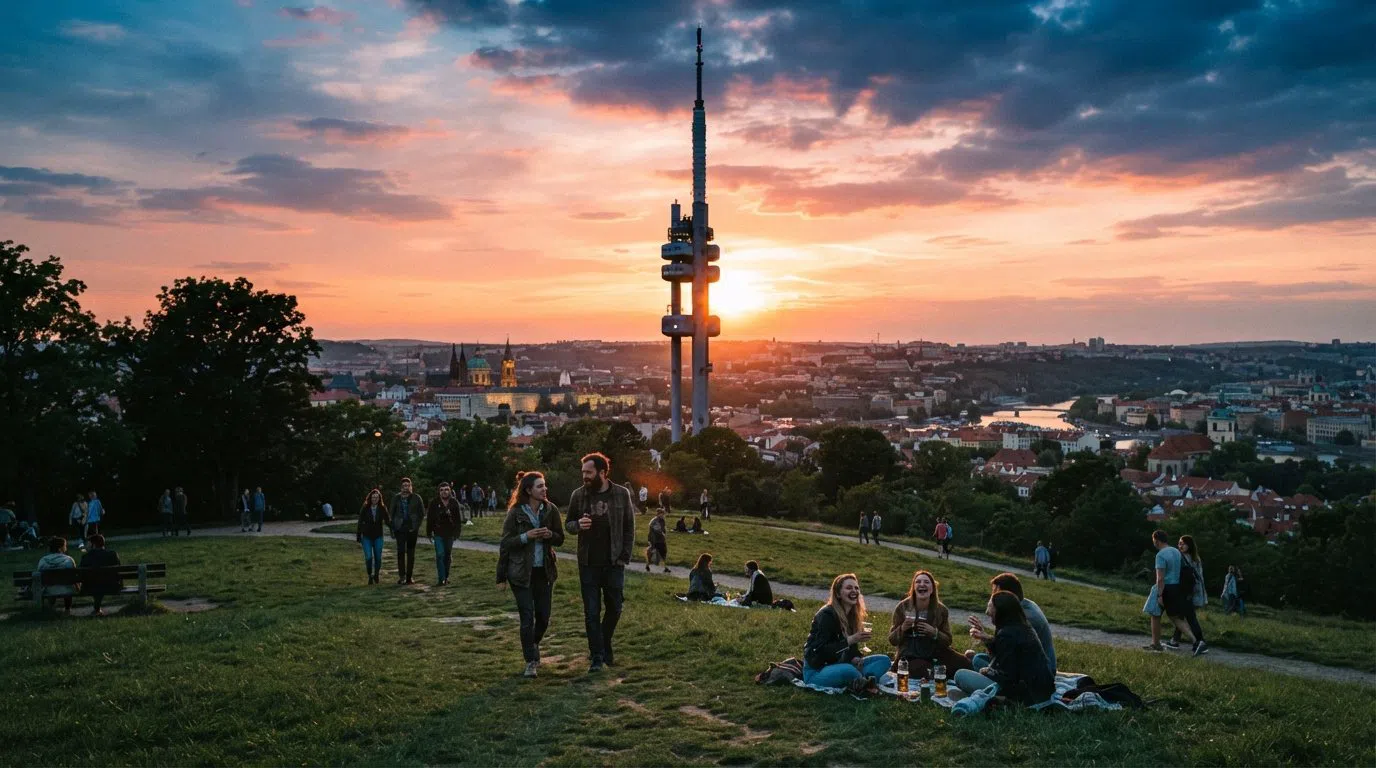
For a green half-hour, Parukářka is the local hill park, prized for its framing of the TV Tower at sunset. In late autumn, the sun drops right behind the mast, which is the kind of accidental theatre the city occasionally gets right without trying. Beneath the park sits Bunkr Parukářka, a 1950s nuclear shelter turned small underground museum, with its entrance below the park’s pub. There is also the city’s longest slide up here if you are travelling with kids, or if you simply like municipal infrastructure with a sense of humour.
Shopping & markets
Žižkov is not a shopping district in the polished sense, and that is one of its better qualities. There are secondhand shops, corner potraviny, tobacconists and the odd record or comic dealer rather than flagship anything. The streets to wander are Seifertova and Koněvova, the district’s two main arteries, where the browsing is unglamorous and therefore honest. You buy what you need, maybe something you didn’t know you needed, and then you go for a beer.
If you want a proper market atmosphere, cross over into neighbouring Vinohrady to náměstí Jiřího z Poděbrad, where a farmers’ market runs several days a week beneath the modernist Church of the Most Sacred Heart of Our Lord. It is an easy stroll from lower Žižkov, and useful if your fridge needs convincing that you are a functioning adult.
For a souvenir with actual local character, buy one of the unfiltered lagers you drank the night before from the pub or a nearby pivotéka. It will mean more than anything with a castle on it.
Where to stay in Žižkov
Žižkov is one of Prague’s better-value bases, and where you sleep matters more here than in districts where the streets all perform the same trick. Lower Žižkov, around Seifertova and Husinecká, puts you within walking distance of Prague Main Station and a short tram or walk from the Old Town, which makes sense for first-timers who want value without surrendering the centre entirely. The streets climbing toward the TV Tower and Kubelíkova sit at the lively heart of the bar scene, which is great news if you plan to stay out late and less great if you believe sleep is a human right.
Toward the Vinohrady border, the streets get calmer and leafier while keeping the cheap pubs a few minutes away. Expect budget-to-midrange guesthouses, apartments and a couple of larger hotels near the station rather than luxury. The standout curiosity is the six-room One Room Hotel inside the TV Tower itself, 66 metres up beside Oblaca. If quiet matters, book a room facing a courtyard rather than a pub street. Žižkov will still be Žižkov; you may as well negotiate on your own terms.
Getting around
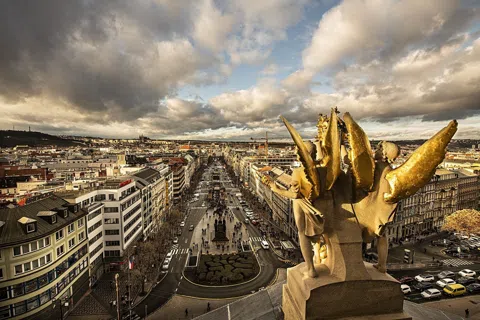
Žižkov famously has no metro station of its own, which is part of why it still feels like a district rather than a transit corridor. Trams do the work here. Lines along Seifertova and Koněvova — with stops such as Husinecká and Lipanská — connect quickly to the centre, and you can be at the top of Wenceslas Square or by the riverbank in ten to fifteen minutes. Metro Line A skirts the edges at Jiřího z Poděbrad, Flora and Želivského, technically just inside Vinohrady, any of which will put you a short walk into Žižkov proper.
Lower Žižkov borders Prague Main Station, so arrivals by train are often a five-to-ten-minute walk from accommodation. The airport bus-and-metro combination via the centre takes roughly 45–55 minutes. Within the district, walking is the honest answer, though honesty comes with hills. The climb back up from the station to the tower earns you your next beer, and Žižkov would be disappointed in you if you tried to cheat the geography.
What Žižkov is really for
Žižkov is for people who want Prague without the varnish. It is for beer travellers, night owls, repeat visitors and budget travellers who still want to be a short tram ride from the centre. It is not for light sleepers, and it is not for anyone who thinks a neighbourhood should be quiet by design. The noise carries late, the pavements are steep, and the pleasure here comes from accepting both as part of the deal.
What survives in Žižkov is an independent streak you can still feel in the graffiti, the secondhand shops and the way a pub table here can hold students, artists and lifers without anyone needing to explain themselves. That is the real luxury. Not marble lobbies. Not a view of a bridge everyone else is photographing. Just a district that knows exactly what it is, pours accordingly, and keeps going until dawn.
Before you go
Is Žižkov a good area to stay in Prague?
Yes, if you want value and nightlife more than monuments at your doorstep. It’s cheaper than the Old Town, genuinely local, and only a 10–15 minute tram ride — or a short walk from Prague Main Station — from the centre. If late-night pub noise would bother you, choose a quieter street toward the Vinohrady border.
Is Žižkov safe?
It’s a lively, generally safe residential district. Use the usual big-city common sense on busy bar streets late at night, keep an eye on your belongings in crowded pubs, and watch your step on the steep, uneven pavements after a few beers.
Why does Žižkov have so many pubs?
It grew up as an independent working-class town outside Prague’s old walls, and the drinking culture stuck. The district is regularly cited as having the highest density of pubs of any city quarter in the country, with beer often around 50–70 CZK — roughly half Old Town prices.
What is Žižkov best for?
Cheap Czech beer, authentic pubs, late nights and a local base that still sits close to the centre. It’s especially good for travellers who prefer character over polish.