Nové Město is not new. Charles IV laid it out in 1348 as a planned extension nearly three times the size of the Old Town, with three long market squares to feed it, and that grid is still what you walk on. In September 2026 the top of the largest of those squares is fenced off for a tram line, the gardens start shutting earlier from mid-month, and the district is otherwise at its easiest: warm enough for a terrace at nine in the evening, cool enough to climb 221 steps without resenting it.
What Charles IV built and what is left of it
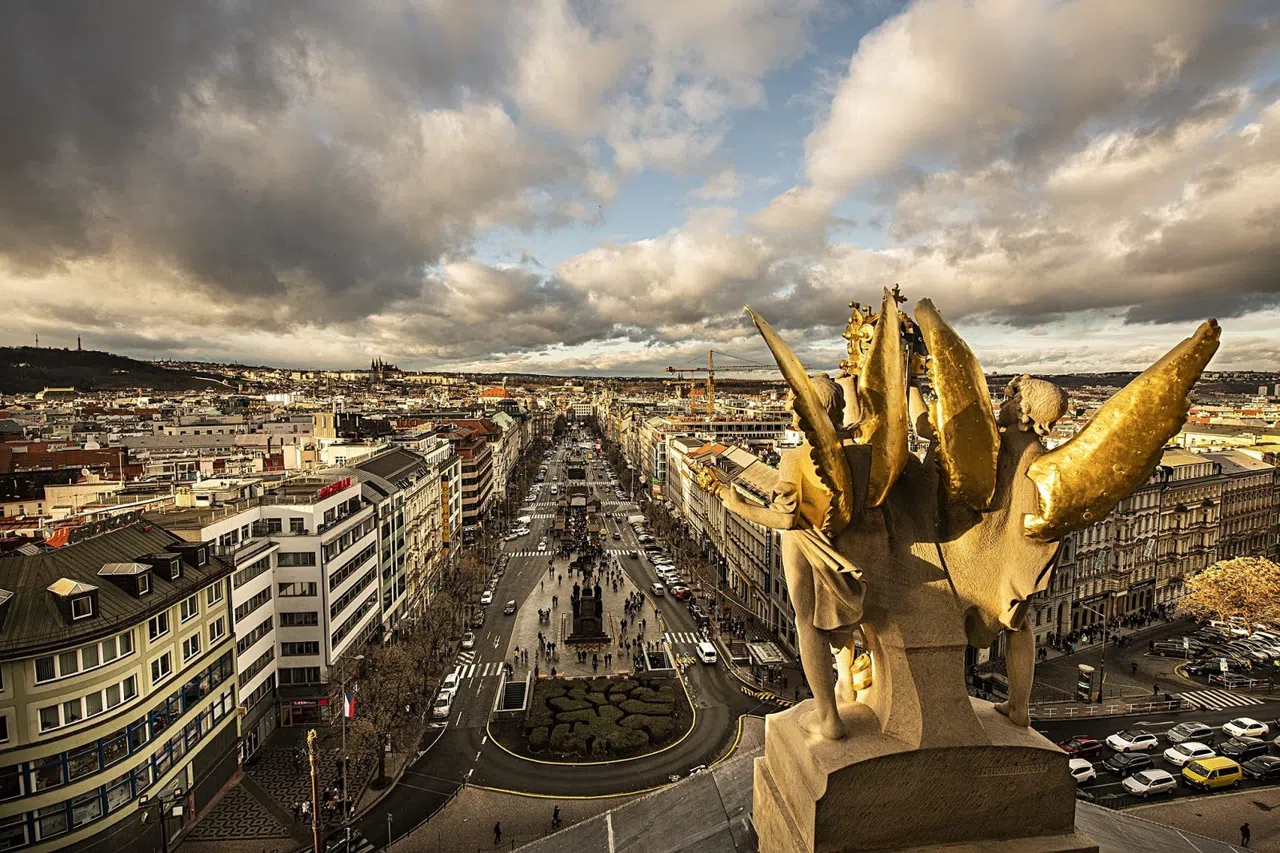
Wenceslas Square (Václavské náměstí, the spine of Nové Město) is not a square in any Italian sense. It is a 750-metre horse market on a slope, closed at the top by the National Museum, open at the bottom into the Old Town, and it has been the room Czech history happens in: the declaration of independence in 1918, the tanks in 1968, the crowds in 1989. Treat it as your orientation point and everything in this piece sits within a fifteen-minute walk.
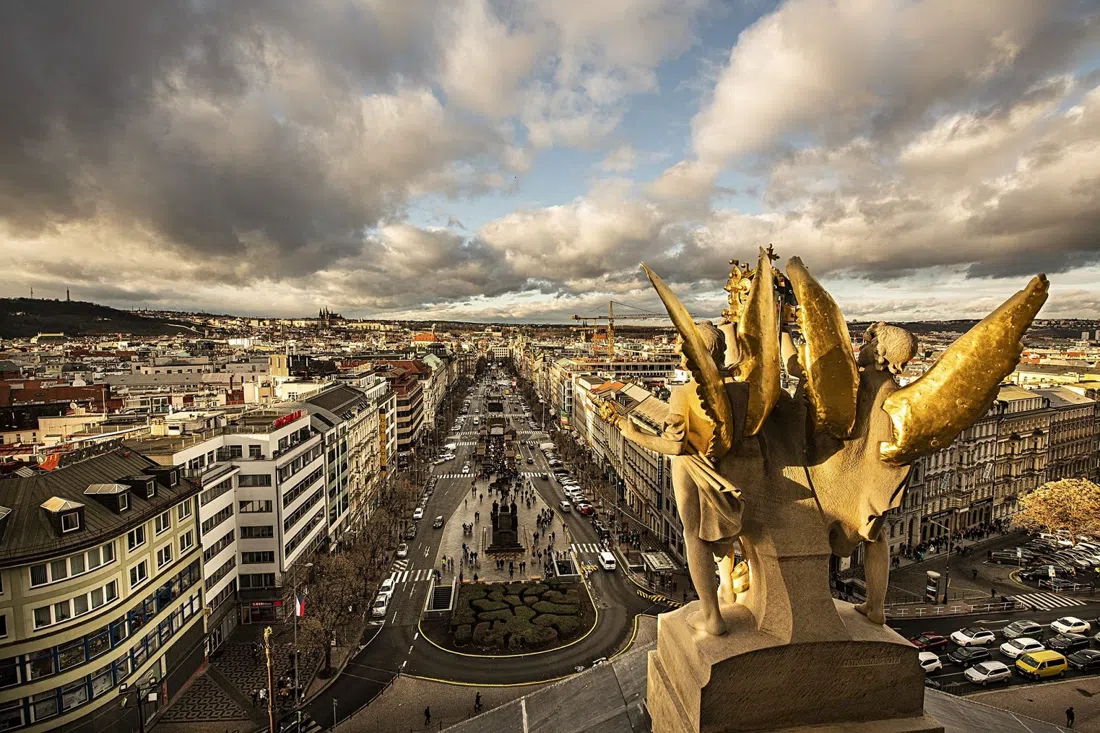
The upper end is a working construction site in 2026. The new tram line through the top of the square is due to open in summer 2027, and trams have been running again on the Muzeum to I.P. Pavlova stretch since 5 September 2026. Walking groups traditionally gather at the horse statue, but with hoardings up the practical meeting point shifts around, so confirm where you are actually meeting rather than trusting an old photo. Nothing here is ticketed and nothing closes; the square is simply a street, busiest and least pleasant between noon and four.
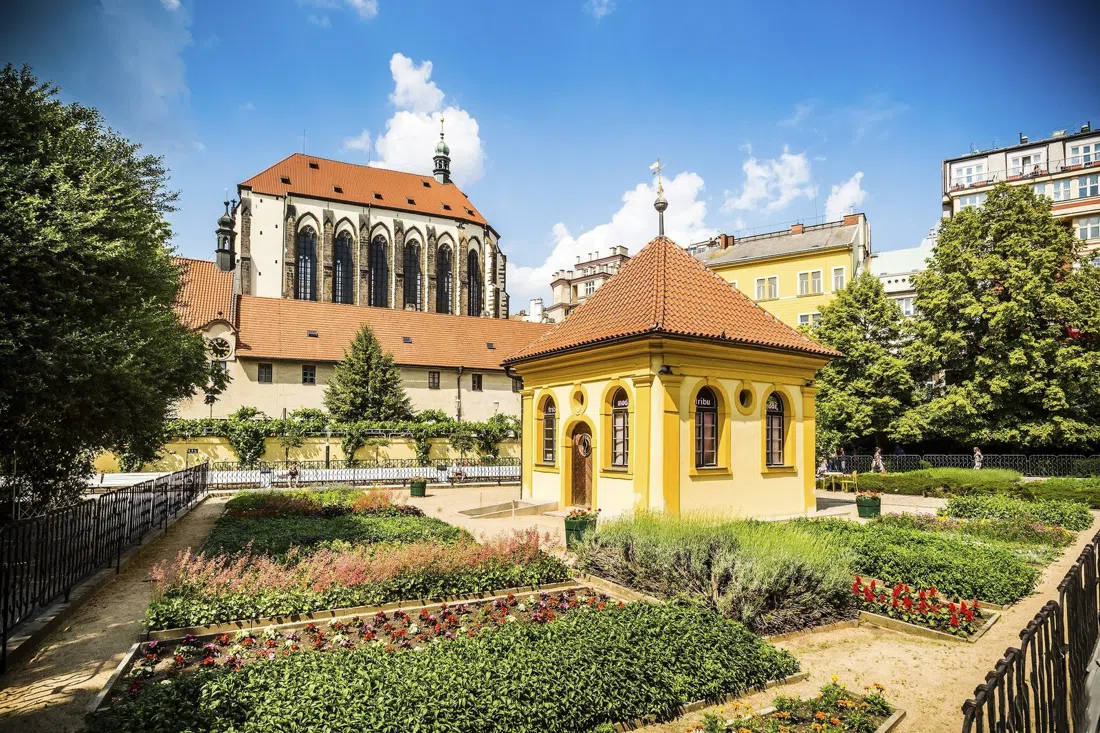
Thirty seconds off the square, through an unmarked passage, is the Franciscan Garden (Františkánská zahrada, behind the Jungmannovo náměstí frontage), a walled former monastery garden of clipped hedges, pear trees and benches, sunk below the shopfronts. Most people walking past never turn in. It is free and unticketed, it feels residential rather than public, and it rewards a quiet pair rather than a party of twelve. From 15 September it closes at 20:00 instead of 22:00, which in practice means your late-evening sit-down there ends with the September equinox.
The twentieth century in four buildings
Nové Město is where Prague keeps its modern history, and these four collections carry most of it.
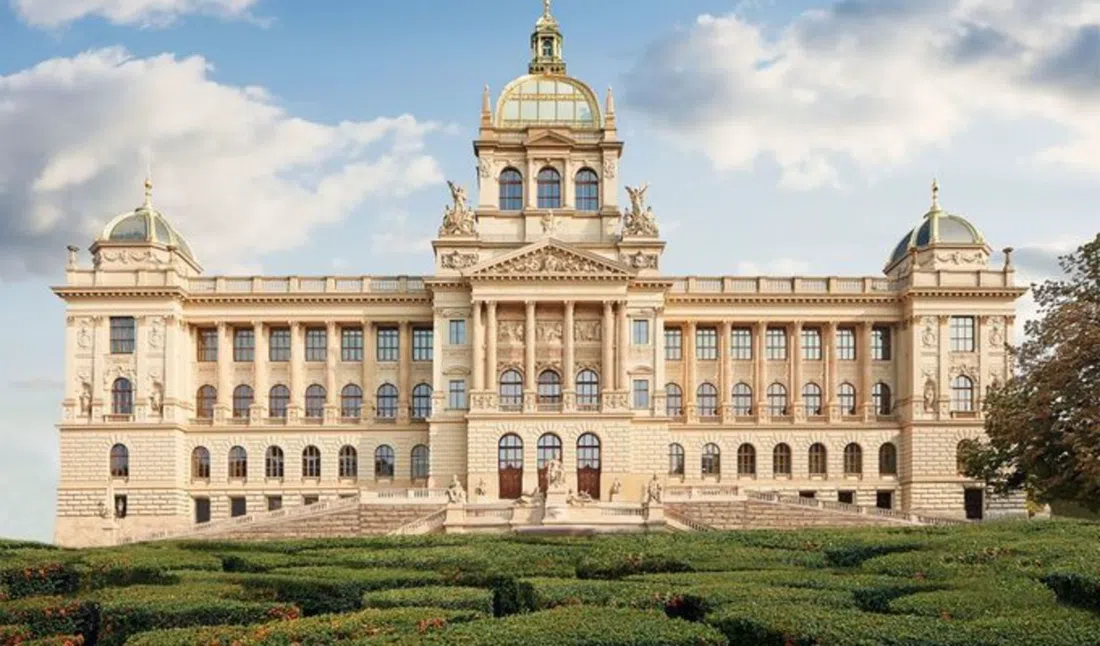
The National Museum — Historical Building (top of Wenceslas Square) is the neo-Renaissance pile that closes the boulevard, reopened after a long reconstruction, and it is as much a building tour as a museum: the marble Pantheon, the staircase, the dome. Adult entry is 360 CZK, reduced 260 CZK, and under-15s go free. Buy the e-ticket online: it is valid for one entry within 30 days and it skips the box-office queue that builds under the portico by mid-morning. It takes groups, and school or lecturer-led programmes are bookable through the museum's For Schools section with invoicing on request.
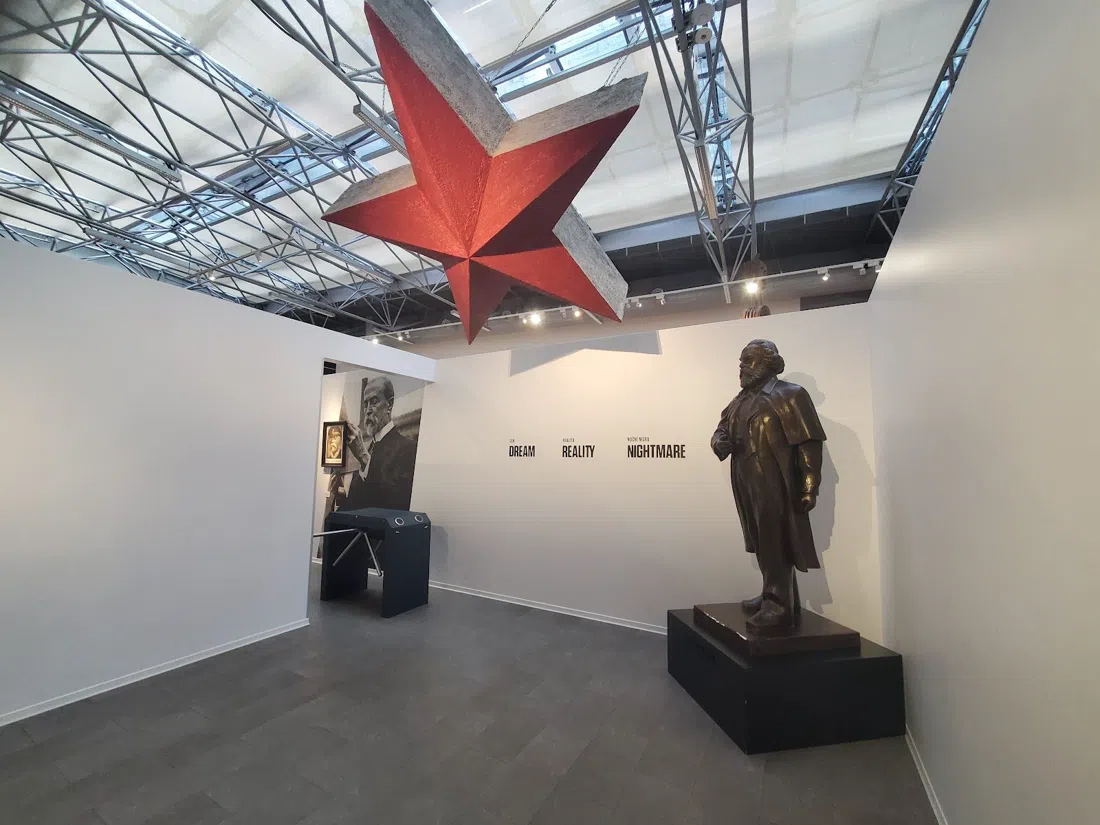
The Museum of Communism (just off the lower square) is a private museum structured in three acts (The Dream, The Reality, The Nightmare) covering 1948 to 1989 through interrogation-room reconstructions, propaganda, consumer shortages and the secret police. Around 380 CZK adult, 290 CZK student, 320 CZK senior. It is heavy on reading, so budget ninety minutes or you will skim the best of it. Its floorplate is roughly 1,500 square metres and it opens 09:00 to 20:00 daily, so groups spread out instead of bottlenecking, which is not true of most museums this size.
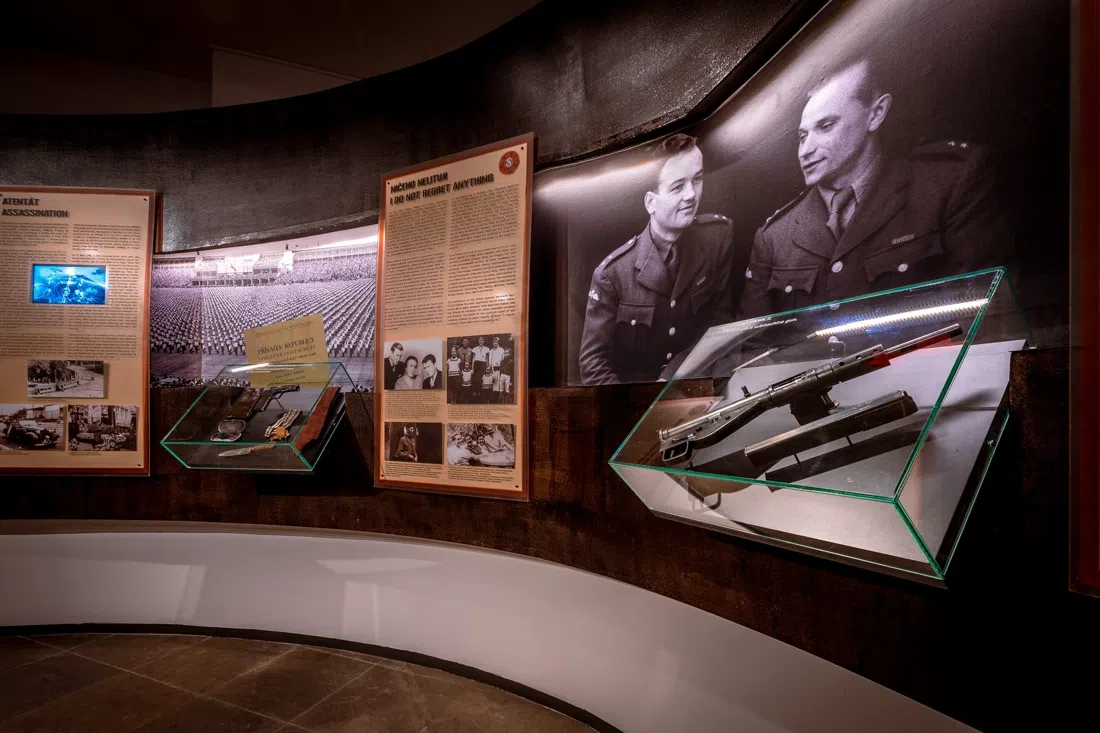
The National Memorial to the Heroes of the Heydrich Terror (Ss Cyril and Methodius church, Resslova street) is the most affecting half-hour in the district and it costs nothing. In 1942 seven Czechoslovak paratroopers, having killed Reinhard Heydrich, held out in the crypt beneath the church until they were found; the bullet scars are still in the exterior wall on Resslova. The crypt is cramped and airless and should be entered in small clusters, because a coach party ruins it for everyone including themselves. There is no group booking system because there are no tickets. Closed Mondays, last entry 16:30.
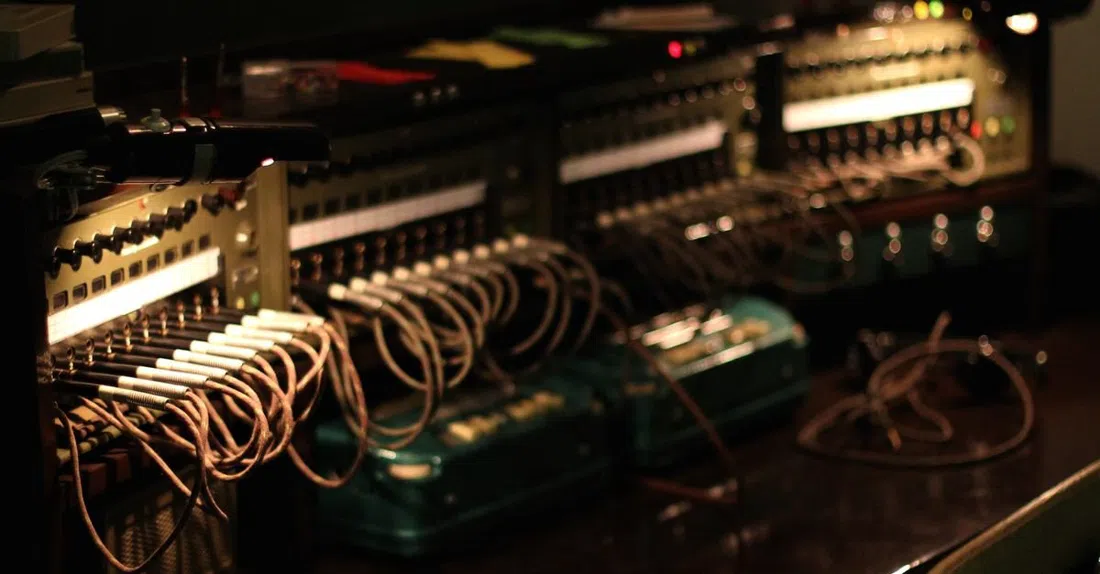
Under a working hotel on Wenceslas Square, the Cold War Museum (the nuclear shelter beneath Hotel Jalta) is a 1950s bunker built into the foundations of a then-new hotel, complete with the eavesdropping room used to listen to the guests above. It runs as a guided tour only, on fixed departures, the shelter was built for 150 people, and reservation is mandatory: book at least five hours ahead, and only in small groups. 250 CZK adult, 190 CZK senior and student, 120 CZK child aged 6 to 15, about 45 minutes. Because it has no street presence, it never feels crowded.
Mucha, the opera house and the house on the bend
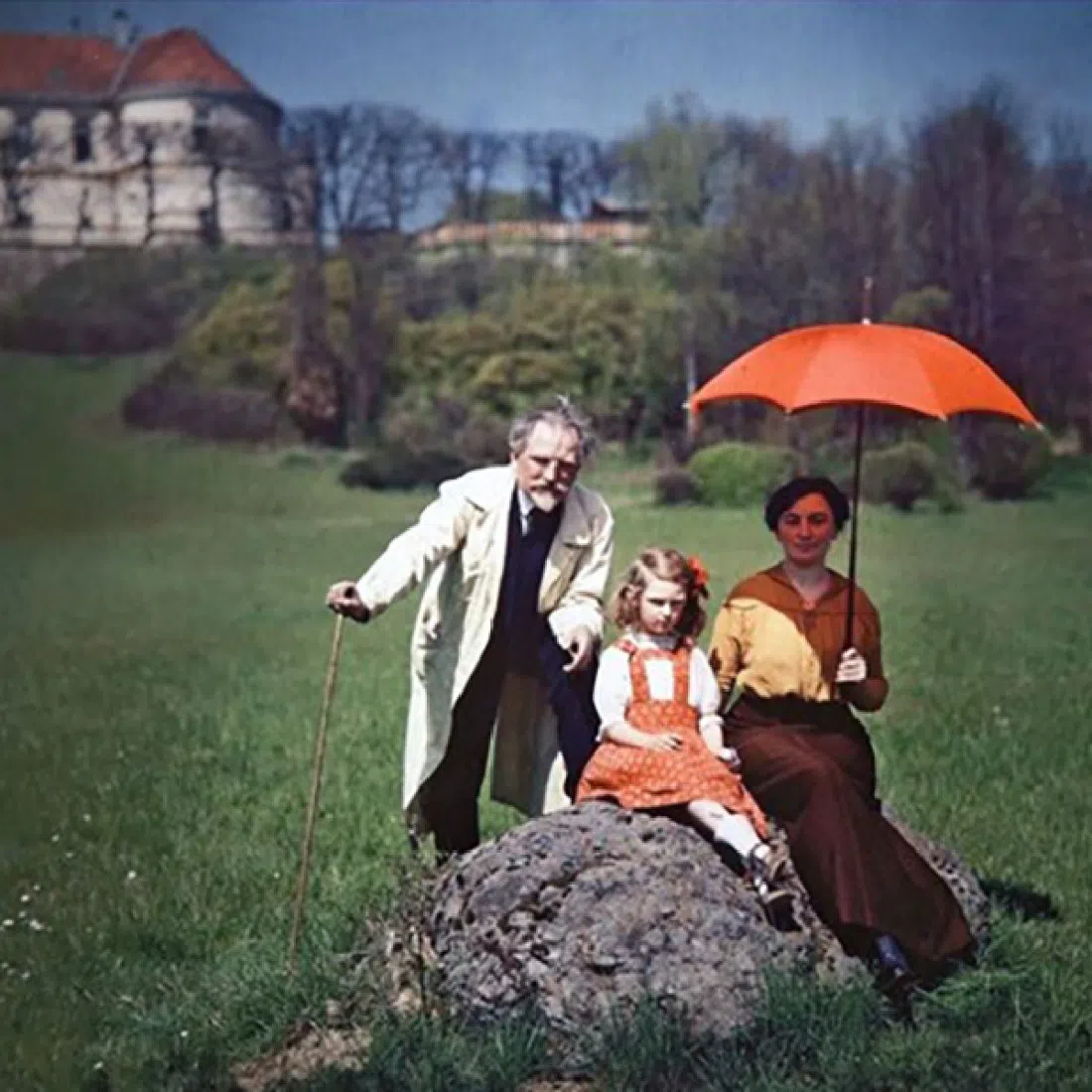
The Mucha Foundation Art Museum (Savarin Palace, between Wenceslas Square and Na Příkopě) is the single most misfiled address in Prague. It replaced the old Panská Street museum in March 2025, so a great many guidebooks and blog posts still send people to a closed door. The roughly eighty works (oils, pastels, sculpture, and Mucha's personal effects) are enough to show that the Paris poster years were a commercial episode in a career he spent trying to escape them. 350 CZK adult, 250 CZK senior and student, under-10s free. It suits small groups; there is no published group tariff, and groups are arranged directly on +420 775 878 618.
The National Theatre (Národní divadlo, at the Vltava end of Národní třída) was paid for twice by public subscription, once for the 1868 foundation stones and again after the 1881 fire, which is why Czechs talk about it the way other countries talk about a cathedral. Scheduled English-language tours run alongside tailored backstage tours for groups; book ahead on +420 224 901 448. Tour tickets are roughly 250 to 350 CZK and performance tickets start well under 1,000 CZK. If opera or ballet is not your thing, the daytime tour is the better buy: it ends on the terrace looking across at Petřín and the Castle.
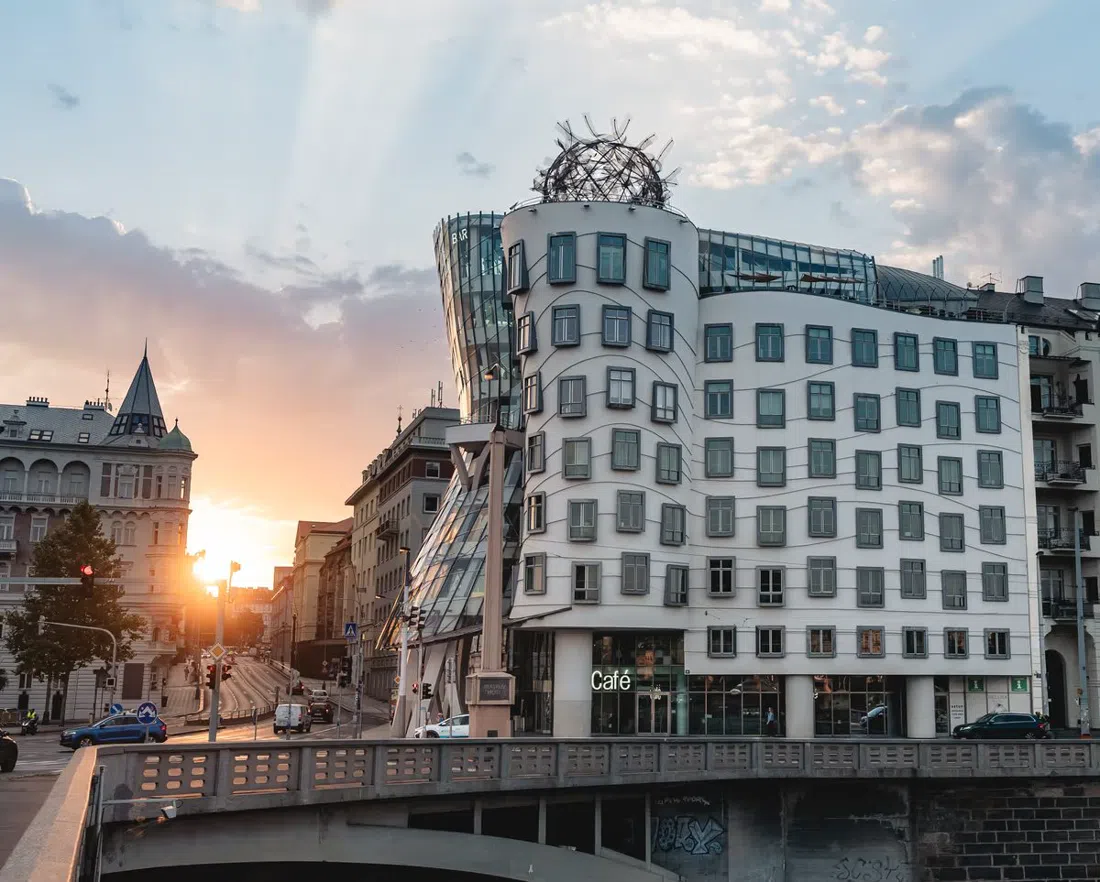
A ten-minute walk upstream, the Dancing House (Tančící dům, Rašínovo nábřeží) sits on a bomb site left empty since 1945. Frank Gehry and Vlado Milunić's 1996 answer to a gap in a nineteenth-century terrace has been loved and resented in roughly equal measure ever since. The rooftop Glass Bar terrace is the reason to go up: it frames the Castle, Charles Bridge and the river in one sweep, which almost no other Nové Město viewpoint does. The terrace ticket is around 150 CZK, or free with a drink at the Glass Bar, so order the drink. The gallery is around 230 CZK adult. Terrace and bar take walk-ins and small groups; the restaurant and meeting room handle larger private bookings.
Two towers and where the cheap view is
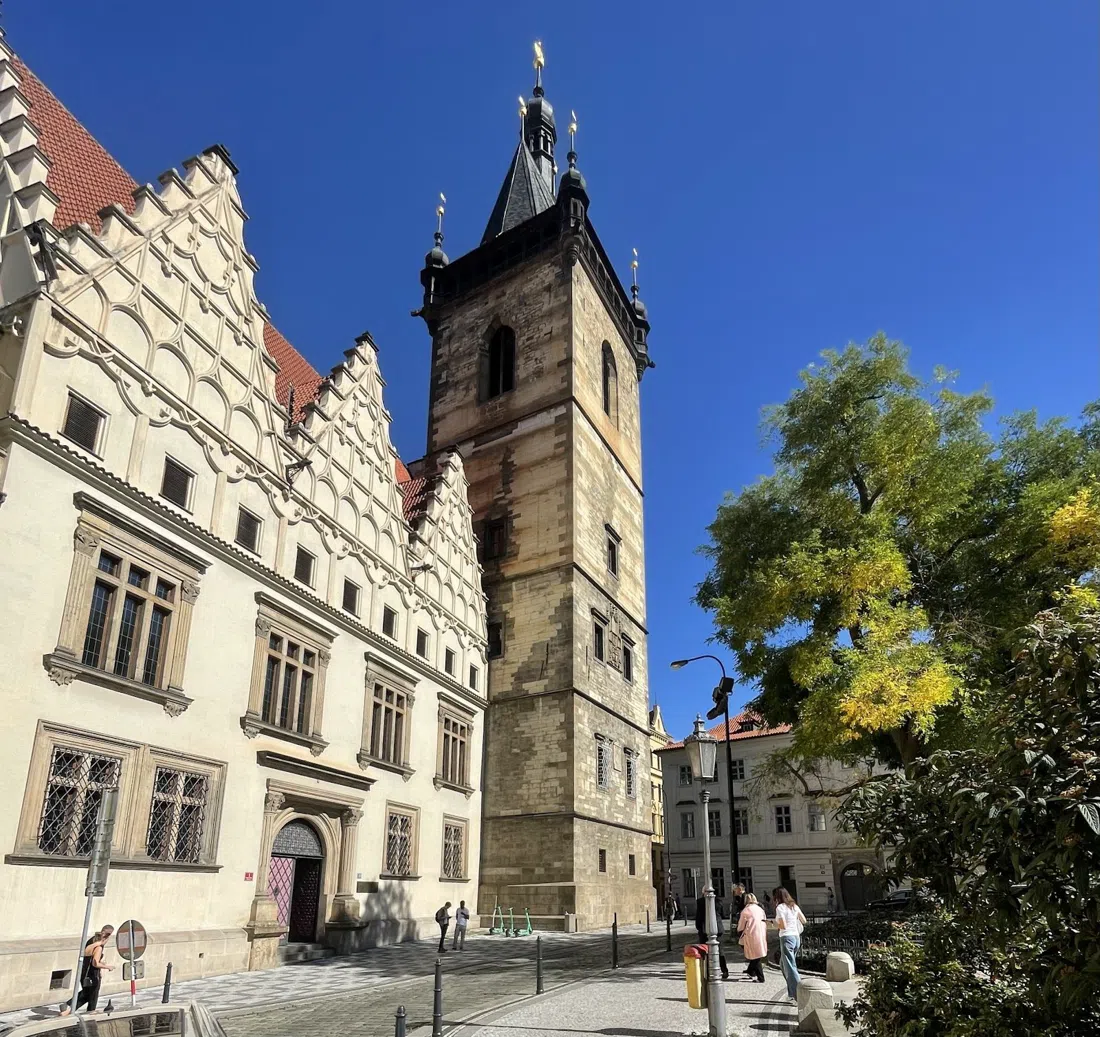
The New Town Hall Tower (Novoměstská radnice, Charles Square) is the cheapest real view in the district and almost never has a queue: 100 CZK adult, 70 CZK concession and group rate, 200 CZK family. It is 221 steps with no lift, and for safety only twenty people are allowed up at a time, so a large group climbs in shifts. It closes Mondays and shuts for the winter after 14 December, which makes September and October the last comfortable window of the year. The tower belongs to the town hall from whose windows two Catholic councillors were thrown in 1419, the first defenestration and the start of the Hussite wars.
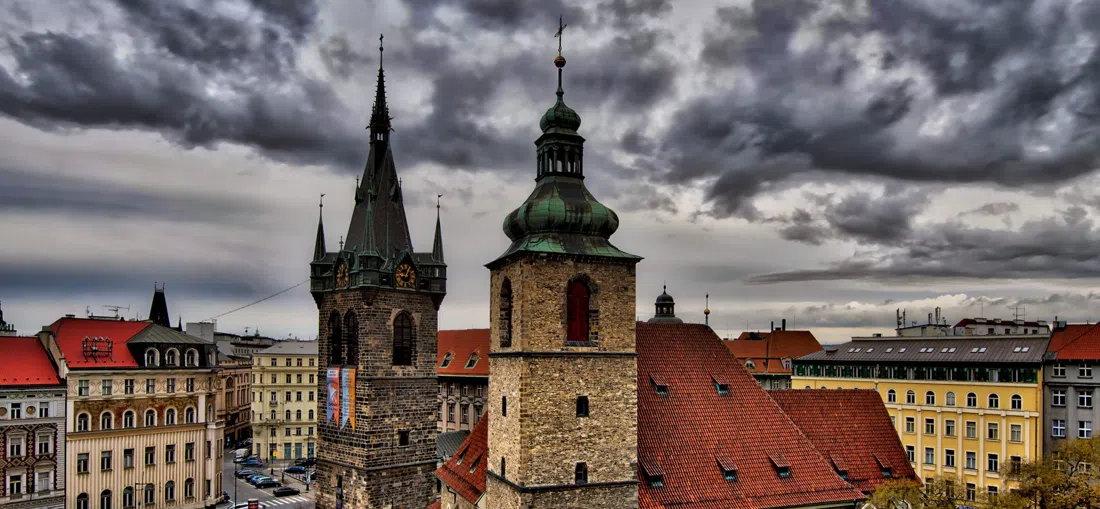
Jindřišská Tower (Jindřišská věž, two minutes off Wenceslas Square) is the accessible alternative: unusually for a Prague tower it has a lift and wheelchair access. 190 CZK adult, 110 CZK student and senior, 70 CZK child, 450 CZK family. Its floors are explicitly available for group rentals, weddings and corporate events, and you can eat at Zvonice beside a 500-year-old bell, with the bar running to midnight. No dogs.
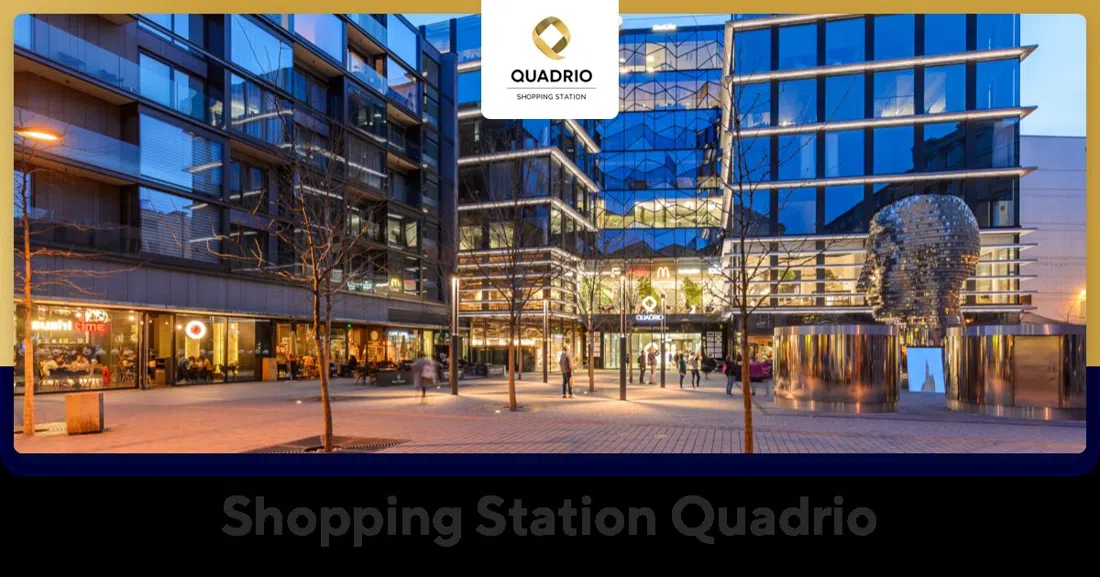
One free piece of theatre sits between them. The Head of Franz Kafka (Quadrio, directly above Národní třída metro) is David Černý's 45 tonnes of mirrored steel in eleven metres of stacked, independently rotating layers. Time it or you will see a silver column and nothing else: the 42 motors run for fifteen minutes at the top of each hour between 08:00 and 21:00, and the face only assembles for a few seconds within that. The plaza is free and fine for any group size, though expect a crowd exactly on the hour.
Saturday morning on the embankment
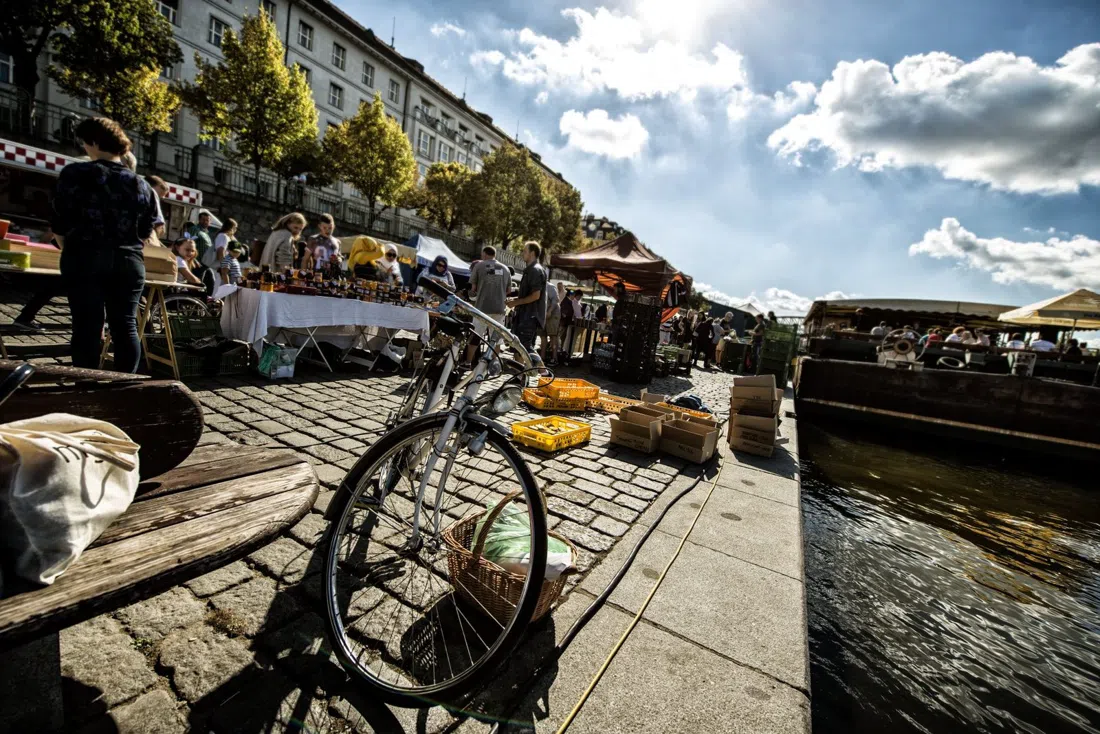
If your September trip includes a Saturday, spend the first half of it at the Náplavka Farmers' Market (Rašínovo nábřeží, the quay below the Dancing House). Ninety-plus growers, bakers and producers set up along the riverside wall from 08:00 to 14:00 with live music, and because it is a linear quay a group flows along it rather than clogging it. Go before 10:00, after which it is a slow shuffle and the good bread is gone. Entry is free; stall food and coffee run to a few hundred CZK a head. There is no booking of any kind. When a large event takes the quay, the market decants to nearby Palackého náměstí, so check before you walk down the steps.
Where the district eats and drinks
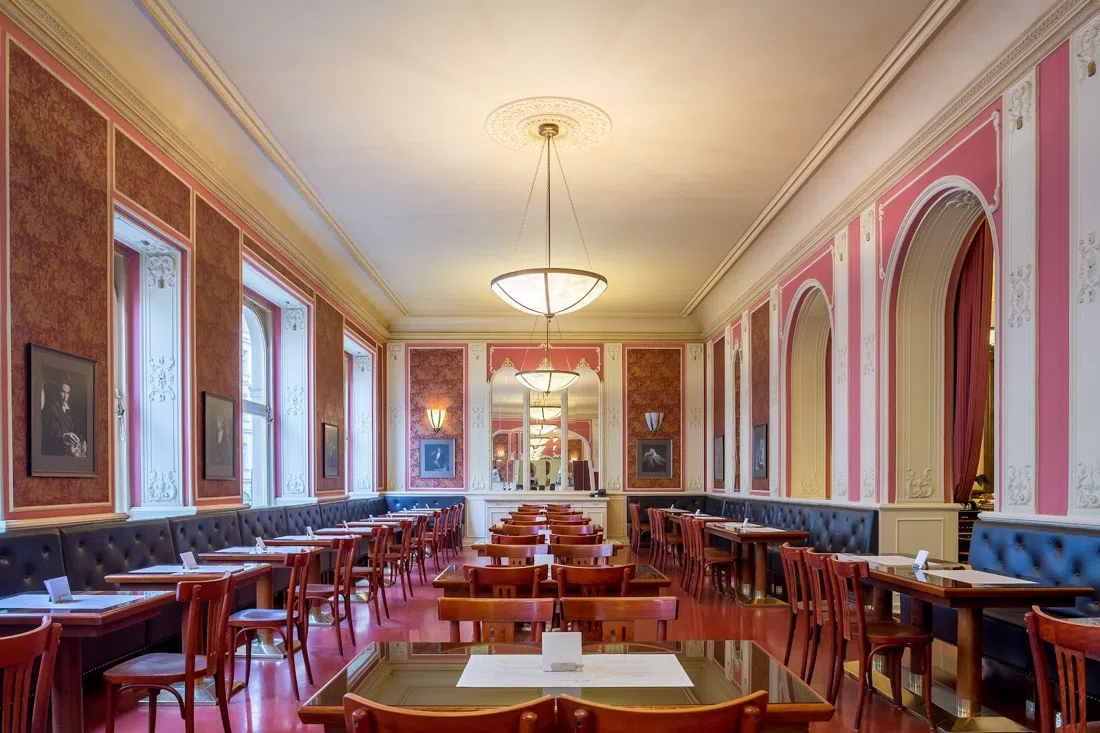
Café Louvre (Národní třída, first floor) has been open since 1902, took Einstein and Kafka as regulars, and is still a working café rather than a preserved set: mirrors, white tablecloths, waiters with no interest in your camera. Coffee and cake come to under 300 CZK, mains 300 to 500 CZK, and it serves until 23:30 daily. The billiard hall at the back, with discounted morning table hire, makes it the rare historic café that genuinely suits a group of six or eight; reserve on +420 724 054 055.
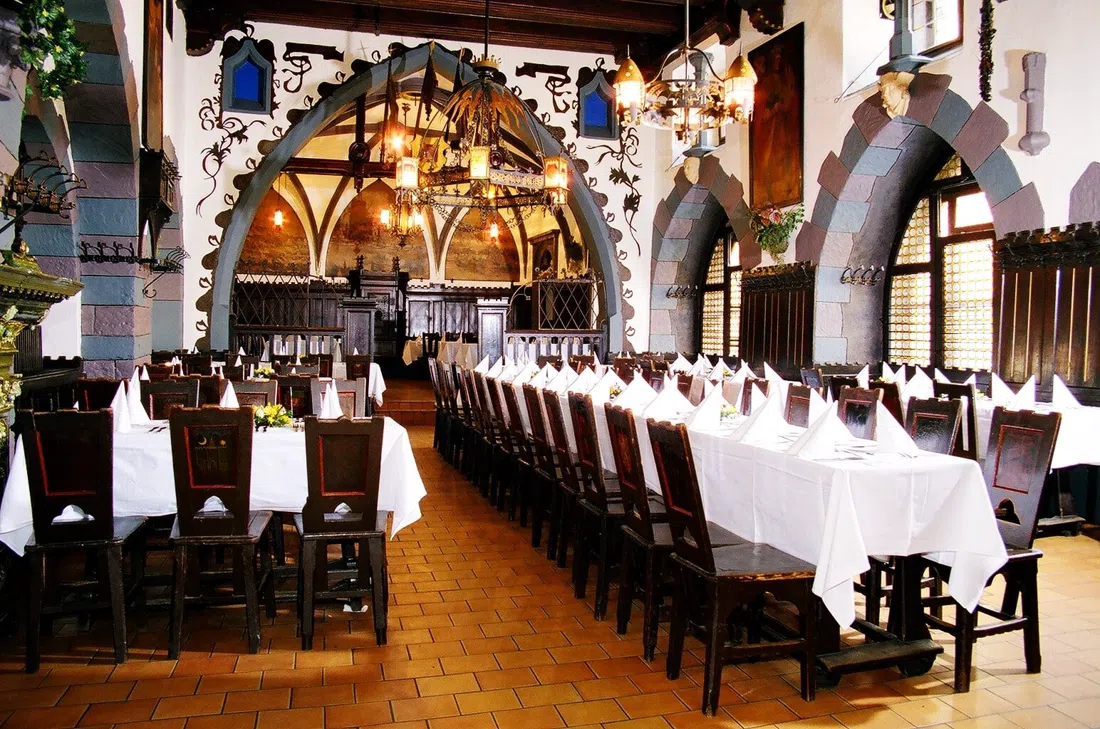
U Fleků (Křemencova street, five minutes from the National Theatre) has been brewing on the same site for over 500 years, and its dark 13° Flekovský lager is sold nowhere else. Be clear-eyed about what it is: 1,200-plus seats across eight halls with live music in all of them, several halls reserved for large parties only, and a cabaret show tailored to group bookings. It is unashamedly a tourist beer hall. It is also very good at being one, and a plate of Czech food with the dark beer lands well under 1,000 CZK a head. Decline the shots that arrive at the table unordered; they are charged for.
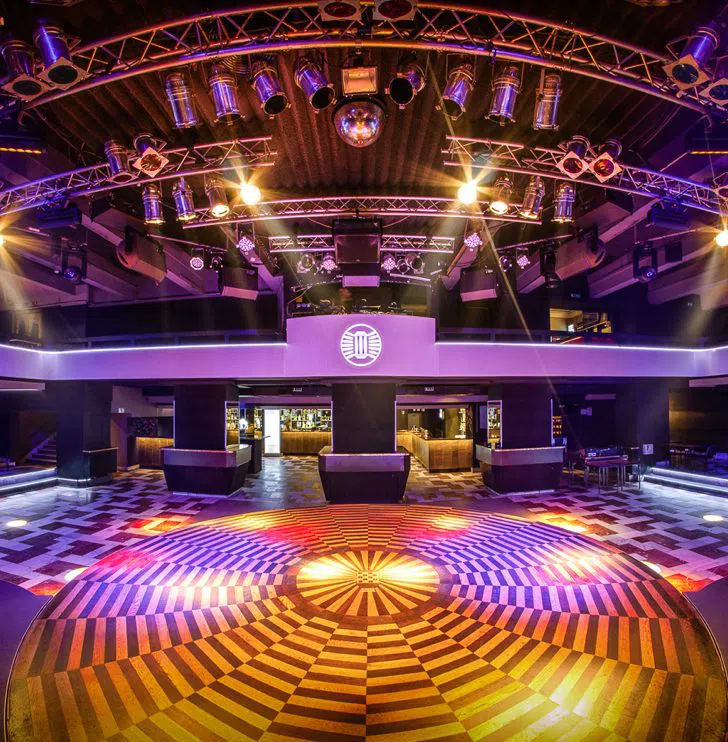
Lucerna Music Bar (Vodičkova, inside the Lucerna passage) is the most reliable night out in Nové Město. DJ Jirka Neumann's 80s and 90s video party runs Fridays and Saturdays; music starts at 22:00, so arrive by 21:00 if you want to stand anywhere useful. Door tickets are typically a few hundred CZK, cash or card, which suits a group deciding at the last minute. Presale runs weekdays 09:30 to 19:00 and the box office opens at 19:00 on the night.
Tickets at the door versus booking ahead
Most of this district is walk-up. The squares, the garden, the memorial crypt, the Kafka head and the market cost nothing and take no reservation; the towers, the Dancing House terrace and the museums sell at the door. Three things need forward planning: the bunker tour, where reservation is mandatory and at least five hours ahead; National Theatre tours and performances; and any table for a group at Café Louvre or U Fleků.
A guided option exists if you would rather have the century narrated than read it off wall panels, and bookable tours here run seven days a week, with prices from about 76 USD per person. The most-reviewed of them holds 5.0 out of 5 from 2,183 reviews. The paid tours are an add-on to a district you can walk competently on your own with this page open.
Best time to go in September
September is the best month of the year for Nové Město and the reasons are boring and practical. Daylight still runs past 19:00 at the start of the month, the terraces and gardens are open, the National Museum's queue is a mid-morning problem rather than an all-day one, and the tower climbs are not punishing.
Work the day in this order. Start at 09:00 with whichever museum you have chosen; the Museum of Communism opens at nine and is emptiest then. Be at the Kafka head a few minutes before an hour strikes. Do a tower in the early afternoon when the light is on the Castle side of the river. Keep the Dancing House terrace for the hour before sunset. Put the Franciscan Garden or the memorial crypt in the gaps.
Two calendar traps. Mondays close both the Heydrich Terror memorial and the New Town Hall Tower, so a Monday-only visit loses the district's best free half-hour and its cheapest view. And the market is Saturdays only, which if you are choosing which weekend to arrive is the deciding fact. From 15 September onwards the Franciscan Garden shuts at 20:00, so an after-dinner walk through it stops working around mid-month.
Is it worth it
Yes, with a caveat about expectations. Nové Město does not do the thing Prague is sold on: no medieval skyline, no cobbled lanes, no astronomical clock. What it has is the nineteenth and twentieth centuries at full size: a national museum, a national theatre, a bunker, a crypt, a communist archive, an Art Nouveau painter's estate, and three viewpoints that cost between nothing and 190 CZK. It suits readers who want to understand what they are looking at, travellers on a second or third trip who have already done the Castle, and anyone who would rather spend 380 CZK on context than on a river cruise.
It suits groups unevenly, and that is worth planning around. U Fleků, Jindřišská Tower, Café Louvre's billiard hall and the National Museum are all built for numbers. The crypt, the Franciscan Garden, the bunker and the Mucha rooms are not, so split into twos and fours or you will spoil them. For a fuller picture of how the district fits with the rest of the city, the Prague guide covers the other side of the river.
Practical notes
Everything above is walkable, and the longest leg, the National Museum down to the Dancing House, is about 25 minutes. Metro lines A, B and C all cross the district (Muzeum, Můstek, Národní třída, Karlovo náměstí, I.P. Pavlova), and trams returned to the Muzeum to I.P. Pavlova stretch of Wenceslas Square on 5 September 2026. Buy a 30- or 90-minute ticket and validate it; inspectors work the metro entrances hard.
Cards work almost everywhere, including the towers and museums, but carry two or three hundred CZK in coins and small notes for market stalls, cloakrooms and toilets. Refuse to change money at a street kiosk offering a headline rate; use a bank ATM. Prices are in Czech crowns, and quoted CZK figures here are 2026 door rates.
On budget, a full day of the paid sights (National Museum, Museum of Communism, one tower, the Dancing House terrace with a drink) lands at roughly 1,000 to 1,100 CZK a head. A free day is genuinely possible: the memorial, the garden, the Kafka head, the market and the squares cost nothing.
Plenty of visitors book Old Town Square apartments or a hostel downtown and walk into Nové Město in ten minutes, which works, but the lower end of Wenceslas Square and the streets around Národní třída put you inside the district for the same money and with quieter mornings. Compare rates and locations with the Prague hotel search.
One last piece of timing. If your September dates fall late in the month, do the New Town Hall Tower rather than postponing it to a winter trip, because it closes for the season after 14 December.