
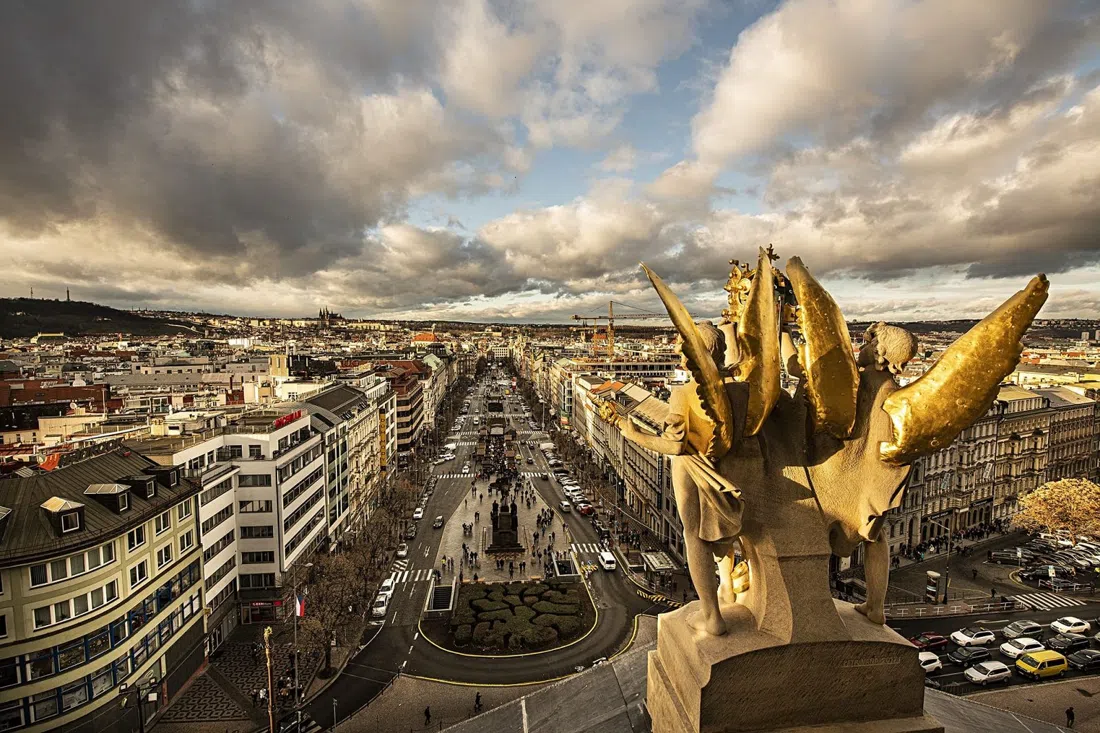
Despite the name, Wenceslas Square is a boulevard of roughly 750 metres, laid out as a horse market in 1348 when Charles IV drew up the New Town, tilted uphill and aimed straight at the National Museum like a gunsight. For most of the day it carries the noise of every tram, exchange booth and souvenir stall in the city. The quiet has not left it, though. It has moved indoors, underground, uphill, and about thirty seconds sideways into a walled garden that most people walk straight past.
What you are actually standing on
Wenceslas Square (Václavské náměstí, Nové Město) is open public space, free, and never closes, with no limit on group size and nothing to book. The interest is in what the address carries. It was the Horse Market for five centuries, renamed in 1848 during the revolutionary year, and since then it has been where modern Czech history gets settled in public. The equestrian statue of St Wenceslas at the top is where the crowd stood in August 1968 when Soviet tanks came down the boulevard, where Jan Palach set himself alight in January 1969 (a low memorial sits in the pavement in front of the statue), and where several hundred thousand people gathered in November 1989. Walking-tour groups muster on the statue steps, which makes that spot both the noisiest point on the square and the most useful place to arrange to meet someone.
Before you plan anything, the 2026 position. The tram tracks along the upper half are being relaid, work runs through 2026, and completion is currently slated for summer 2027. Expect hoardings, narrowed pavement and a rerouted walking line on the museum half of the square. It is not a reason to skip the place, but the pretty, uninterrupted sweep you may have seen in photographs is not what you will get this year, and the lower half towards Můstek is the better stretch to loiter on.
What you actually see, once you stop expecting a piazza, is a hundred years of architecture stacked up either side of a slope: Art Nouveau hotels, interwar functionalist banks, a few unlovely socialist-era insertions, and the passages. Prague's centre is threaded with arcades cut through the blocks, and on this square they are the real texture. The crowds are out on the pavement, and the city is still in the passages.
The two best views down the boulevard
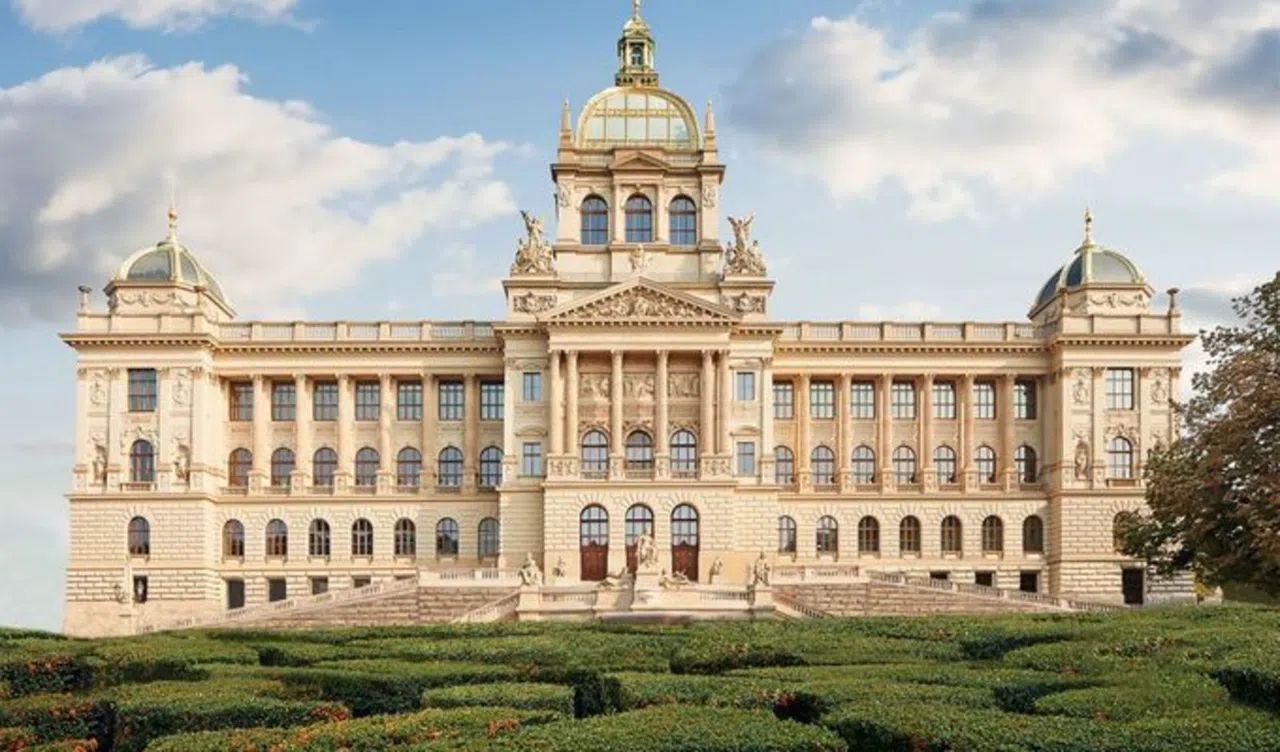
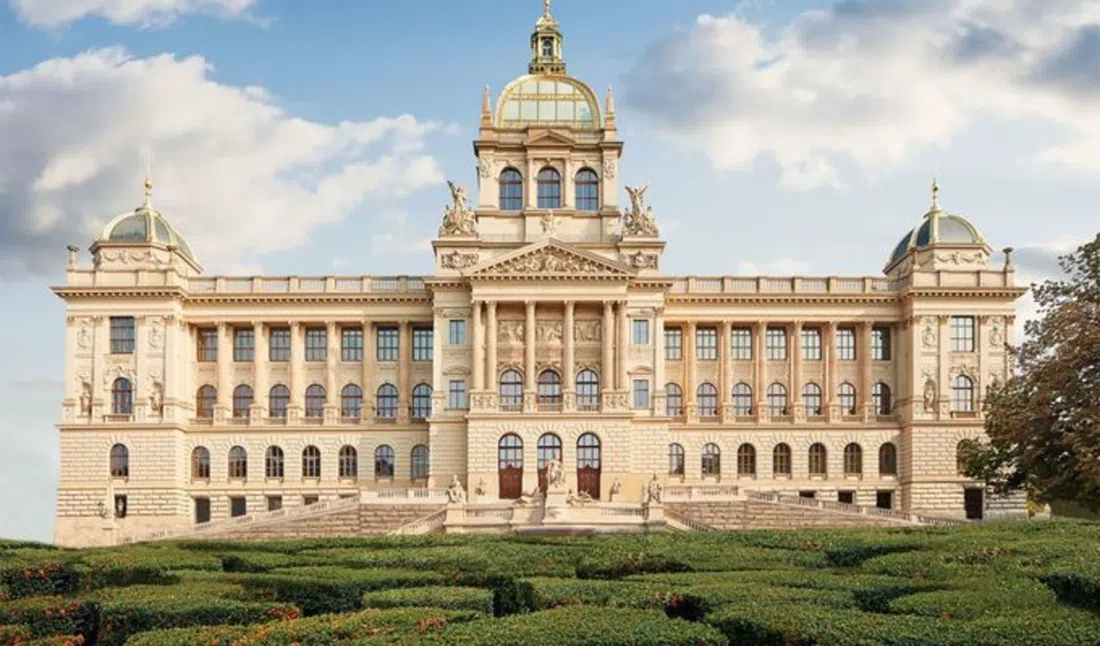
National Museum — Historic Building (Národní muzeum, top of the square, Nové Město) is the obvious one, and the restoration completed at the end of the last decade is what makes it worth the money. The cupola is open again, and the view down the full length of the square from it is the single reason to buy a ticket even if the natural-history and historical collections do not tempt you. Entry to the complex runs about 280 CZK for an adult, around 400 CZK if you add the temporary exhibition, and under-15s go free. Large bags must go in the cloakroom, which is enforced rather than advisory, and the museum takes groups, with group rates and pre-booked guided tours available. Go in the first hour it opens, because the stairs and the dome are narrow and they get slow by late morning.
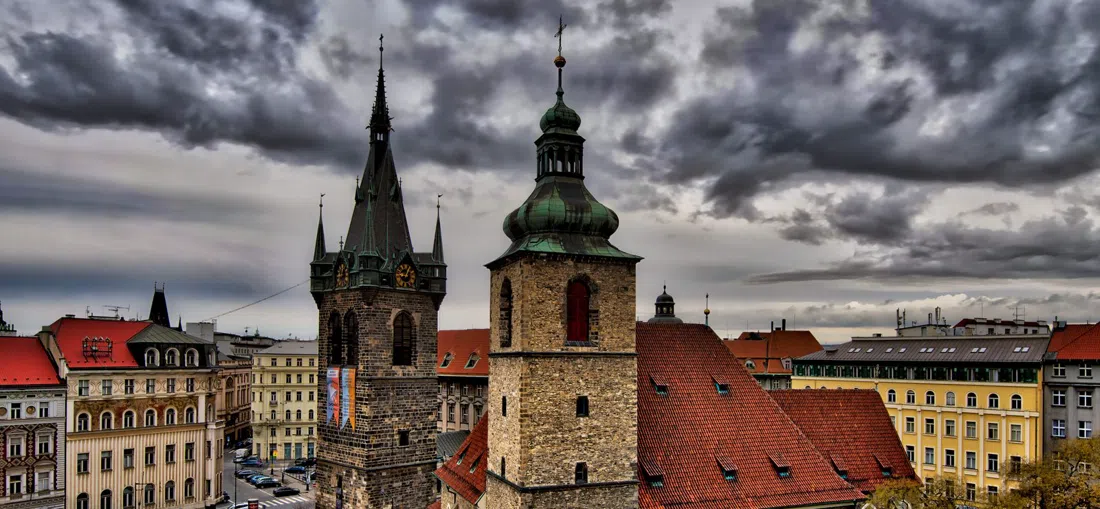
Jindřišská Tower (Jindřišská věž, Nové Město, two minutes off the lower square) is the cheaper and much quieter alternative. The tower is open daily 10:00 to 19:00, costs roughly 150 to 200 CZK, and has a lift, which matters if stairs are a problem for anyone in your party. You are looking across rooftops rather than down the boulevard, but you are also not queueing, which is more than can be said for the Old Town towers. Restaurant Zvonice occupies a floor of the same tower, serves 11:30 to 23:00, takes group reservations, and is genuinely upmarket at about 500 to 900 CZK for a main. It is the only restaurant in the city where you eat beside a medieval bell, and the bell sits in the room as structure rather than decoration.
Underground, where the square keeps its hardest history
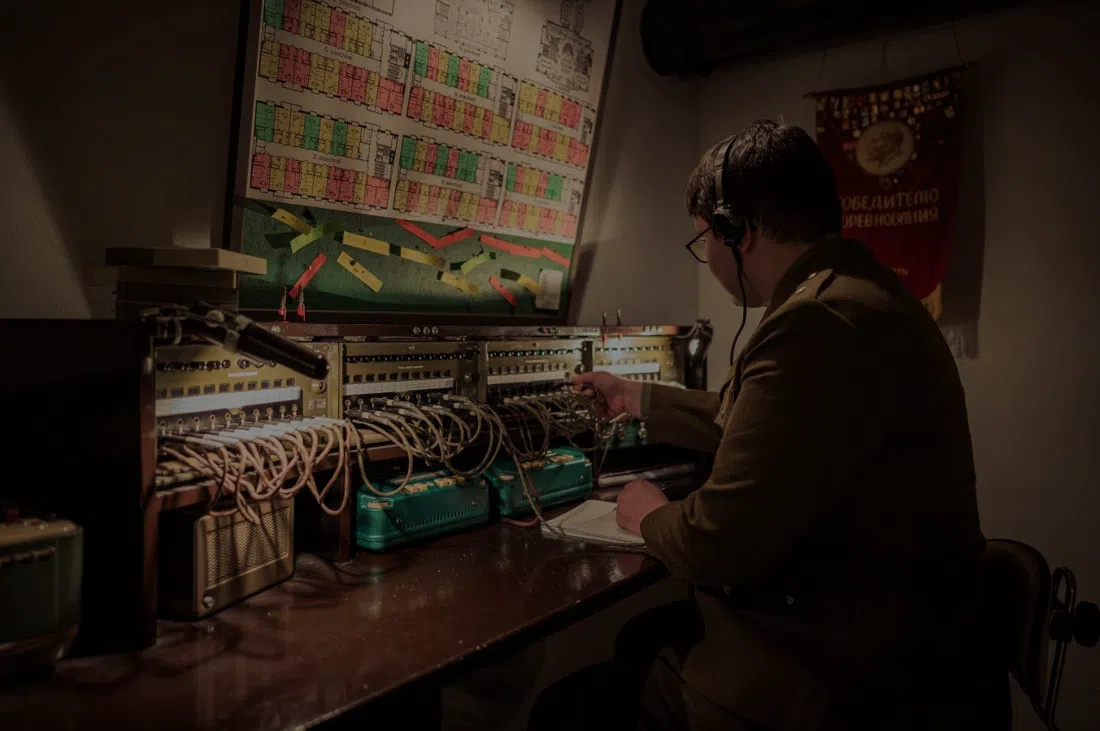
Cold War Museum (the nuclear bunker beneath Hotel Jalta, mid-square, Nové Město) is the most interesting hour on the square and the one most likely to be denied to you. It is guided-tour-only with small-group capacity, roughly 250 CZK for an adult with children free, and there are about four English-language tours a day including weekends. The entrance is unsigned from the street, which suits the history: the hotel was built in the 1950s with a government bunker underneath it and a listening post aimed at the square above. Small capacity also means walk-ups are turned away regularly. Book this before you arrive at the square, not after you have wandered up to the door.
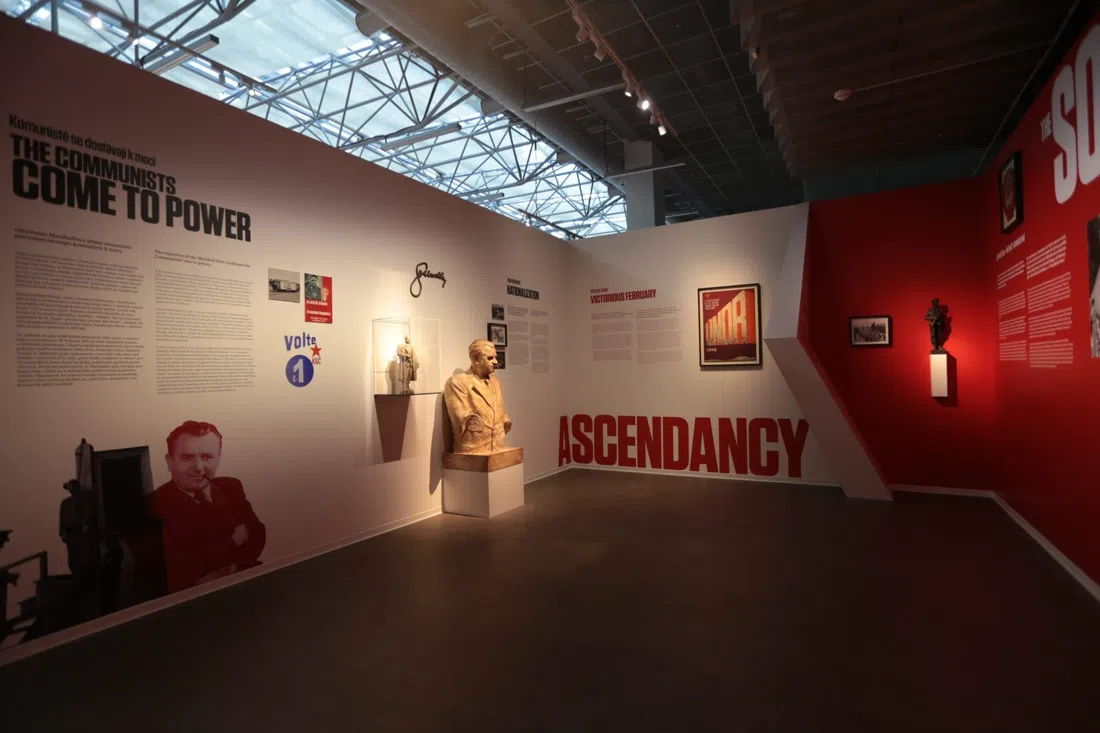
Museum of Communism (Nové Město, about ten minutes from the top of the square) is the companion piece, and the better of the two for straight context on what happened out on the pavement in 1968 and 1989. It opens daily 09:00 to 20:00 with last entry at 19:30, closes on 24 December, and charges around 390 CZK adult, 310 CZK reduced and 820 CZK family, with group tickets available. It is expensive for its physical size and the fit-out is more display-case than spectacle. Treat the bunker and this museum as a pair rather than agonising over which single one to pick: together they cost under 650 CZK a head and they explain each other.
Two indoor rooms that hold up in the rain
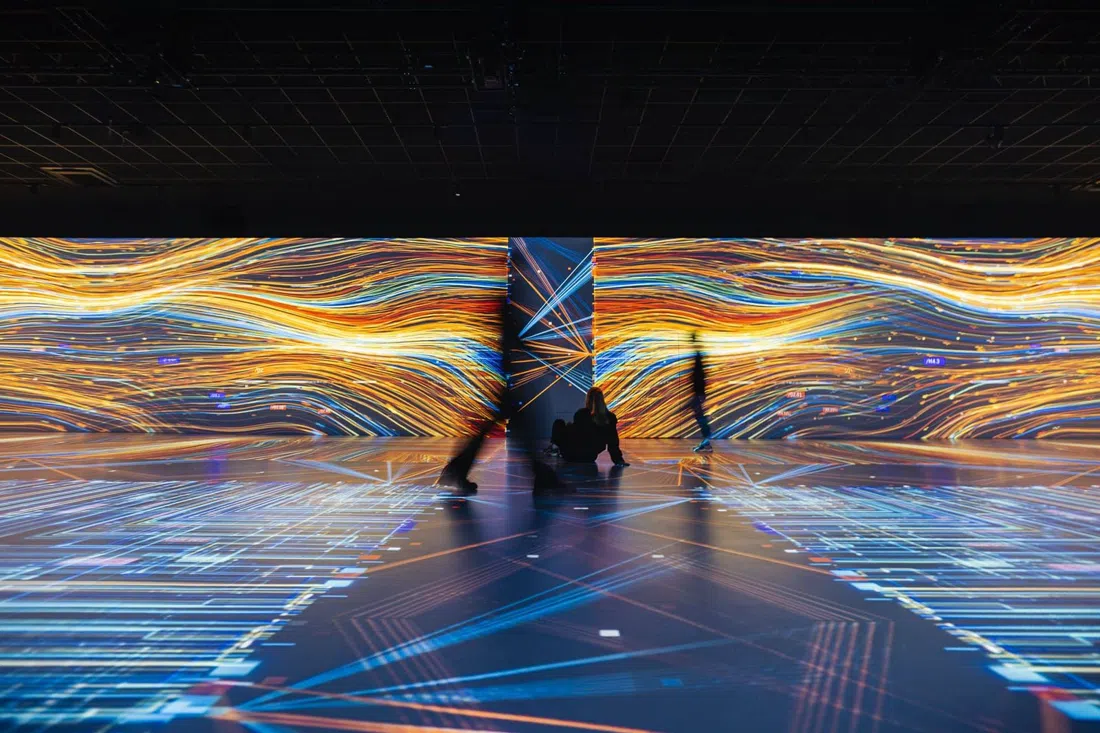
Signal Space Digital Art Gallery (Nové Město, four minutes from the Můstek end) opened in late 2025 and has already collected a shelf of awards. Tickets are timed-entry at roughly 390 to 500 CZK for an adult, with family and combined tiers running up to about 1,650 CZK, and it is included in the Prague Visitor Pass. There is a dedicated interactive Playground zone, which makes it the one place in this guide that reliably works for children. On a wet afternoon it is a more honest use of two hours than dragging everyone round another church interior.
Pilsner Urquell — The Original Beer Experience (Nové Město, the Můstek end) is the most polished indoor attraction at the bottom of the square and completely weatherproof. The Original Tour runs 60 to 90 minutes at about 579 CZK including two drinks, or roughly 1,460 CZK with the Tapster Academy add-on, with multilingual audio guides and group and corporate bookings taken. Capacity is around 300 people an hour, so this is a volume attraction rather than a retreat. What people actually remember is the tapster demonstration, the difference between a hladinka pour and the near-all-foam mlíko, which tells you more about how Czechs drink than any bar crawl will.
Where to sit down within a minute of the noise
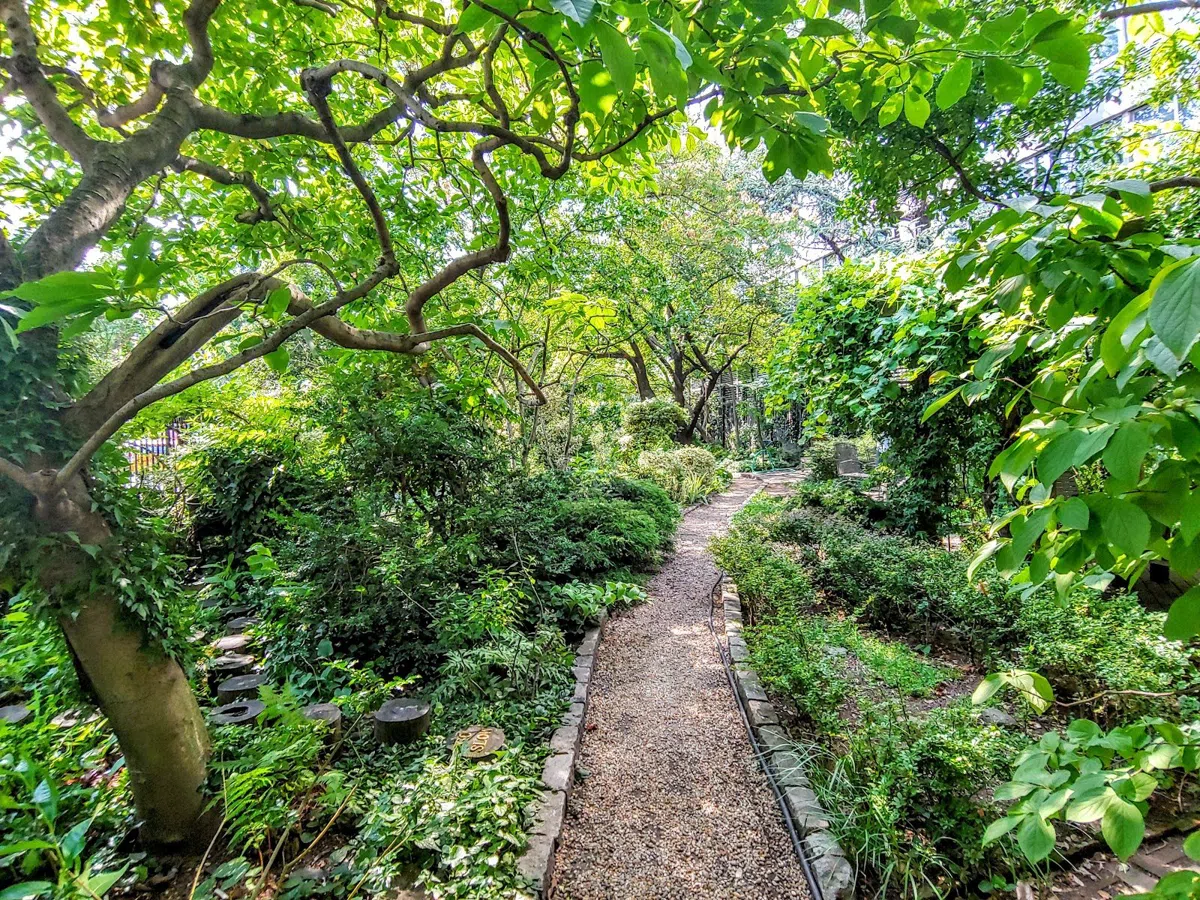
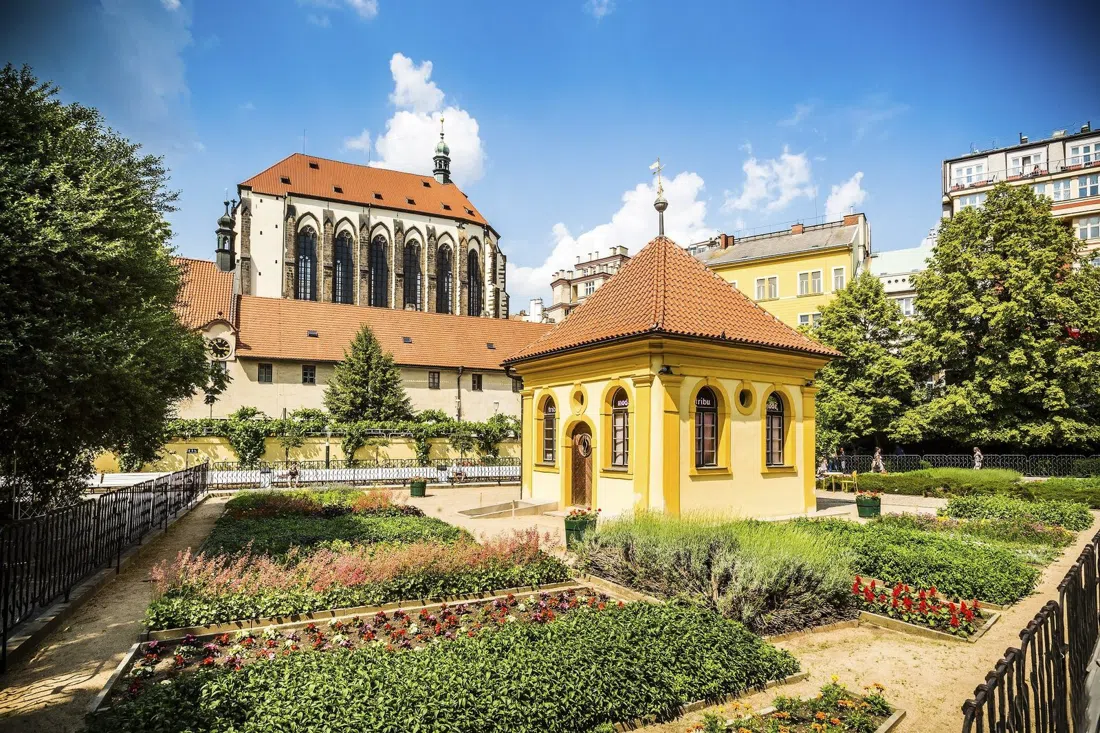
Franciscan Garden (Františkánská zahrada, Nové Město, behind the square's western block) is the single best move when the crowds get to you. It is free, open to all, thirty seconds from the loudest stretch of pavement, and completely silent: a walled monastery garden with clipped hedges, benches and residential windows looking down into it. The paths are narrow and the calm is the point, so a large, loud group is out of place in there. Take a couple of people and ten minutes, not twelve people and a speaker.
Lucerna Palace Passage and Kavárna Lucerna (Vodičkova, Nové Město) is the arcade to walk if you only walk one. The passage is a free public thoroughfare through a 1920s entertainment palace built by Václav Havel's grandfather, and hanging inside it is David Černý's inverted horse, a direct satire of the dignified St Wenceslas statue outside and the best single joke in the district. The café upstairs seats small groups but has no reservations desk for large parties and is closed on Sundays; coffee and cake runs about 120 to 250 CZK. Its balcony is the only place you can sit down and look properly at the horse.
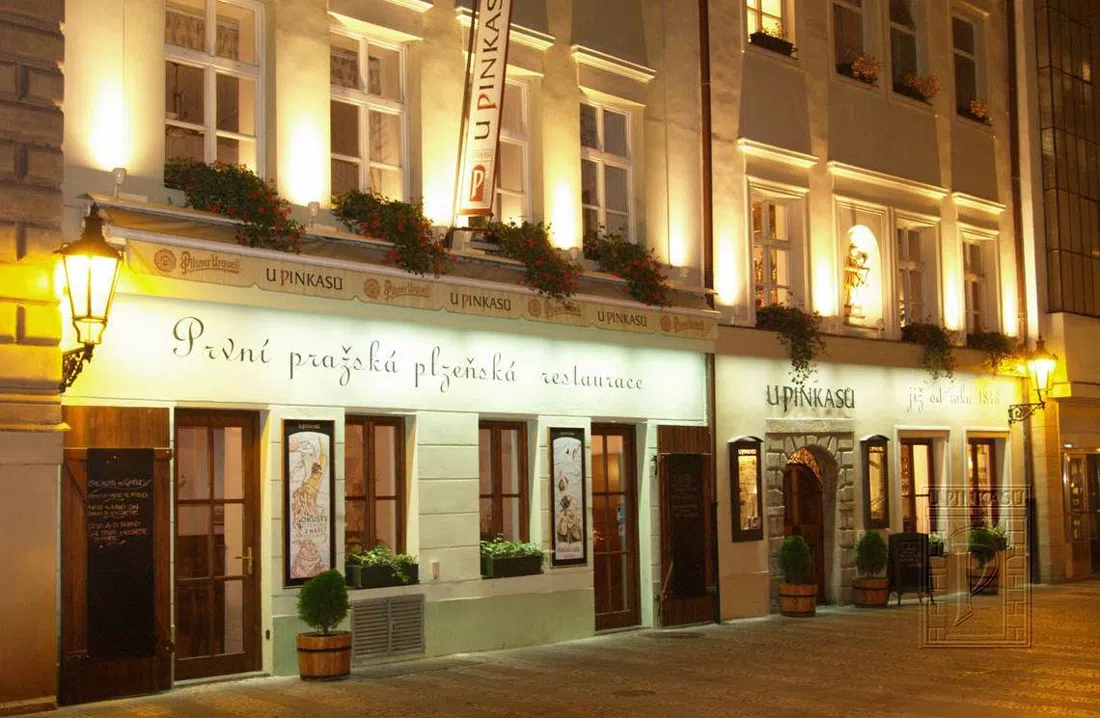
U Pinkasů (Nové Město, just off the Můstek end) was the first place in Prague to pour Pilsner Urquell on draught, in 1843, and it is still doing it more than 180 years later. Three floors plus a courtyard garden, open daily 10:00 to 22:30, half-litres at roughly 60 to 75 CZK, mains 250 to 400 CZK, group bookings and private events taken. The courtyard is the best beer garden within two minutes of the square and the one place here where the price has not drifted up with the footfall.
Above the square and after dark
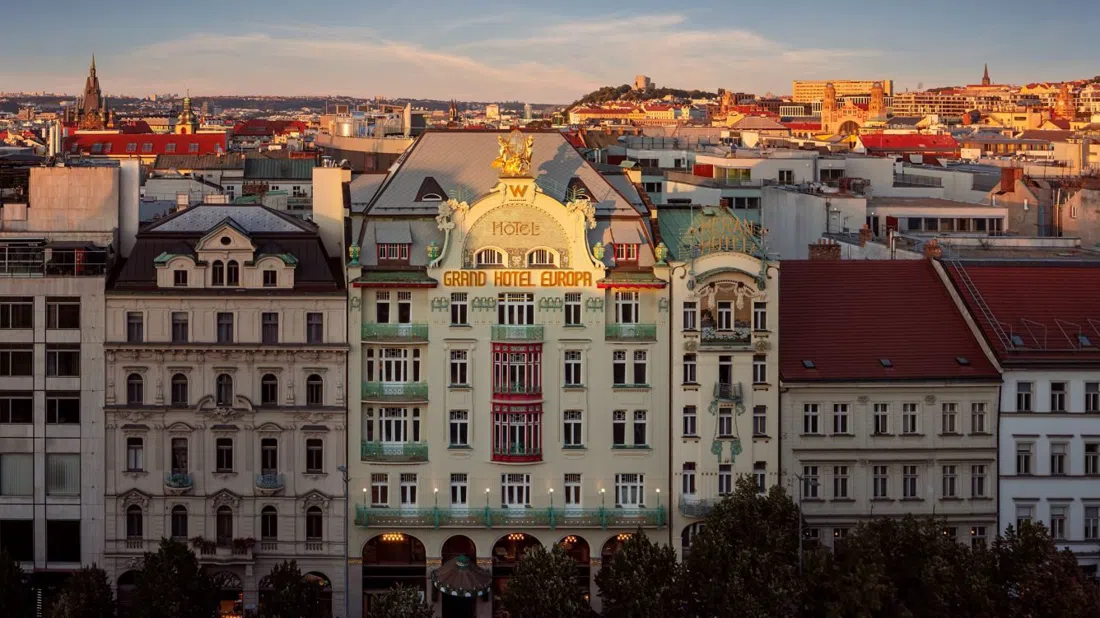
ABOVE Rooftop at W Prague (Nové Město, mid-square) sits on top of a building that stood dark for eleven years before reopening as the W in October 2024. It is open to non-guests daily 17:00 to 22:00, cocktails run about 300 to 450 CZK, and the Mediterranean Hour between 17:00 and 18:00 gets you two spritzes and a platter for around 990 CZK. Reservations are strongly advised and large parties need to call ahead. This is the most comfortable paid viewpoint on the square, and it closes at 22:00, so treat it as a sunset plan rather than a late one.
Lucerna Music Bar (Vodičkova, Nové Město) is in the same palace as the café and is the cheapest real night out within a minute of the square. Doors at 21:00, the floor fills from about 22:00, entry runs roughly 100 to 300 CZK depending on the night, and beer is 60 to 90 CZK. It is walk-up with no table service, it absorbs big groups without fuss, and the Friday and Saturday 80s and 90s video party is a long-running local fixture rather than something assembled for visitors.
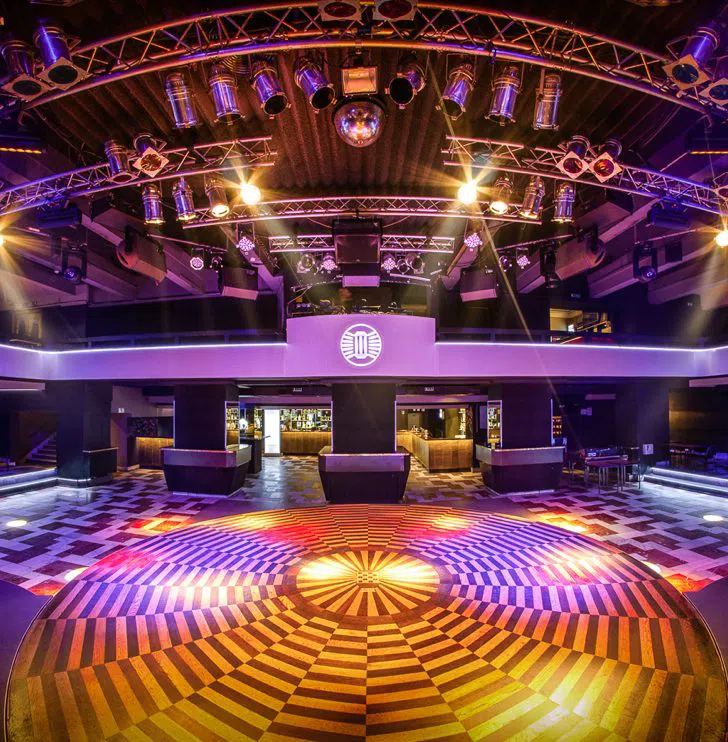
Duplex Club (Nové Město, mid-square rooftop) is the big mainstream room, open daily 22:00 to 05:00, casual dress with jeans and trainers fine, entry roughly 200 to 400 CZK, drinks high by Prague standards. It is explicitly set up for groups and stag parties with VIP table packages, and it is the honest choice if that is what your night is. Go for the terrace view, expect hard upselling inside, and expect the usual late-night square hustle of touts, flyers and a taxi driver with a creative fare on the way out. Couples wanting a quiet drink with a view should stay on the hotel rooftop and go home at 22:00.

How long the square takes
Walking the boulevard end to end, reading the Palach memorial and ducking into one passage takes 20 to 30 minutes, and that is the whole of the square as a sight. A half day is the square, one paid thing (dome, tower or bunker), the Franciscan Garden and a beer in the U Pinkasů courtyard. A full day is two museums, the garden, and a rooftop at sunset, with the club afterwards if that is your group. Anything more and you are padding.
The best time to go
Before 09:00 the pavement belongs to commuters and delivery vans, the square is photographable, and the museum has just opened with nobody in the cupola. From roughly 11:00 to 17:00 is the crush, with tour groups cycling through the statue steps and the lower half at its thickest near Můstek; that is the window to be underground in the bunker or inside the digital gallery rather than out on the setts. From 17:00 the day-trippers thin out noticeably, which lines up neatly with the rooftop opening and its first-hour offer.
Weekdays beat weekends on the square itself, and Friday and Saturday are the only nights the video party runs, so pick your priority. Sunday has one trap worth knowing, which is that the Lucerna café is closed, so the balcony plan does not work that day. In winter the daylight is short and the dome is best done early; two indoor pairings, the bunker with the communism museum or the gallery with the beer experience, will fill an afternoon, and note that the Museum of Communism closes on 24 December. In summer the courtyard at U Pinkasů and the walled garden are the reason to be here at all rather than fighting for space on Old Town pavements. Throughout 2026, assume the upper half is a building site and plan your crossings accordingly.
Tickets at the door or booked ahead
The square costs nothing and needs nothing. Of the paid things on it, only two genuinely require forward planning: the bunker beneath the Jalta, where small-group capacity means walk-ups are regularly turned away, and the digital gallery, which runs on timed entry. The rooftop wants a reservation, especially for the 17:00 hour. The museum, the tower and the beer halls are fine on the day.
If you would rather have the 1968 and 1989 story told to you while standing on the spot, guided options exist and run seven days a week. Across the bookable tours attached to this page there are 9,830 traveller reviews, with the top-rated option sitting at 5.0 out of 5 from 3,821 reviews, which tells you the format works for most people who try it. Some departures of that top option are already fully sold out on 24 December 2026; other dates are still bookable. The comparison is simple: a guide gives you narrative and pace for one fixed sum, while the two museums plus the dome give you more detail and more freedom for broadly similar money, and you keep your own schedule.
Access and group realities
The square is a continuous gentle slope with wide paved footways, so walking it is easy, but the 2026 trackwork narrows the upper half and shifts the crossings. Jindřišská Tower has a lift to the viewing level and the restaurant; the National Museum dome is reached on foot, and the mandatory cloakroom means you cannot carry a large bag up. The bunker is guided-only with limited capacity, which rules out spontaneous large parties. The Franciscan Garden has no barriers but has neighbours. For groups specifically, the music bar, the club, the beer hall, the beer experience and the tower restaurant all take numbers happily; the café and the garden do not, and the rooftop wants a phone call rather than a booking form if there are more than a few of you.
Is it worth it
As a standalone sight, no. If you come expecting the view people have in mind when they picture Prague, you will find a sloping traffic artery with a museum at one end, a building site along one half this year, and more currency booths than any street needs. Judged that way it disappoints, and plenty of visitors say so.
As an address, it is one of the most consequential pieces of ground in Europe, and it rewards a reader. Stand on the statue steps with the 1968 and 1989 photographs in your head, go underground into the bunker that was built to listen to this street, read the museum displays, then come back out and look up the slope. That is an afternoon worth having. It suits people who like history with a place attached, groups who want a night out that does not require a dress code, and families who need one reliable indoor hour. Anyone hunting a postcard will not get one here.
Practical notes
Transport is the square's real advantage. Metro Můstek (lines A and B) sits at the bottom and Muzeum (lines A and C) at the top, so the whole boulevard is one stop from almost anywhere in the centre; a single public-transport ticket covers metro, tram and bus. Trams along the upper half are rerouted during the 2026 works, so check the posted stop rather than the one you remember. Walking the full length takes about ten minutes. Do not take a taxi from a rank on or near the square, and use an app with the fare shown up front.
Money is Czech koruna. Cards work almost everywhere, including the museums, the tower, the rooftop and the beer halls, so you need very little cash. Ignore the exchange booths on and around the square and their no-commission boards; if you must change money, ask for the exact number of koruna you will receive in your hand before you hand anything over, and prefer a bank's own ATM.
Budget in three tiers. A free day is the square, the Franciscan Garden, the Lucerna passage and a half-litre at U Pinkasů for 60 to 75 CZK. A mid day of about 700 to 800 CZK a head is the museum dome at 280, the Jalta bunker at 250 and the tower at 150 to 200. A big day of roughly 1,500 to 2,000 CZK adds either the digital gallery or the beer experience and a cocktail at sunset.
As for where to sleep, the square is the best-connected address in the city and also among the loudest, and rooms facing the boulevard get trams, works traffic and club spill until late, so ask for a courtyard side. Compare rates and locations through Prague hotel search, and read the wider Prague guide before you commit, because staying one tram stop out usually buys you a quieter room for less money without giving up the ten-minute walk back to the statue steps.