The Prague issue
The City That Built in Angles: Prague's Cubist Architecture
For a few years before the First World War, Prague's architects did something no other city dared — they built cubism into concrete and stone, and much of it still stands.

By Sander BakkerThe city beyond the Charles Bridge crush
Cubism was supposed to stay on canvas. In Paris it stayed on canvas. Only in Prague did a small circle of architects decide that a building could be faceted like a cut crystal — that a façade could lean, fold and throw shadows the way a Braque still life fractures a guitar. Between roughly 1911 and the early 1920s they put up houses, a café, a bank, even a lamppost in this idiom, then let the movement soften into the curvier "rondocubism" of the new republic. The result is scattered across the centre with almost no signage, which is exactly why it rewards a slow, deliberate walk.
This guide follows the story geographically, in the order the style actually developed, so you can trace it from its confident debut in the Old Town down to the riverbank at Vyšehrad where its purest houses stand. Nothing here is a museum-piece behind glass — most of it is street architecture you view from the pavement, which shapes how you plan the day. Pair it with a good base using the Prague hotel search, and read the wider Prague guide for context on the neighbourhoods you'll pass through.
Where it starts: the Old Town corner
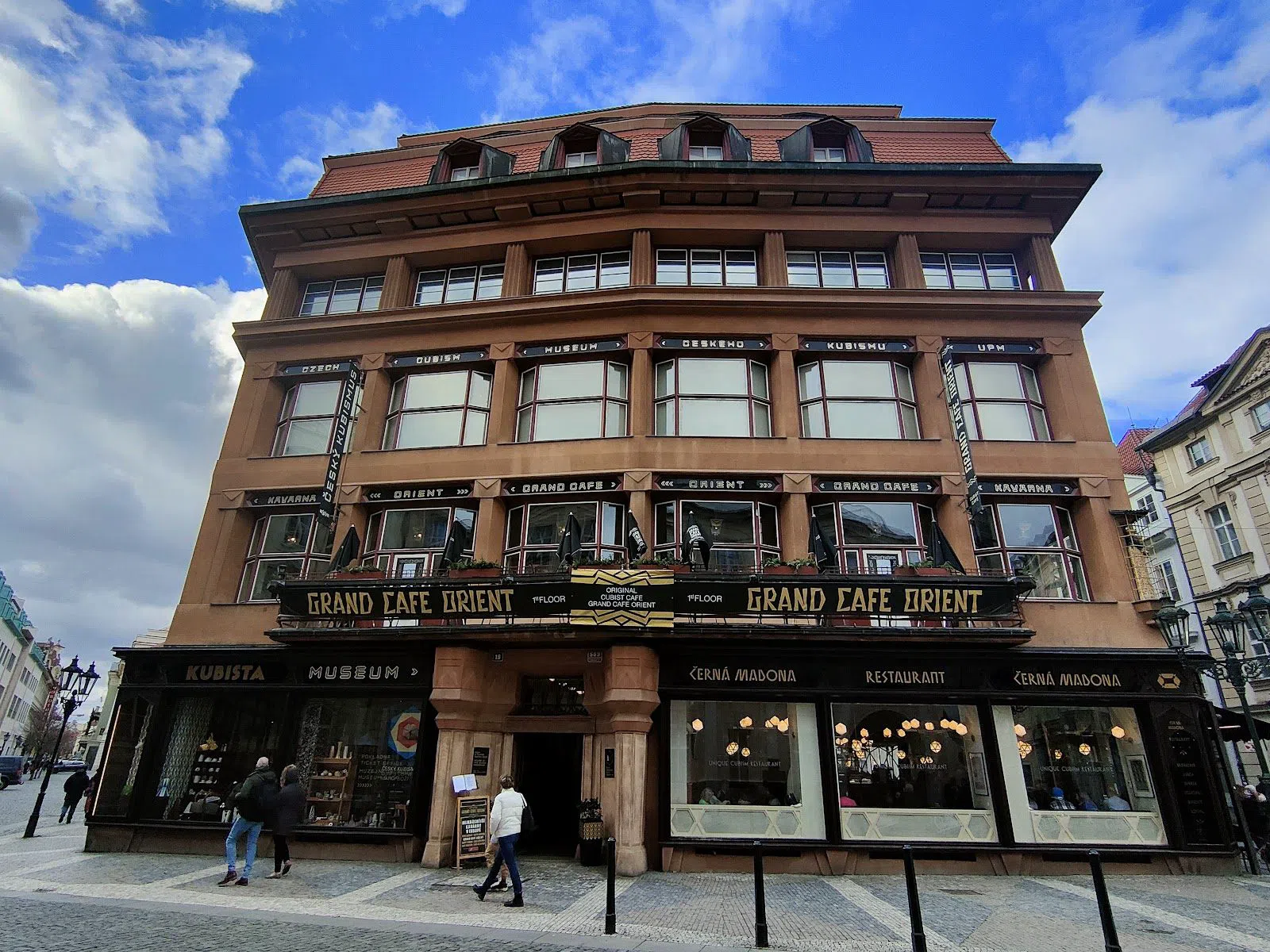
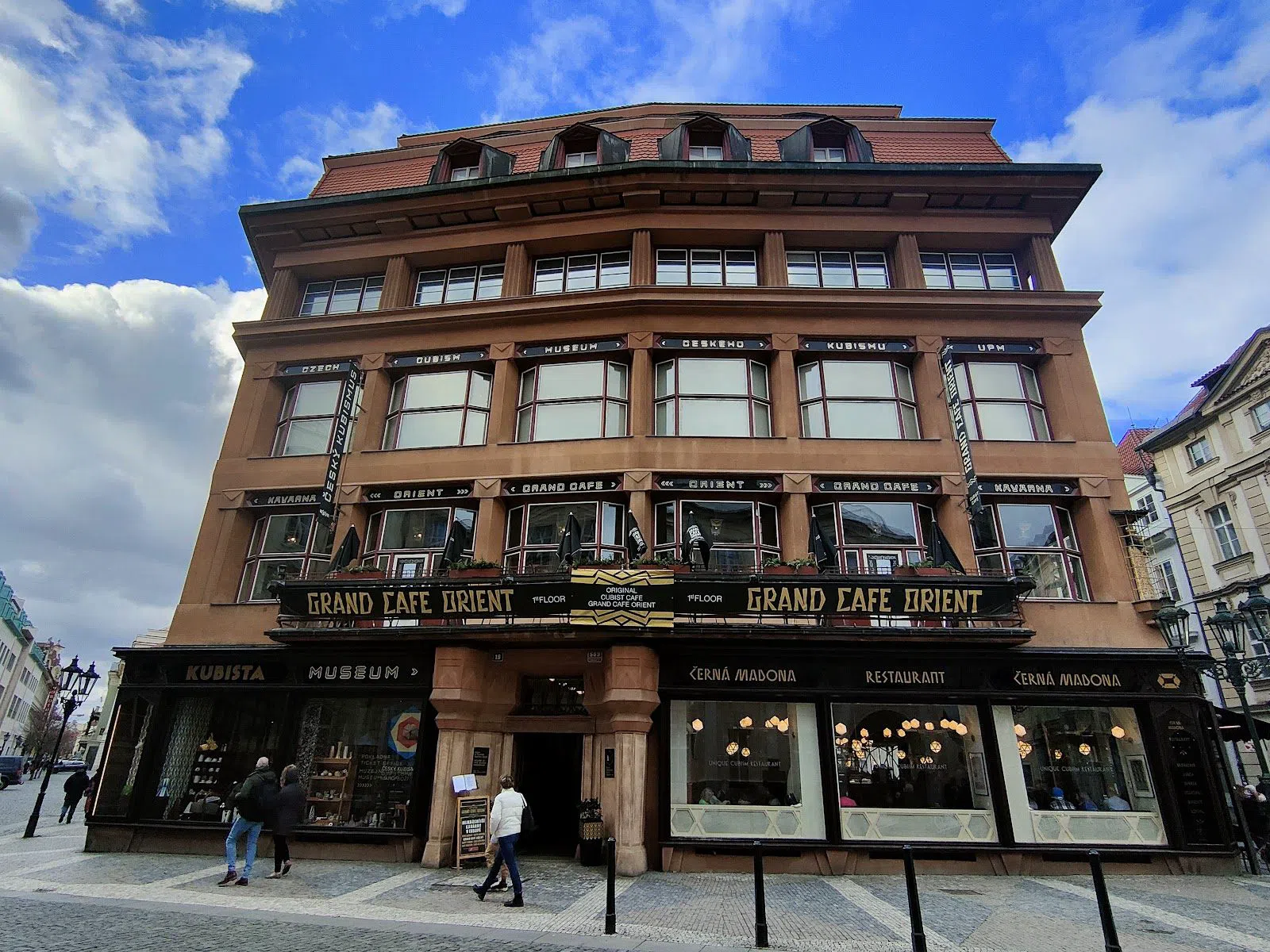
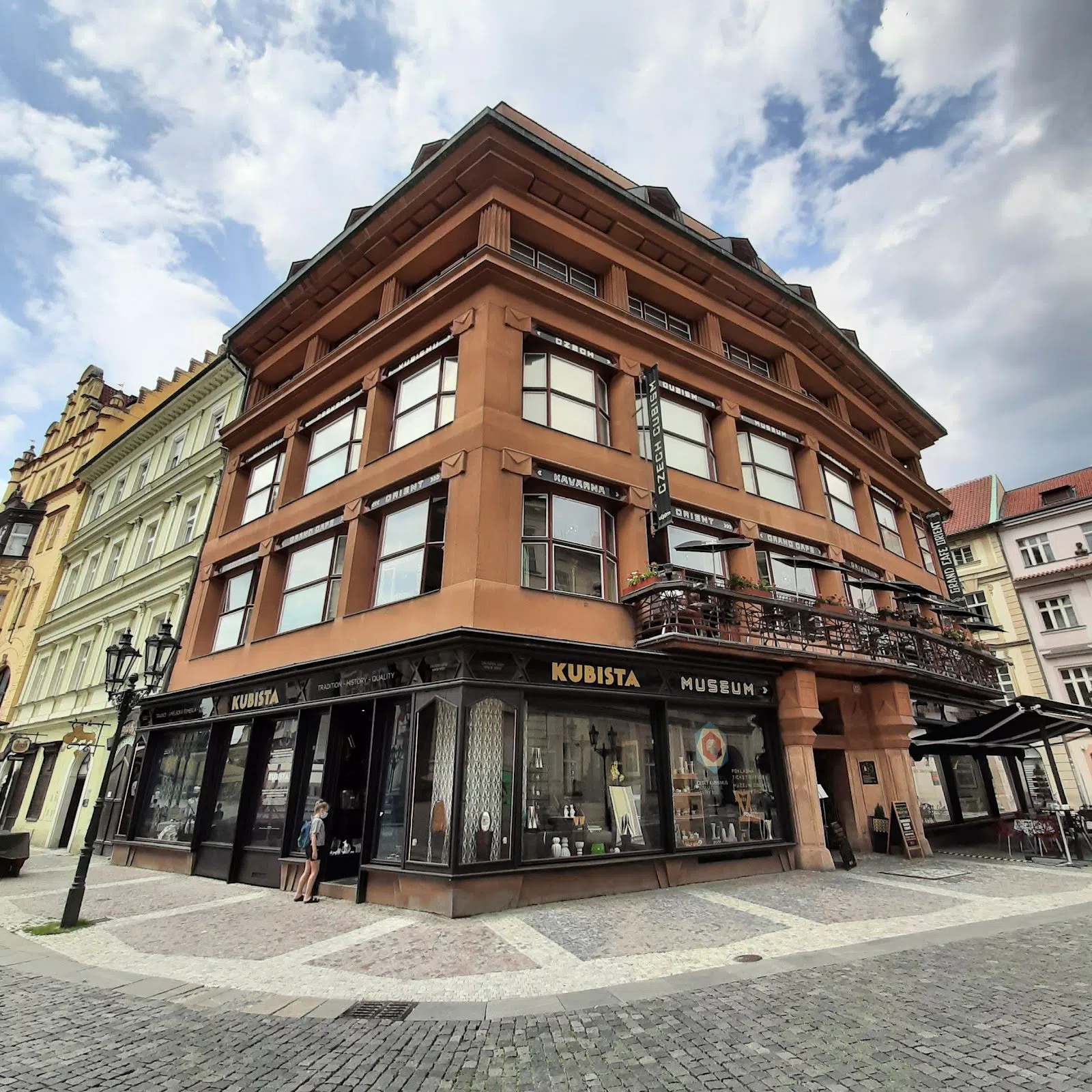
The natural first stop, and the only place you can step inside the style rather than photograph it from the kerb, is the House of the Black Madonna (Old Town, corner of Celetná and Ovocný trh). Designed by Josef Gočár and completed in 1912, it was the first cubist building in Prague, and it announced the whole experiment: a department store whose bay windows and cornices are faceted like folded paper, set among baroque and Gothic neighbours it does not apologise to. Today it houses the Museum of Czech Cubism, run by the Museum of Decorative Arts, and the point of going in is to see that this was never only about façades — the cubist logic ran through furniture, ceramics and glass too. Tickets are around 150 CZK (about 80 CZK concession), and it takes groups freely; guided groups are common here, so a booked tour will often begin at this door.
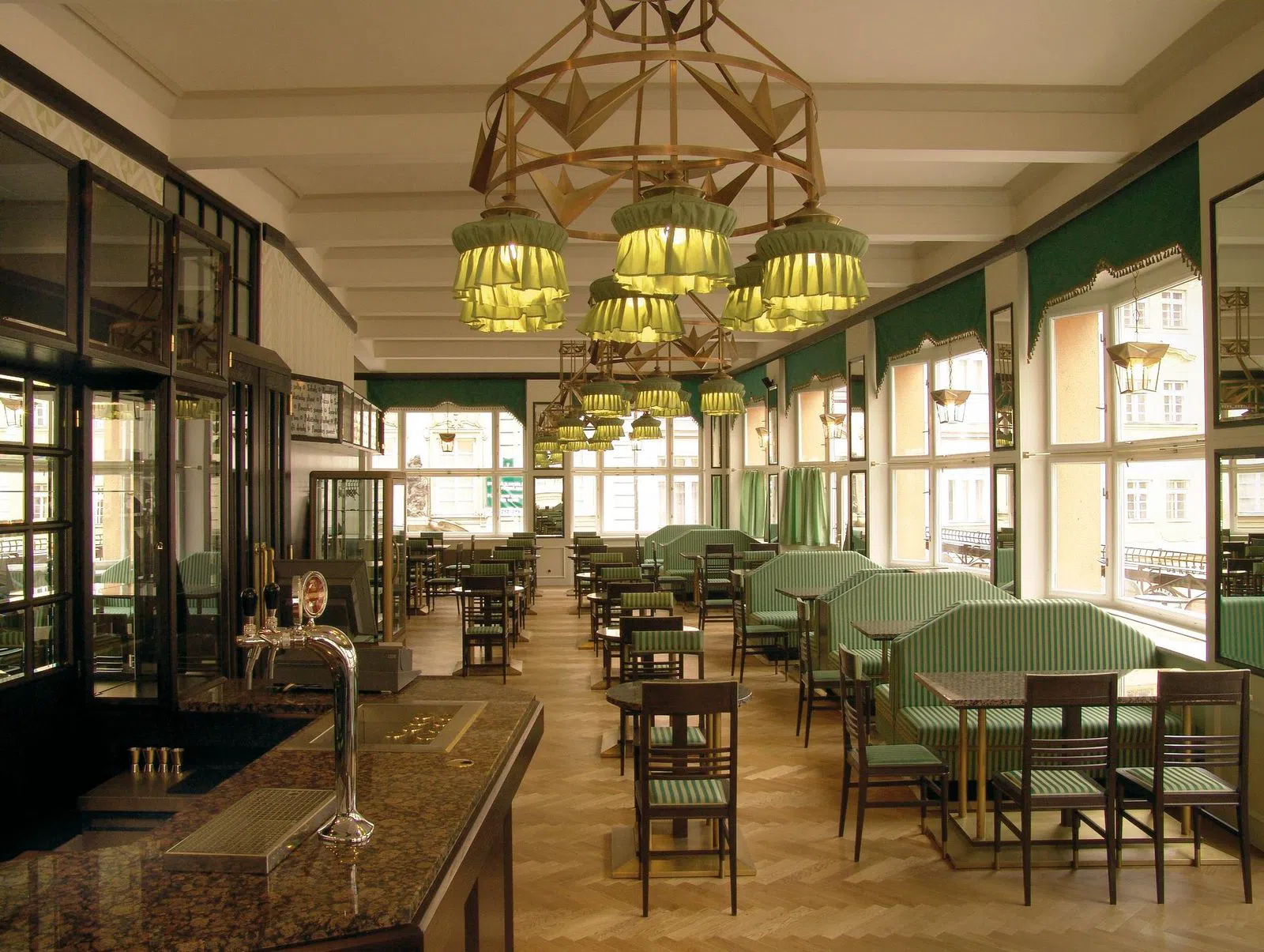
Inside the same building, on the first floor, is the Grand Café Orient (Old Town) — the only cubist café in the world, faithfully reconstructed. Everything from the lampshades to the coffee-cup shapes and the zig-zag balustrade obeys the geometry, and unlike almost everything else on this trail you get to sit down in it. A coffee and cake runs roughly 200–300 CZK, which is fair for what is effectively a working period interior. Two honest cautions: the room is reached by a tight spiral stair, and the floor is small, so it suits couples and pairs far better than a large party. If you're bringing a group of more than a handful, call ahead rather than arriving en masse and hoping.
A short walk away, tuck in a stop at Kubista (Old Town), the small design shop and gallery that is the only specialist Czech-cubism store in the country. This is where the thread runs from architecture back down to everyday objects — you can see, and buy, replicas and original design pieces, from angular coffee sets to geometric ceramics. Browsing is free, though the pieces themselves are mid-to-high priced. It's genuinely tight inside, so treat it as a quick, appreciative stop for one or two people rather than somewhere to shepherd a crowd.
Plan your Prague trip
Live prices from our booking partners.
Free cancellation on many rooms. We may earn a commission when you book.
The New Town leg: how the style negotiated with old Prague
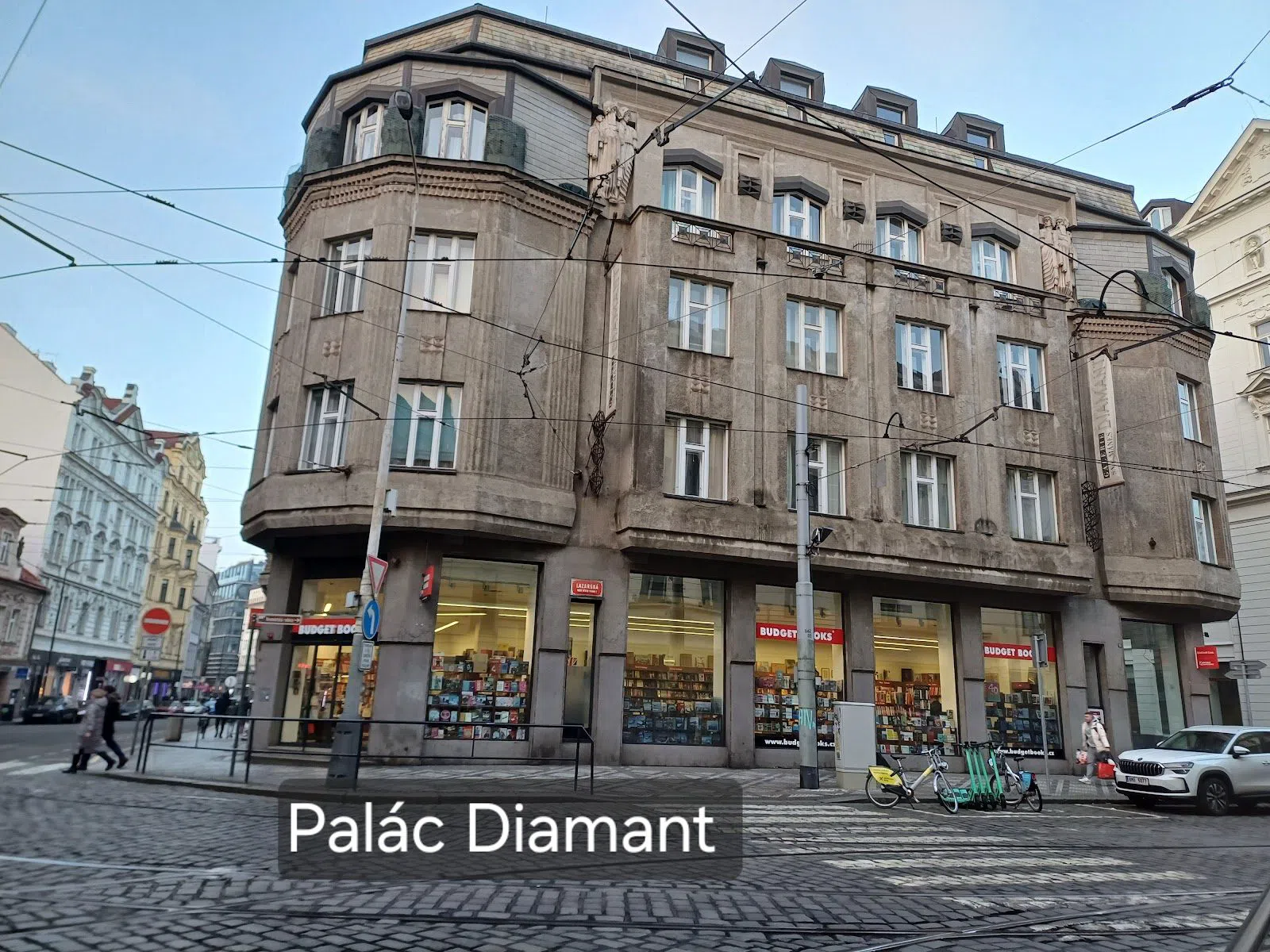
Walk south-west toward Wenceslas Square and the mood shifts from debut to dialogue — here you see cubism working around, and sometimes on top of, the city that was already there. The clearest single lesson is the Diamant House (New Town, on Spálená), whose cubist archway is grafted directly over an older baroque saint. That collision — sharp new geometry framing an inherited devotional figure — is the best short illustration you'll find of how the style negotiated with the existing city rather than bulldozing it. You view it from the public pavement, it costs nothing, and the wide street means any group size can stand back and take it in.
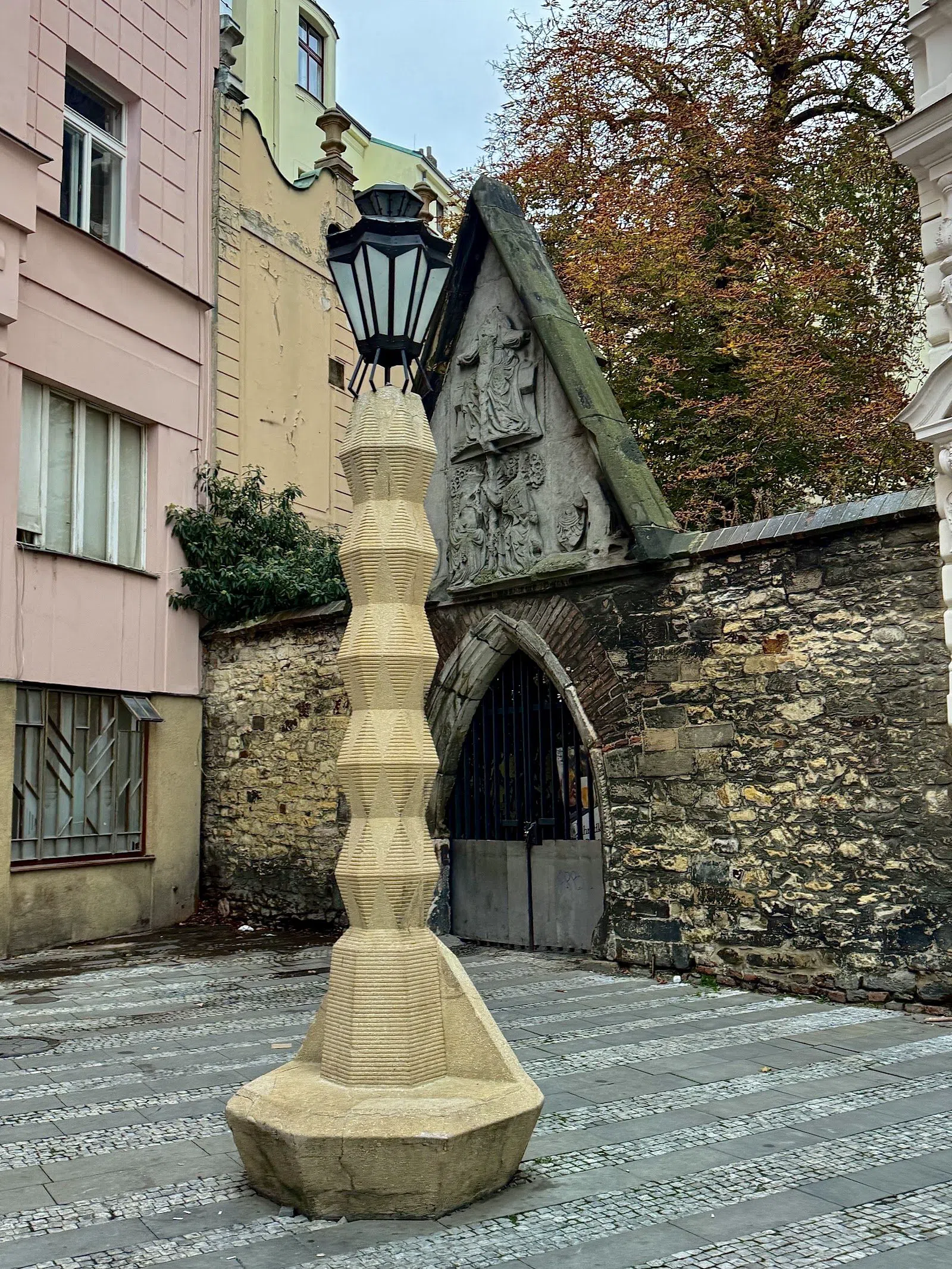
A couple of minutes north, on Jungmannovo náměstí, look up (and slightly down) for the Cubist Lamppost (New Town). Designed by Emil Králíček in 1913, it is the only cubist lamppost in the world — a stack of faceted concrete blocks that most people walk straight past. It was restored and lit again in recent years, and it's a free, open-square stop with no restrictions, which makes it an easy crowd-pleaser for any group. It rewards the reader who knows to look for it precisely because it is so easily missed.
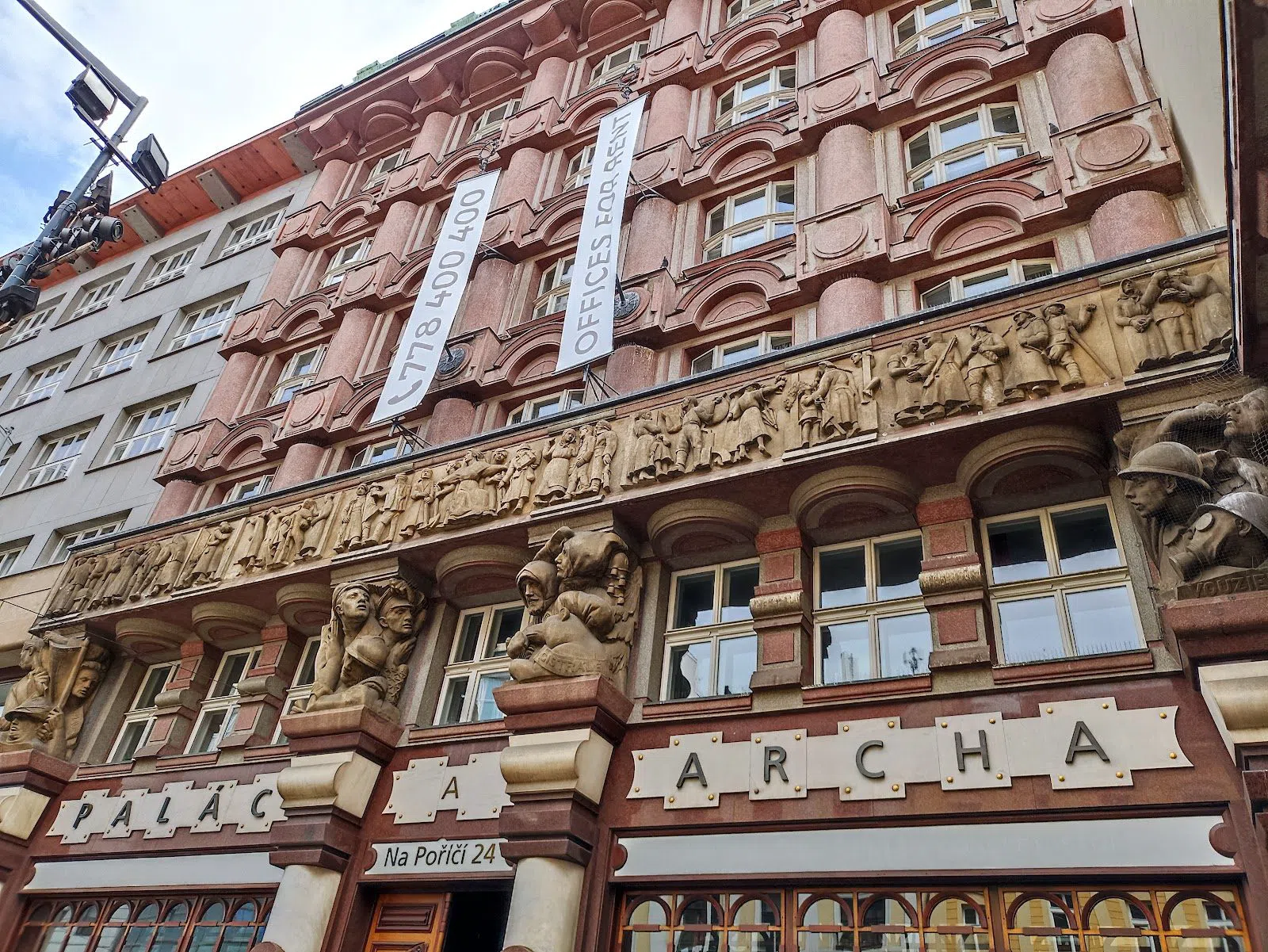
For the rondocubist chapter — the softer, curvier phase that arrived with the young Czechoslovak republic around 1920 — two nearby buildings tell the story. The Bank of the Legions (New Town, on Na Poříčí), now a ČSOB branch, is Gočár's prototype of the style: where his Black Madonna was all sharp facets, here the forms roll into cylinders and arcs, in red and white, crowned with sculpture. Crucially you can walk into the original banking hall during bank hours, free of charge — a rare interior on this trail. It is a working branch, so keep a small group low-key and don't turn it into a photo shoot at the counter.
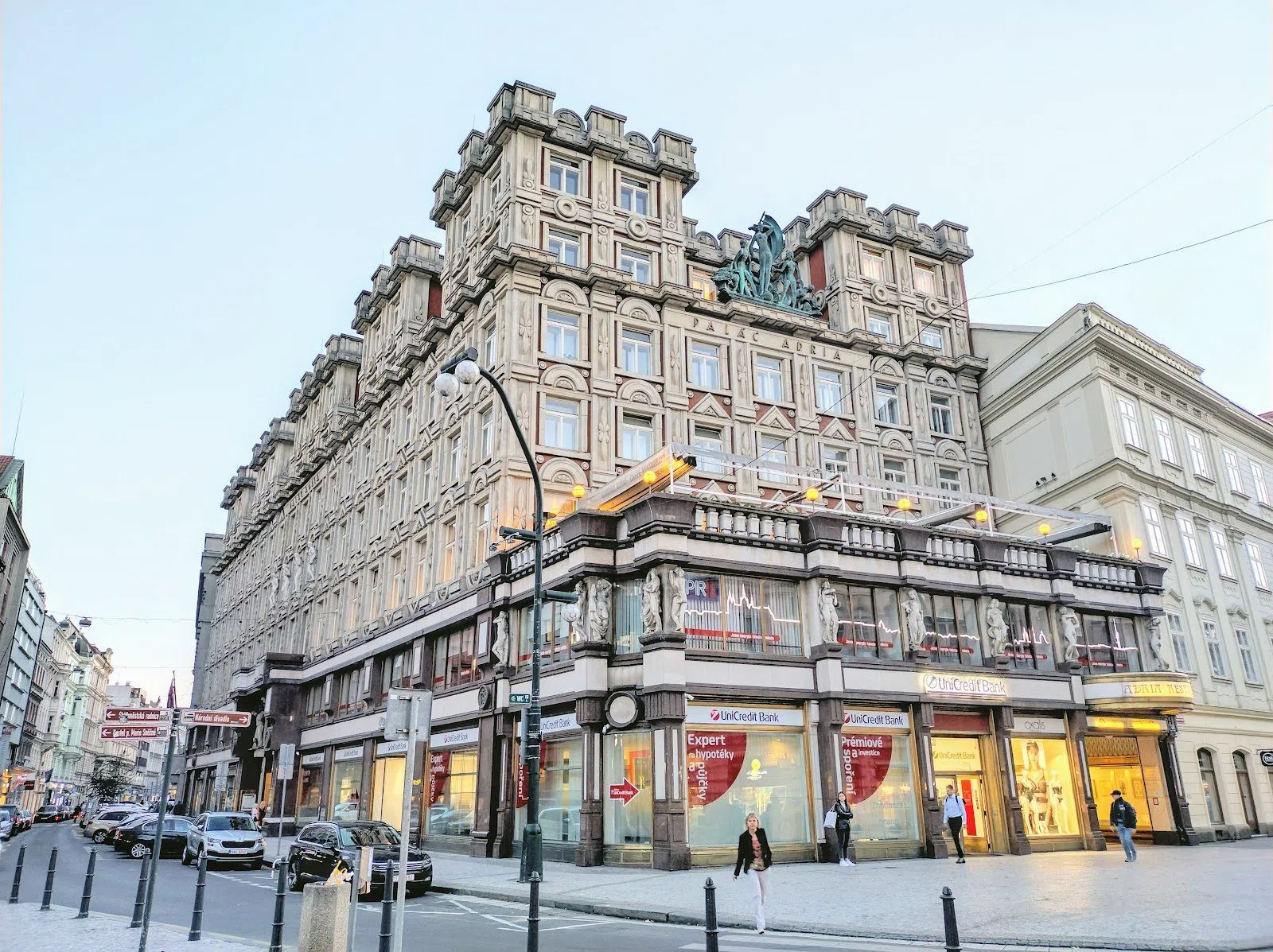
The fuller statement of that later, mellower manner is the Adria Palace (New Town, on Národní třída and Jungmannova), the Palác Adria, by Pavel Janák and Josef Zasche. This is the definitive rondocubist pile — a heavy, ornamented block with a public passage, a café and a theatre inside, all of it group-friendly. Access to the arcade and the café terrace is free; you only spend if you sit down for a drink. Seen after the earlier, spikier work, it shows exactly how cubism's hard angles had rounded into a national Art-Deco by the mid-1920s, which is why it pairs so well with the older Vyšehrad houses you'll reach next.
The Vyšehrad cluster: the movement at full strength
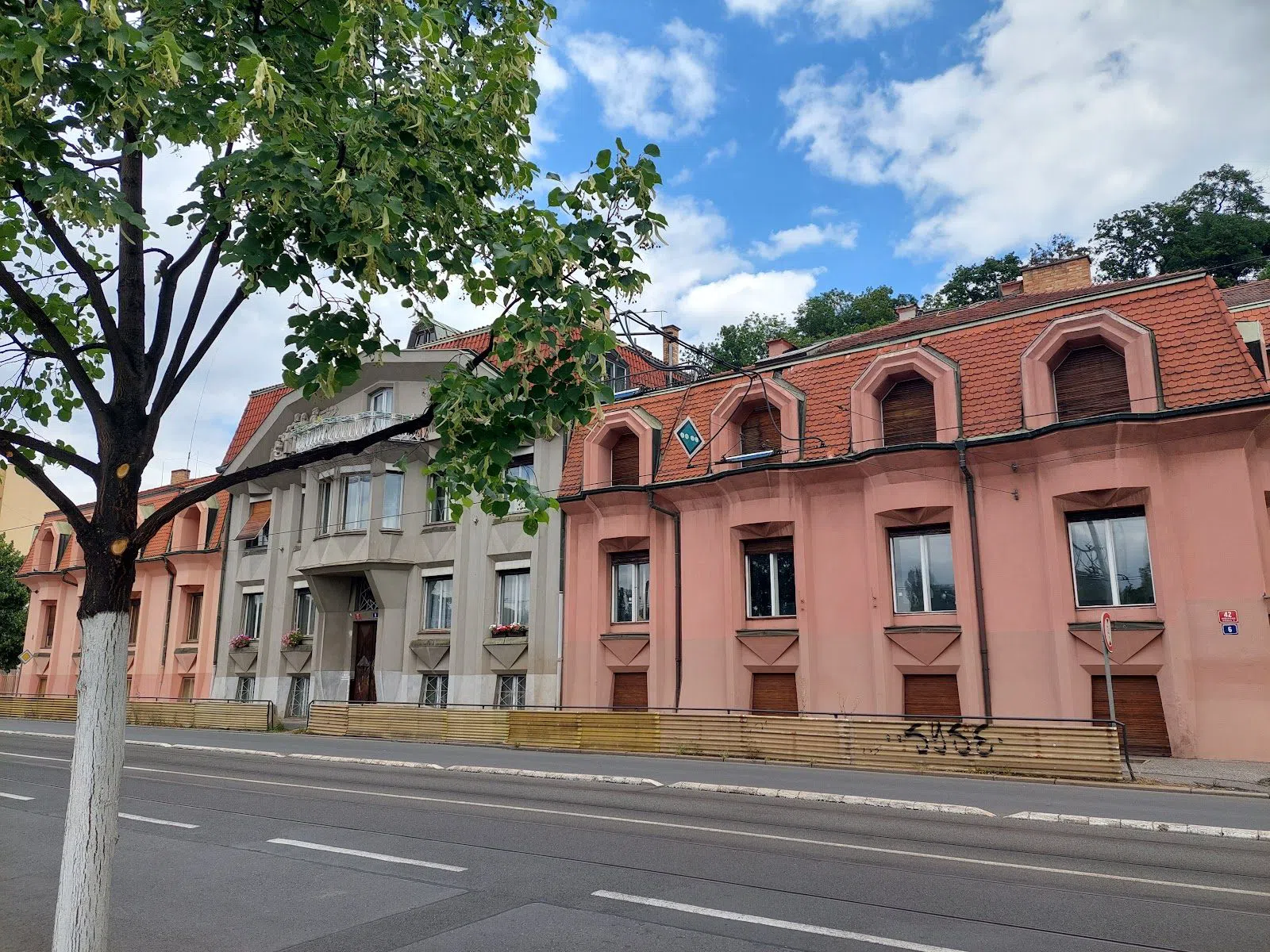
The most concentrated and, for many visitors, the most satisfying stretch is below the Vyšehrad rock, along and just back from the river on the New Town / Vyšehrad embankment. Here Josef Chochol built a run of houses that represent cubism at its most uncompromising, and the wide riverside path gives walking groups room to view and photograph without crowding a doorway.
Start with the Cubist Triplets (Vyšehrad embankment, Rašínovo nábřeží 6–10), Chochol's trio of family houses and his earliest cubist work here. Read as a first draft: the faceting is present but comparatively restrained, which makes them the perfect warm-up for the sharper block a short walk away. The broad embankment means you can stand well back and take all three in together.
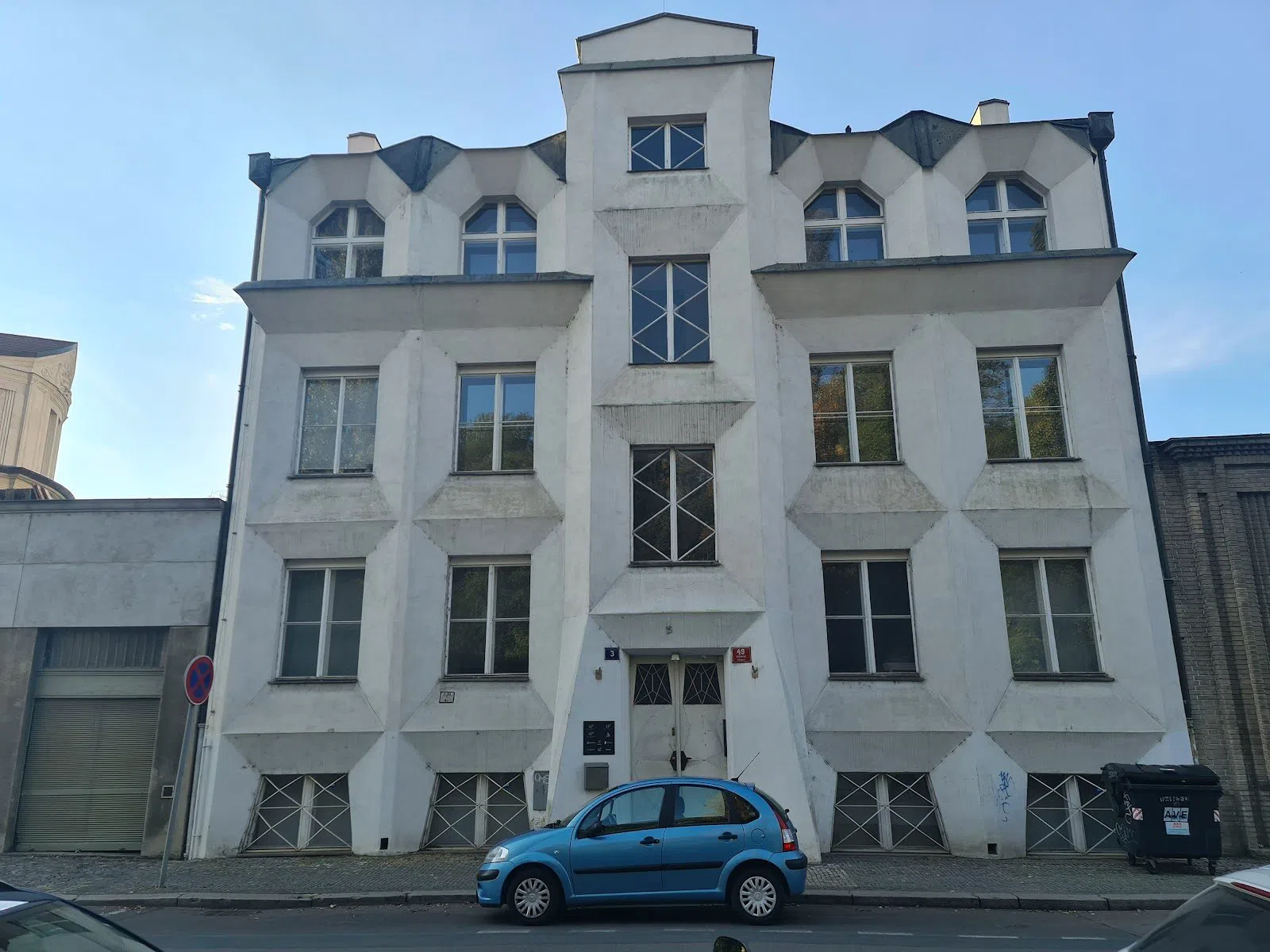
That sharper block is the Hodek Apartment Building (Vyšehrad, Neklanova 30), widely considered Chochol's masterpiece — a corner building in concrete whose diagonals and crystalline surfaces are the showpiece of the whole cluster. It's residential, so this is exterior viewing only from the pavement, but that's all you need. Time it for low sun if you can: when the light rakes across the façade, the diagonals throw the shadows that the design was built to catch, and the difference between a flat midday photo and a late-afternoon one is dramatic.
Complete the set with Villa Kovařovic (Vyšehrad, on Libušina by the embankment), the most famous cubist residence in Prague. It's a private home, so you view it from the street and the garden fence — but the fence is half the appeal, because Chochol carried the geometry all the way down into the garden railings and the plan of the garden itself. Groups can view comfortably from the embankment path, and there's no charge to stand and admire.
Seen in sequence — the tentative Triplets, the assured Hodek block, the total design of the Kovařovic villa — this short walk lets you watch the style find its full voice within a few hundred metres, which no single building can show you on its own.
Should you take a guide?
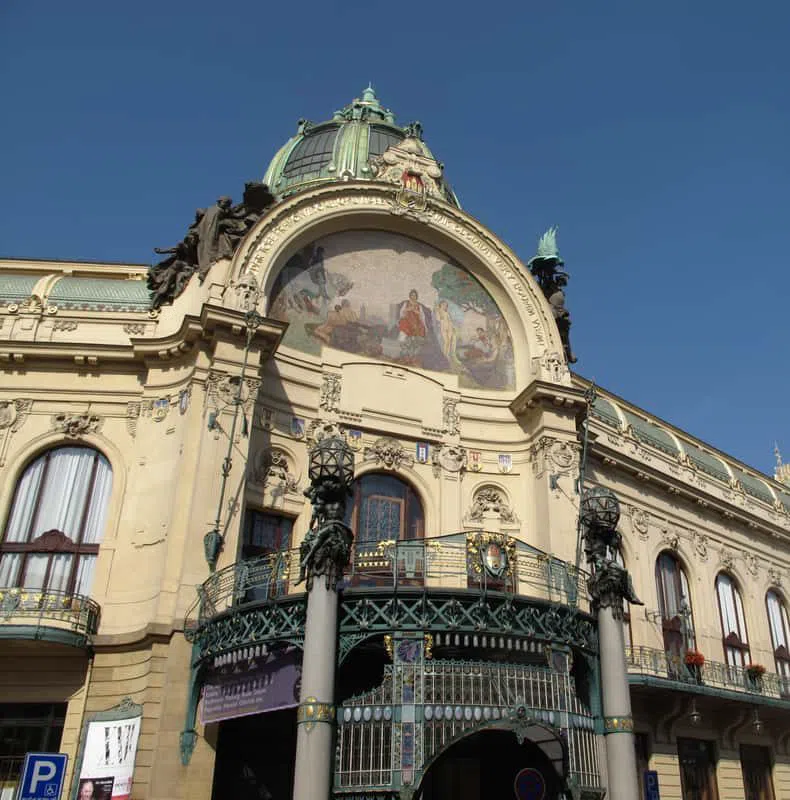
Because cubist Prague is dispersed, largely unlabelled and easy to walk past, a guided walk earns its place for first-timers. The Prague Art Nouveau & Cubism Private Walking Tour is the one entry here built specifically to tie the standalone landmarks together into a coherent story. It's private and made for groups, runs about three hours, and several operators offer it (GetYourGuide, Viator, ToursByLocals) with hotel pickup. Expect roughly €60–100 per person, varying with group size — the more of you there are, the lower the per-head cost on a private booking. If you'd rather self-guide, the geographic order above works perfectly well on foot; the tour mainly buys you the connective narrative and the small details you'd otherwise miss.
Planning notes: pace, groups and couples
A sensible way to build the day is Old Town first — Black Madonna, a coffee in the Grand Café Orient, a look into Kubista — then the New Town leg on the way south (Diamant House, the lamppost, the Bank of the Legions banking hall, the Adria Palace passage), finishing at the Vyšehrad embankment for the Chochol houses in the late-afternoon light. That sequence also happens to follow the style chronologically, from its 1912 debut to its rondocubist afterlife and back to its purest residential form.
Be realistic about which stops suit whom. The interiors — the café and the Kubista shop especially — are cramped and reward couples or pairs; large groups should call the café ahead and rotate through the shop a few at a time. Everything at Vyšehrad, plus the lamppost, Diamant House and the Adria passage, is open street architecture that handles any group size. The bank hall is fine for a small, quiet group but remember it's a live branch, not an attraction.
The practical section
Getting around. All of this is walkable — the full Old Town to Vyšehrad route is comfortable in a day at an easy pace, and it's largely flat until the riverbank. If you want to skip the walk south, Prague's trams and metro are quick and cheap; the embankment houses sit near the river tram lines, and Vyšehrad has its own metro stop on the C (red) line, a short downhill walk to the houses. Buy transit tickets from machines, tobacconists or the PID Lítačka app and validate on boarding.
Cash and cards. The currency is the Czech koruna (CZK); Prague is comfortably card-friendly, so museum tickets, the café and the design shop all take cards, but carry a little cash for small purchases. If you're offered a price in euros, pay in koruna — the local rate is almost always better than the on-the-spot conversion.
Timing. The only stops that keep hours are the Black Madonna museum, the Grand Café Orient inside it, Kubista, and the Legiobanka hall (bank hours only, so a weekday visit is safest for the interior). The rest are outdoor and open any time — which makes early morning good for crowd-free photos of the New Town buildings, and late afternoon best for the Vyšehrad houses, when low sun brings out Chochol's diagonals.
Budget. This is one of the cheaper serious walks in the city. The single ticketed stop, the Black Madonna, is around 150 CZK (about 80 CZK concession); a coffee and cake at the Grand Café Orient is roughly 200–300 CZK; everything else — the lamppost, Diamant House, the bank hall, the Adria passage and every Vyšehrad house — is free to view. If you add the private guided walk, budget the extra €60–100 per person on top. A self-guided day, then, can cost little more than a museum ticket and a good coffee — a rare thing for a landmark this singular.
Before you go
Where should I start a Prague cubist architecture walk?
Start at the House of the Black Madonna in the Old Town — Gočár's 1912 building was the first cubist structure in Prague and now houses the Museum of Czech Cubism, so it sets up the whole story. From there the route runs south through the New Town and down to the Vyšehrad embankment, which also happens to follow the style chronologically.
Can you go inside any of the cubist buildings, or is it all exterior viewing?
Most of the residential landmarks — the Hodek building, Villa Kovařovic and the Cubist Triplets at Vyšehrad — are exterior-only from the pavement. But you can go inside the House of the Black Madonna museum, sit in the Grand Café Orient on its first floor, browse the Kubista design shop, and walk into the original banking hall of the Bank of the Legions during bank hours.
Is the cubist walk suitable for groups?
The outdoor stops — the Cubist Lamppost, Diamant House, the Adria Palace passage and all the Vyšehrad houses — handle any group size easily. The interiors are tighter: the Grand Café Orient has a spiral stair and a small floor, so large parties should call ahead, and Kubista is best browsed by one or two people at a time.
How much does it cost to see Prague's cubist architecture?
It's inexpensive. The only ticketed stop, the House of the Black Madonna, is around 150 CZK (about 80 CZK concession); a coffee and cake at the Grand Café Orient runs roughly 200–300 CZK; everything else is free to view from the street. A private guided walk adds about €60–100 per person if you want one.
Is a guided tour worth it for cubist Prague?
For first-timers, yes. The cubist landmarks are dispersed and almost entirely unlabelled, so it's easy to walk past them. A private Art Nouveau and cubism walking tour (about three hours, roughly €60–100 per person) ties the standalone sites into one narrative. If you'd rather self-guide, the geographic route works well on foot.