The Prague issue
Prague's Communist-Era Metro Art
A self-guided crawl through sixteen stations across all three lines, from a vertigo-inducing escalator to a scrapped Olympic memorial, before one of them disappears behind scaffolding in 2027.

By Sander BakkerThe city beyond the Charles Bridge crush
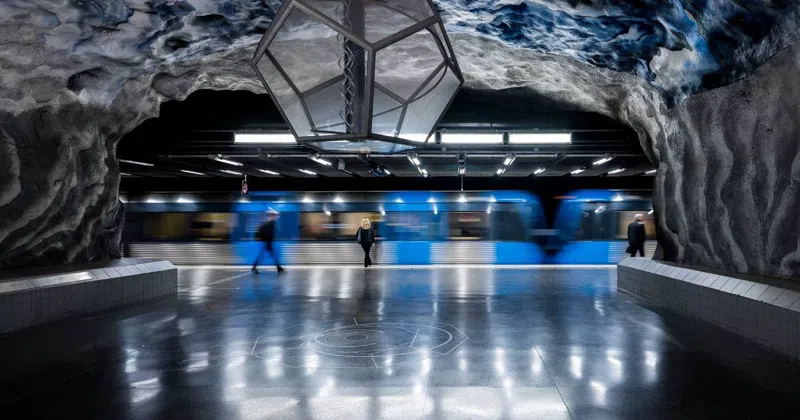
Ride the Prague metro at rush hour and it feels like pure plumbing — fast, functional, over almost before you've read the station name. Ride it slow, off-peak, with your head tilted back, and it turns into something else entirely: an underground gallery of aluminium relief, stained glass, blown-metal cladding and mosaic, built by a regime that wanted its infrastructure to argue for itself. What follows is a self-guided crawl through sixteen stations across all three lines, in the order you'd actually walk them, telling the story of what communist-era Czechoslovakia chose to put underground — in 2026, before at least one of these stations disappears behind scaffolding.
Prague came to the Eastern Bloc habit of monumental metro-building later than Moscow, so by the time the first line broke ground here in the 1970s, the state had a well-rehearsed playbook: deep platforms doubled as civil-defence shelters, and every station got a distinct artistic identity so that no two stops looked interchangeable. What makes Prague's version worth a dedicated afternoon rather than a single photo stop is how much of it survives essentially unaltered — not restored into a museum piece, not stripped out for advertising space, just still doing the job it was built for, forty-odd years on.
Line A, east to west: the spine the regime built first
Line A opened in 1978, and its stations share a family look — vaulted ceilings, deep platforms, and a fondness for cladding that turned engineering into ornament. Riding it end to end is the single best half-day itinerary in this guide, since every stop sits a few minutes apart and none of them require anything beyond the ticket already in your pocket.
Start, or finish, at Skalka (Strašnice), the quietest station on this list and the one worth doing first precisely because nobody else is doing it first. It gets none of the crowds or the camera queues of the line's famous stops, which makes it the right place to slow down and actually look rather than photograph and move on — a useful warm-up before the busier stations ahead.
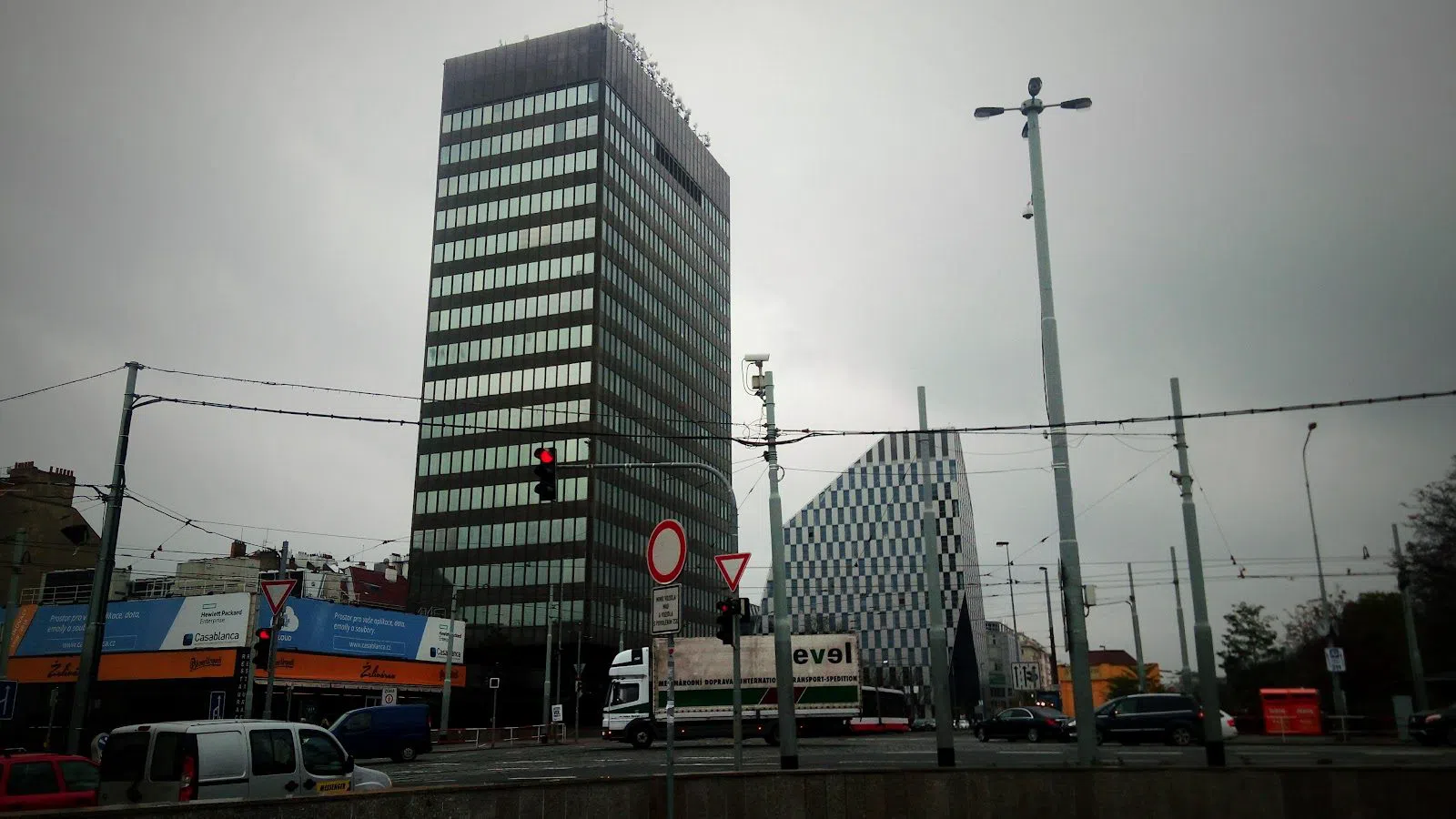
Two stops on, Želivského (Žižkov) is the most complete single ensemble on Line A: a relief, a mosaic and a fountain, all original, all intact, and — usefully for anyone with a camera — all visible from roughly the same spot on the platform. Few of these stations survive as a full set; this one did, and it rewards the ten minutes it takes to actually take it in rather than snap and go.
Jiřího z Poděbrad (Vinohrady) is the restoration story of the group. The colour work here was fully renewed, and it reads today as vividly as it did in 1978 — a rare case where you can point at a Prague metro station and say, with confidence, this is what the whole line originally looked like before four decades of grime and patchwork repairs dulled the rest of it.
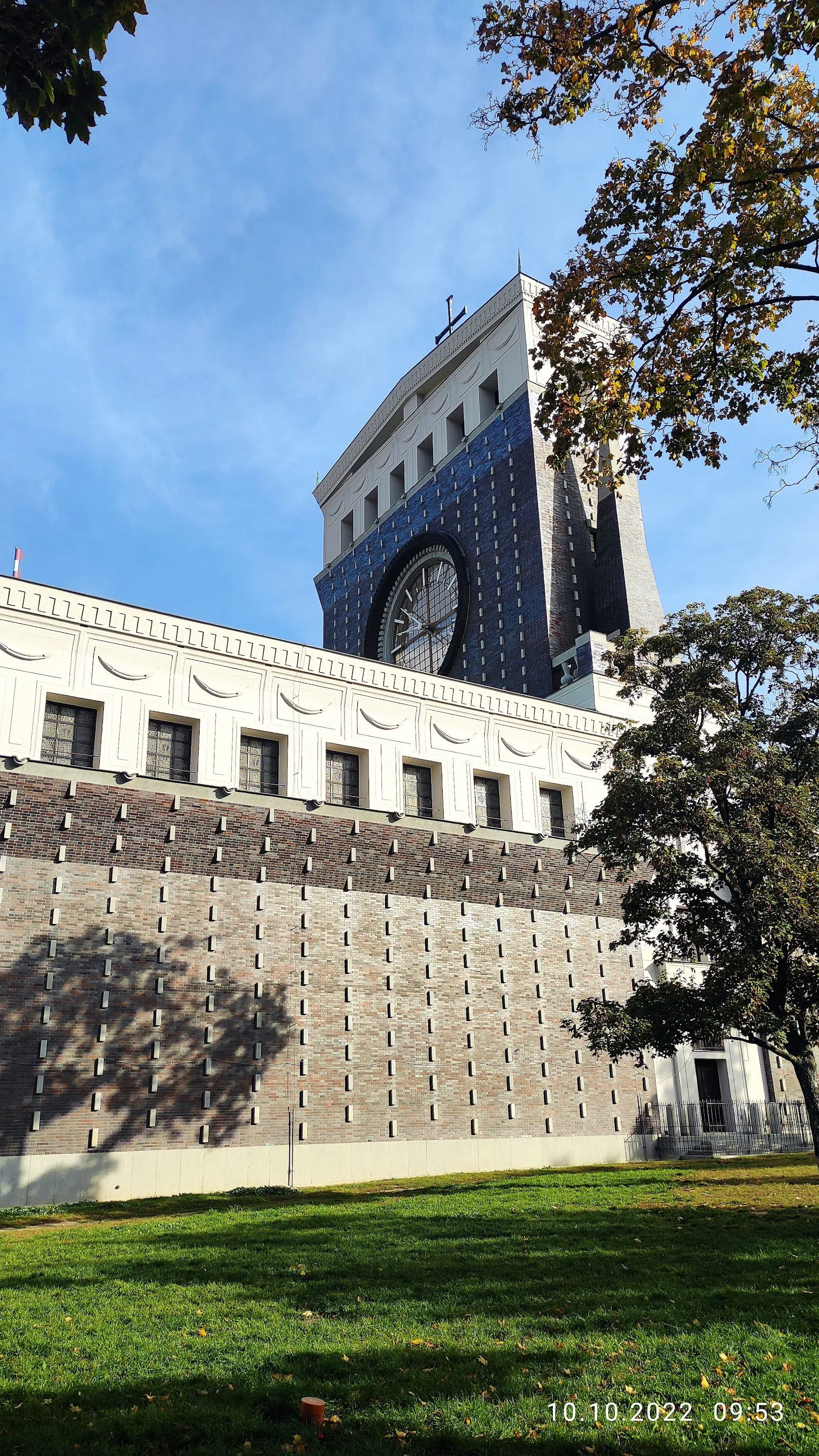
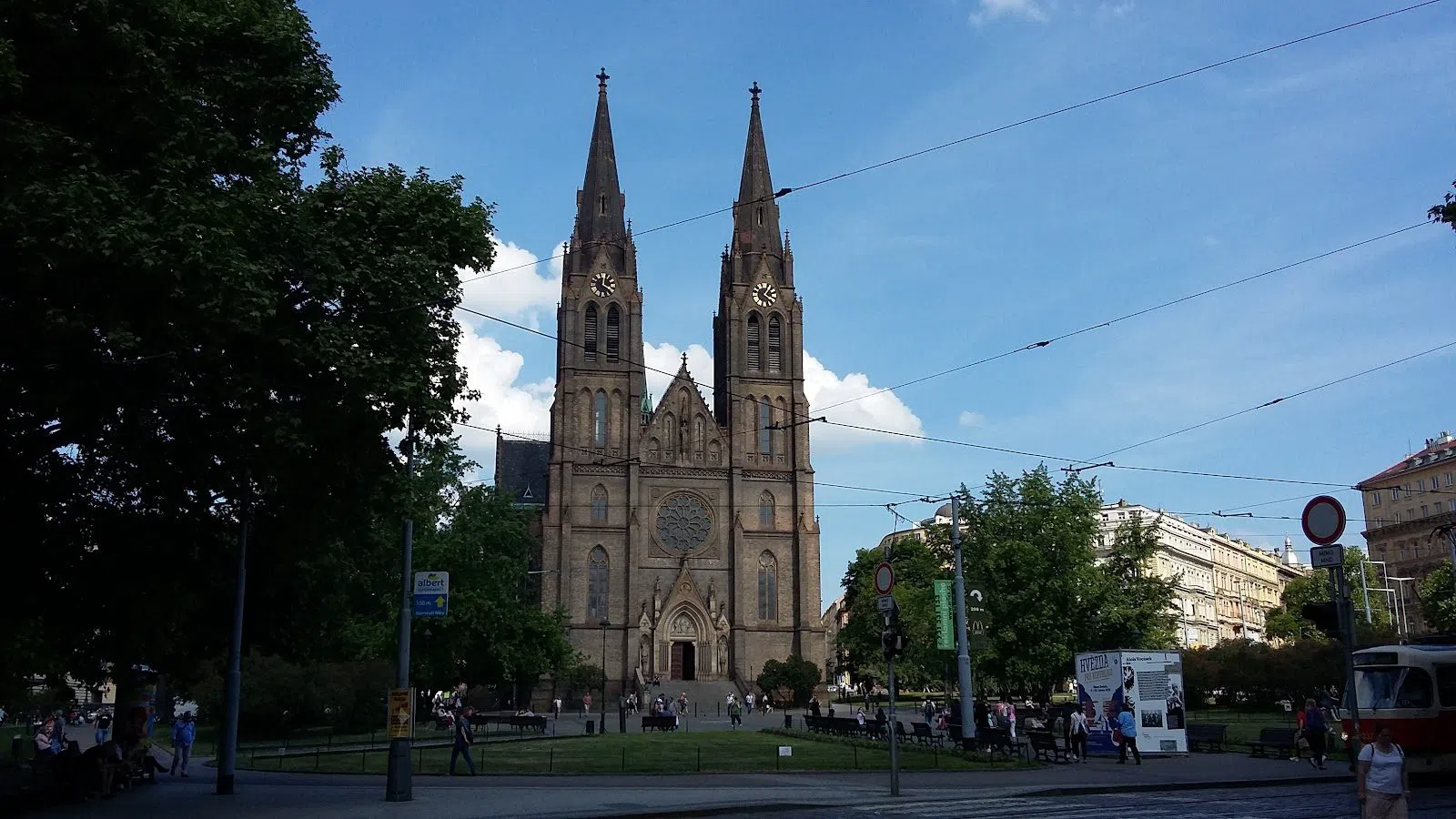
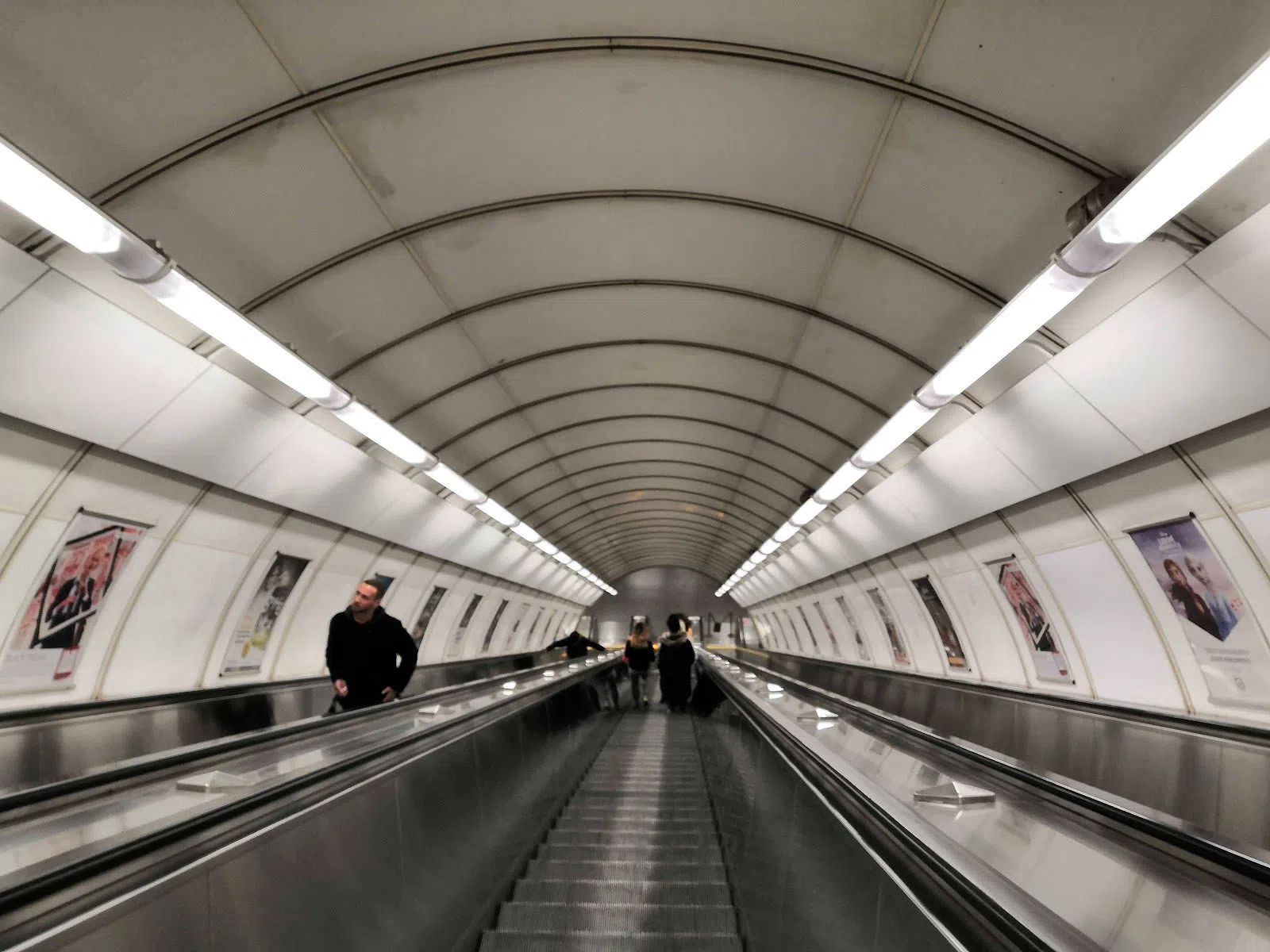
One stop further sits the image most visitors already have in their head without knowing the station's name: Náměstí Míru (Vinohrady), with its blue bubble cladding and an escalator so steep and so long it induces genuine vertigo on the way down. It's the single best "wow" station on the network for a global audience, and deservedly the cover image of this itinerary — but it's also popular, so aim for outside the 7–9am and 4–6pm rush if you want the platform and escalator to yourselves for photos.
Muzeum (Wenceslas Square) is where the itinerary gets more interesting than pretty. This is the interchange between Line A and Line C, and it puts two rival communist-era design languages side by side in one corridor — worth the stop even if you're not continuing south on Line C. Seeing both styles within the same walk, rather than reading about them separately, is the closest this crawl gets to a compressed lesson in how the aesthetic shifted across the system's build-out decades. The corridor gets genuinely busy at peak times, so groups should keep to one side of the walkway rather than spreading across it; couples and solo travellers will barely notice the constraint.
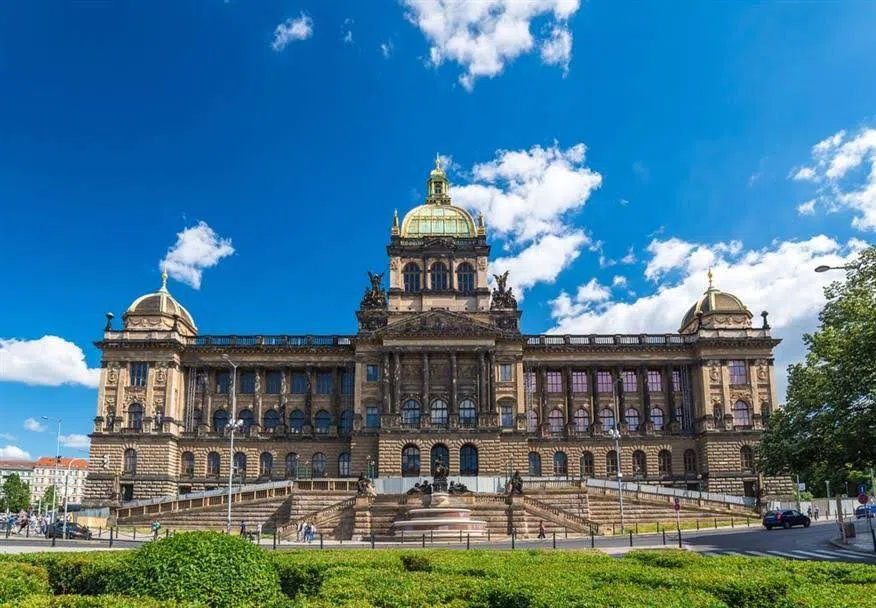
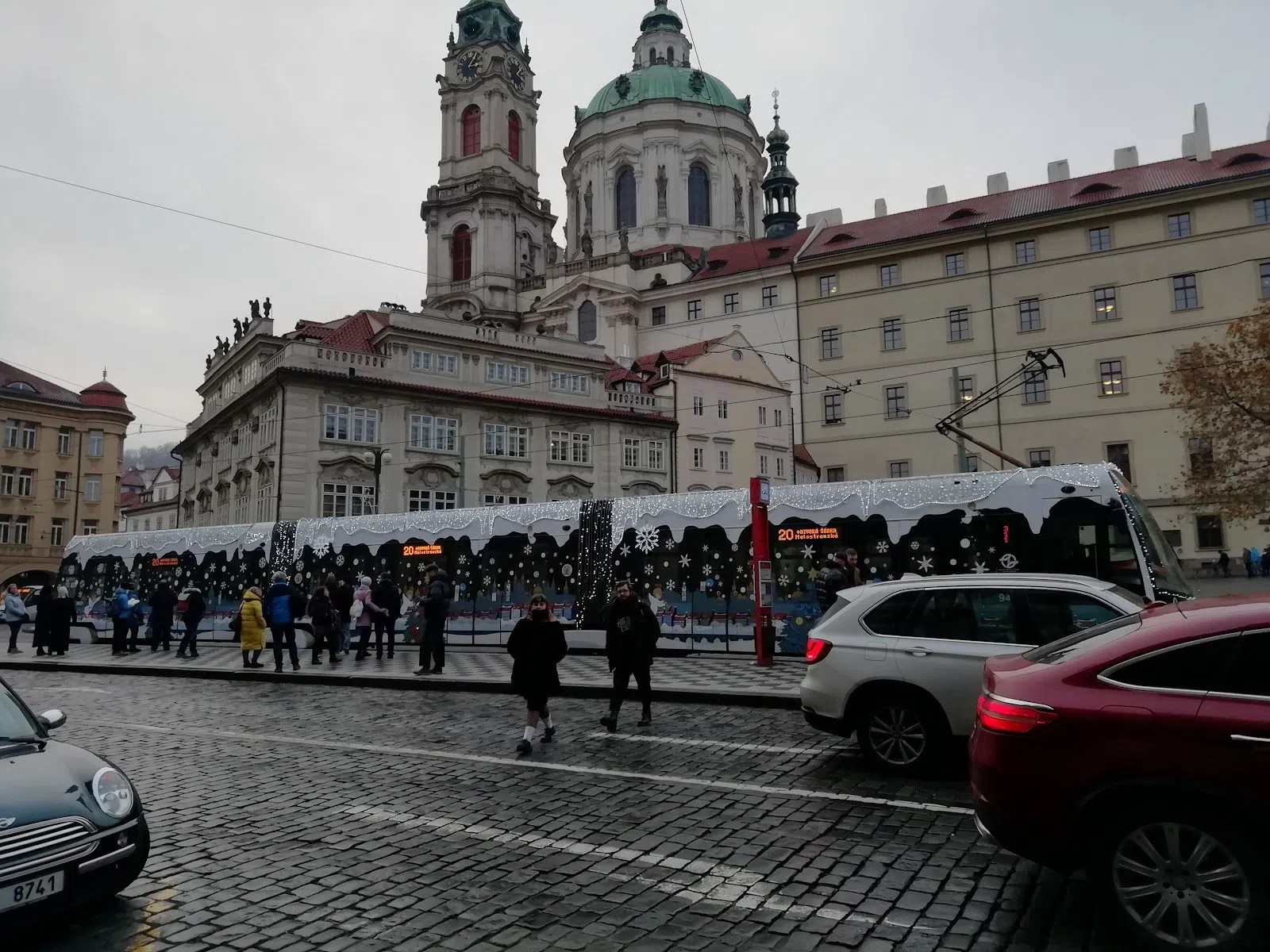
Further west, Malostranská (Malá Strana) tells a different kind of story: the practical one. Line A's engineers had to drive modernist concrete and steel through a district of unbroken Baroque streets, without disturbing the fragile historic fabric above — a good anecdote to have ready as you climb back up into one of Prague's best-preserved quarters and see exactly what they were building underneath.
Hradčanská (Bubeneč, near the Castle) is the one with a deadline attached. Prague City Hall has slated an eleven-month full reconstruction here starting in early 2027, so if you're building a 2026 itinerary, don't push this one to "next time" — next time it may be under scaffolding for the better part of a year.
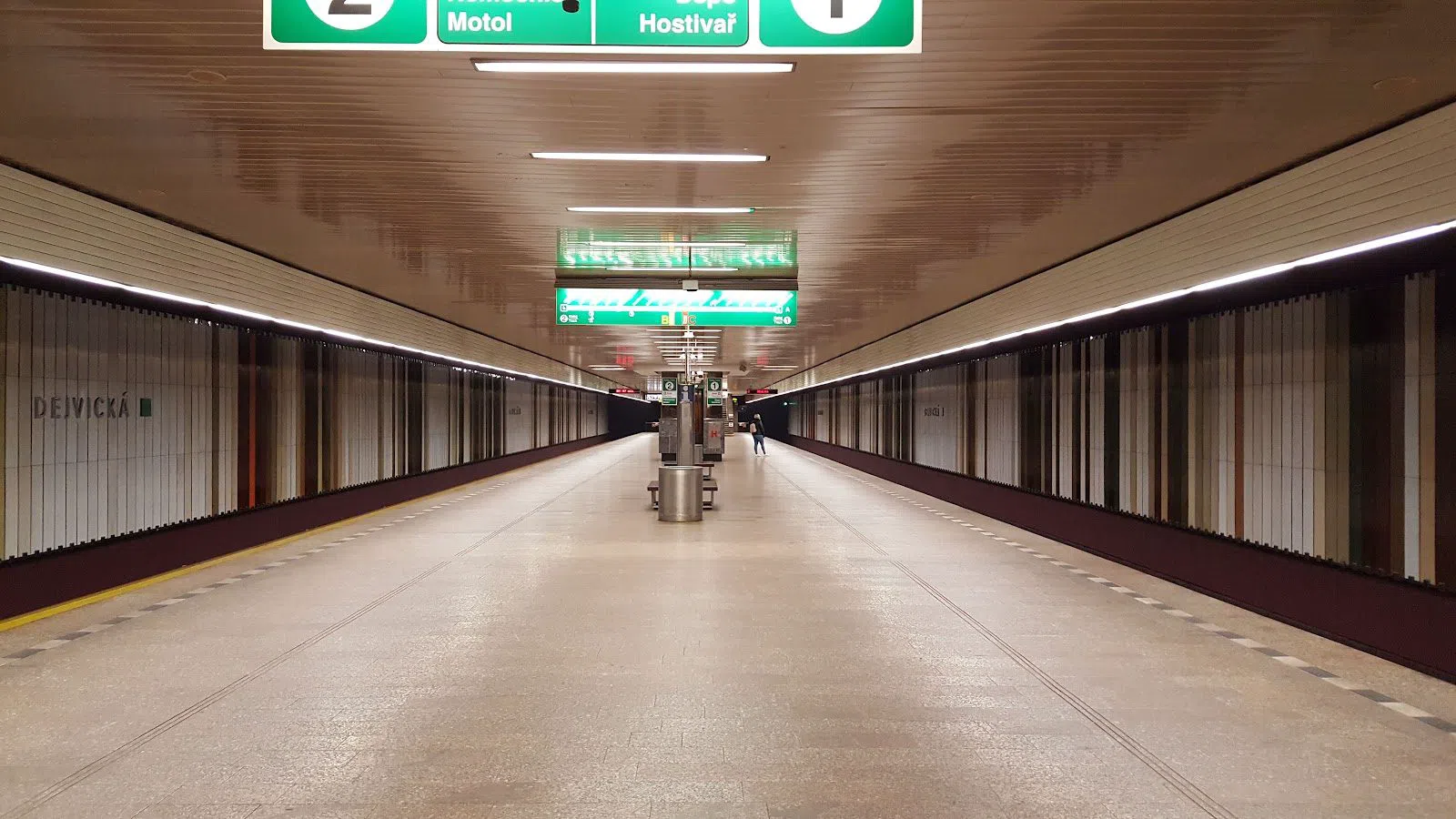
The original line ends at Dejvická (Dejvice), the terminus of the 1978 route and the most openly propagandistic relief still on public display anywhere on the network. It isn't subtle, and that's the point — this is the station to see if you want communist public art at its most direct, before the softer, more decorative work found further along the system.
Plan your Prague trip
Live prices from our booking partners.
Free cancellation on many rooms. We may earn a commission when you book.
Line B: glass, labour, and a station that changed its name
Line B opened through the 1980s and carries a different visual language — more colour, more variety in materials, and, at one stop, a genuinely odd piece of Olympic history.
Anděl (Smíchov) is the busiest interchange on this list, and the only station here where you should actively manage a group rather than just let people wander. Stick to the platform edges, away from the doors, especially with more than four or five people in tow. It's also the best "before and after 1989" story on the network: this station was called Moskevská until the Velvet Revolution, and the renaming is as good a hook for the era's end as the original art is for its beginning.
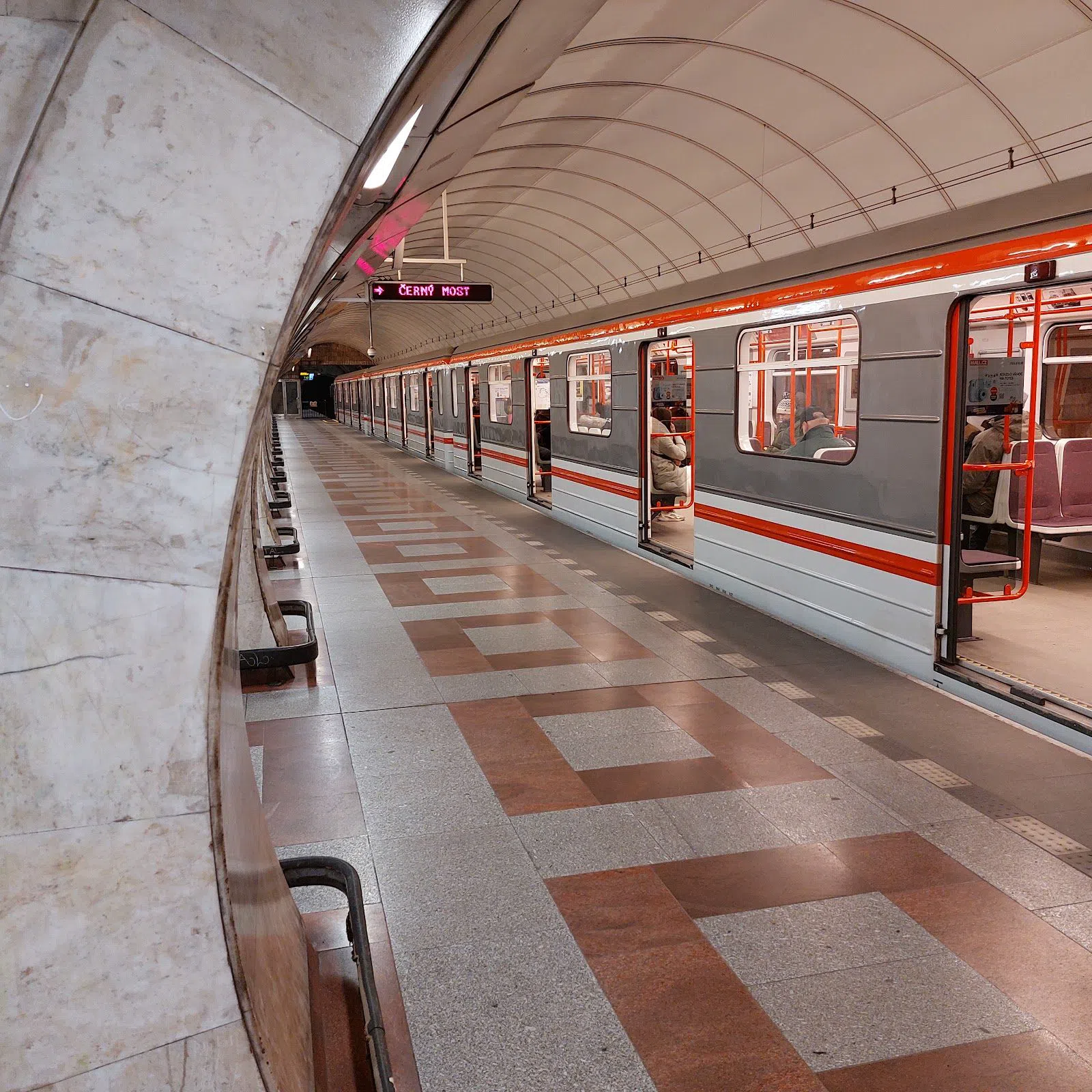
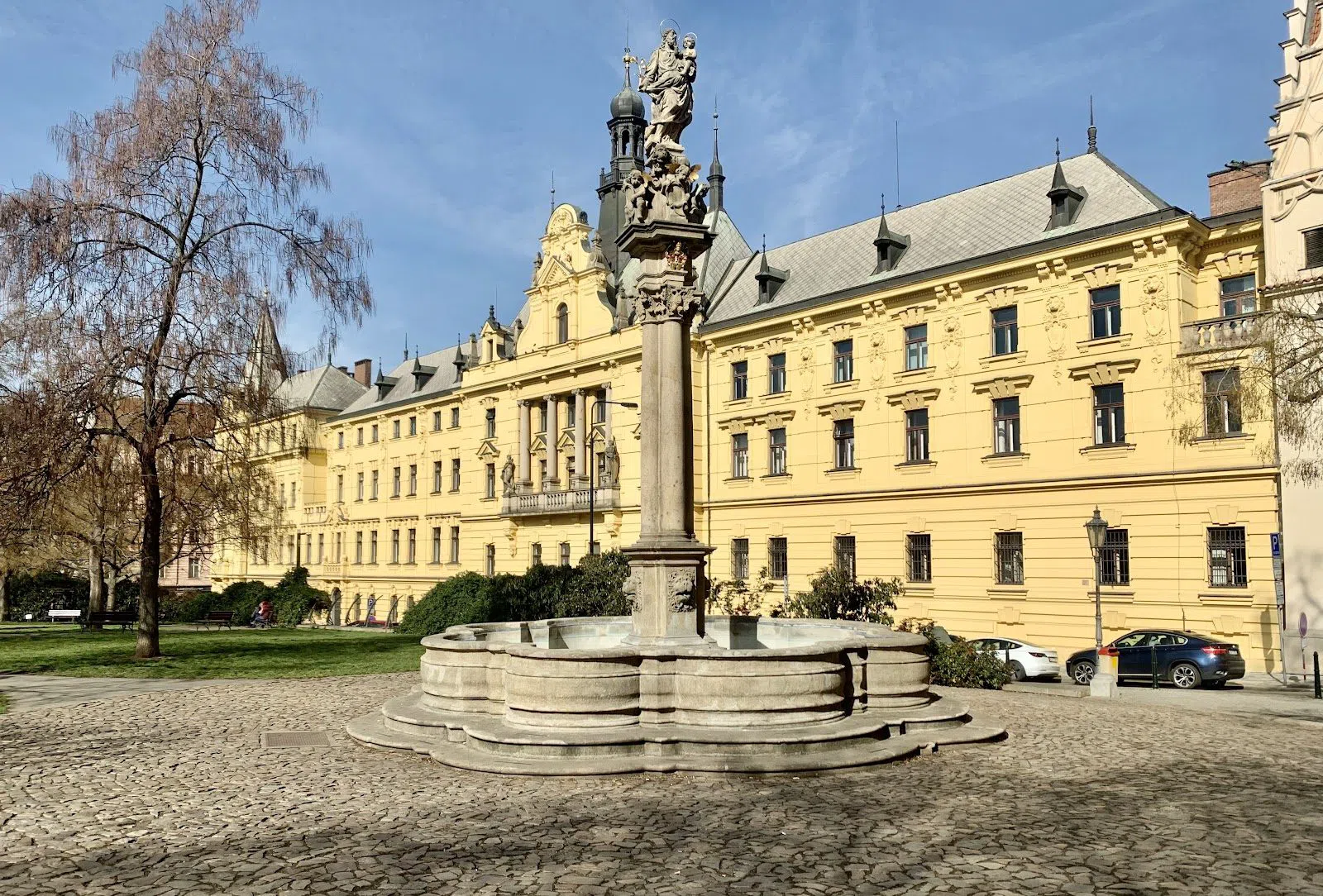
A few stops on, Karlovo náměstí (New Town) is the glassmaking showpiece of the line — proof that this era's underground art wasn't only aluminium panels and concrete relief, but genuine stained-glass craft, executed at a scale you wouldn't expect to find below street level. It's worth a slow pass on both platforms rather than a single glance from the train, since the effect reads differently depending on which direction the light and the trains are moving.
Florenc (on the border of Karlín and New Town) is architecturally the most unusual stop in the guide: a rare two-tier interchange where Line B and Line C meet on different levels, letting you compare two distinct eras of station design without leaving the building. It's worth pausing on the connecting stairs rather than rushing straight through to the next train.
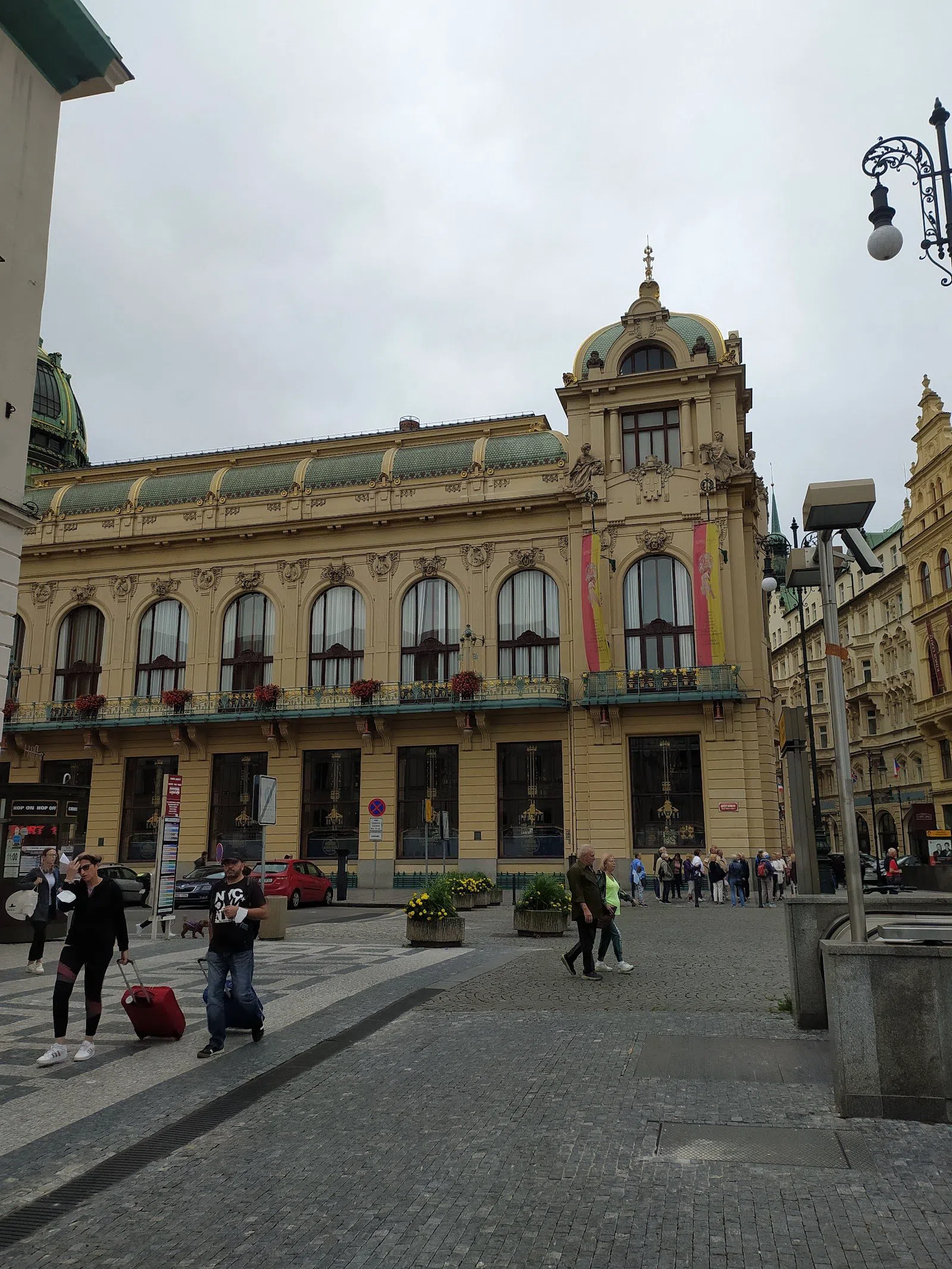
One stop east, Invalidovna (Karlín) has the best story in the whole piece and the least visual drama to go with it: a memorial, tucked into an otherwise ordinary station, to a Prague Olympic bid that was scrapped before it ever happened. It rewards readers who like their travel trivia genuinely obscure rather than merely repeated from the last guidebook.
The line's starkest imagery is at Palmovka (Libeň) — industrial-labour iconography, workers and machinery rendered with none of the softness found at Jiřího z Poděbrad or Karlovo náměstí. It's a useful counterpoint if you're building a mental gallery of the era's range: this is communist public art at its most muscular and least decorative, and worth seeing precisely because it doesn't try to charm you.
Line C: the river line, and where the crawl ends
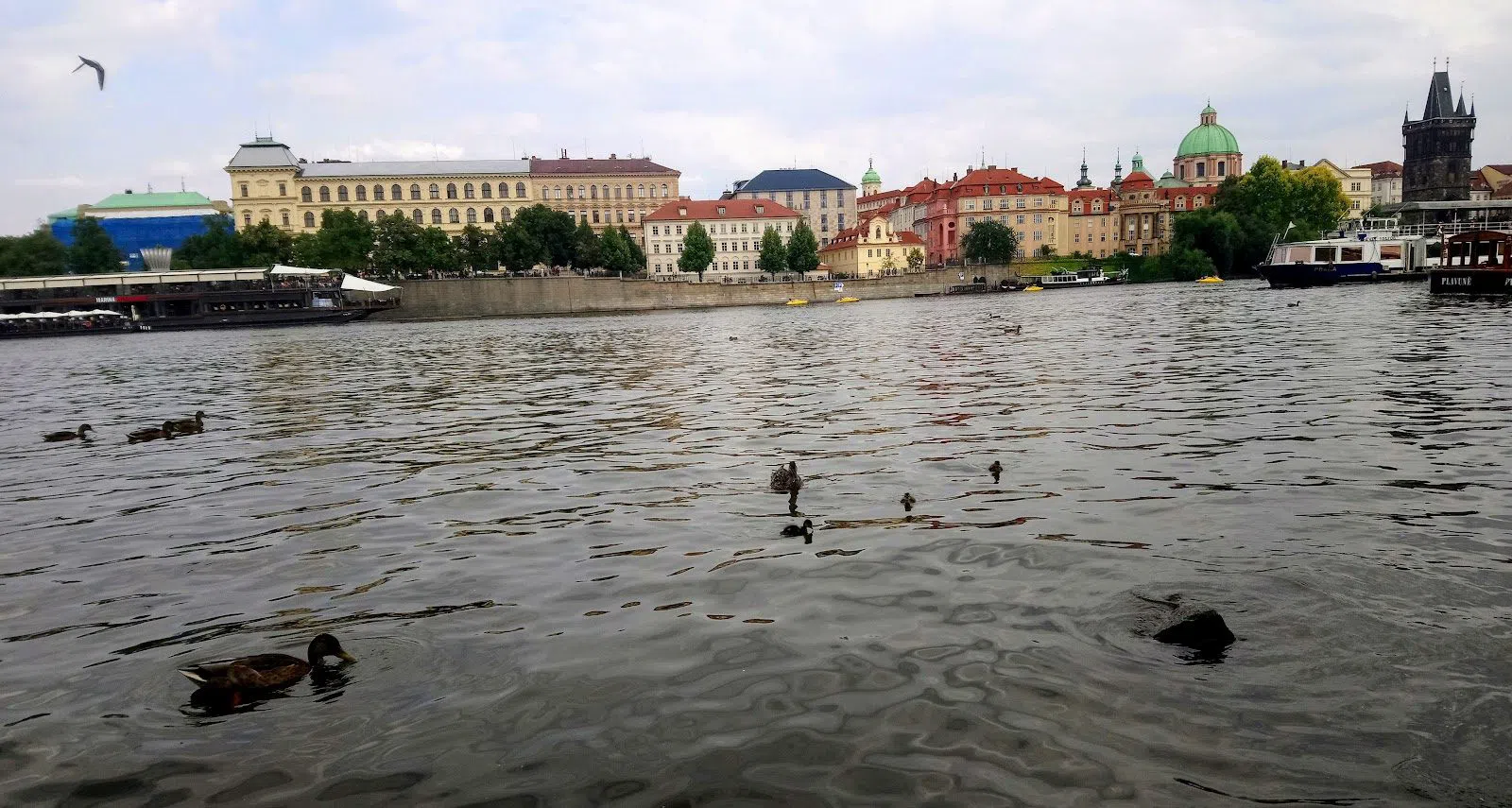
Line C runs north–south along the Vltava's east bank, and its stations lean into that geography rather than fighting it. Vltavská (Holešovice) is the clearest example — a river-themed piece that ties the underground art directly back to the water flowing above street level, and a good narrative beat if you're walking the crawl in one continuous outing.
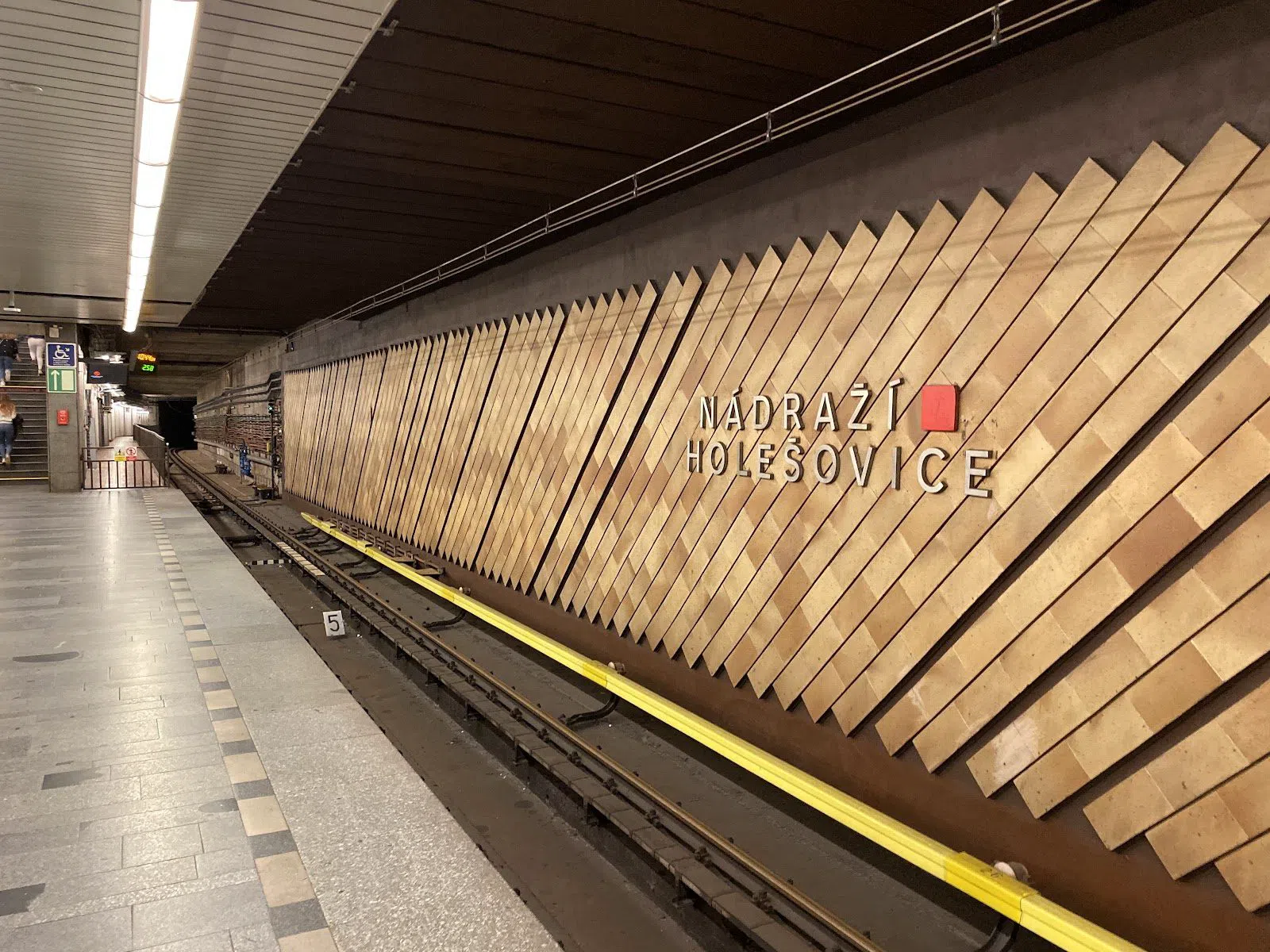
The practical last stop on a self-guided day is Nádraží Holešovice (Holešovice), which doubles as the interchange for mainline trains. It isn't the most dramatic station on this list, but it's the sensible place to end: step off the metro, look up, and you're already at the station you'd need for a train onward, out of the city or in from the airport.
Háje: the finale
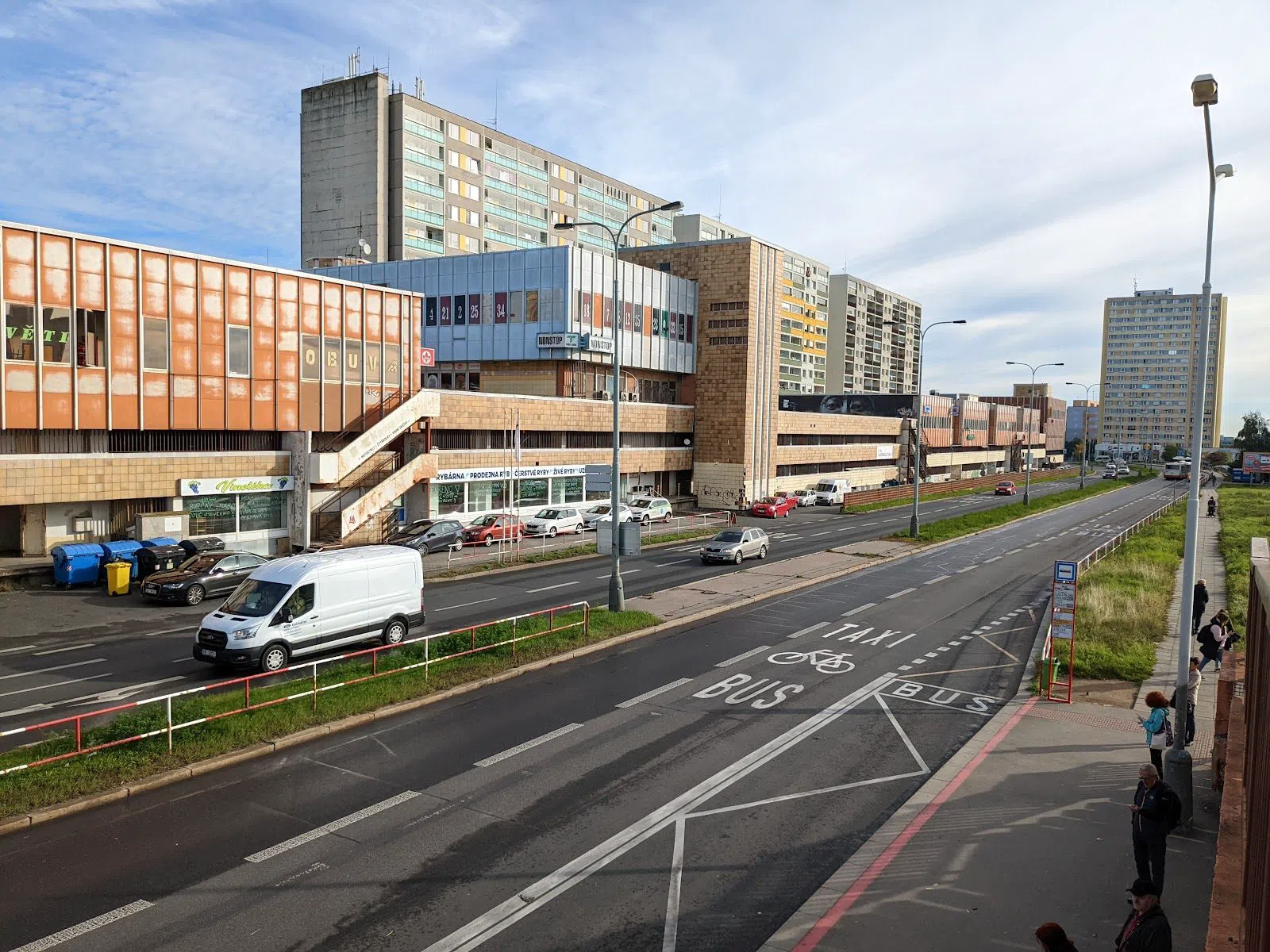
If you want a single station to end the whole story on, make it Háje (Jižní Město, Prague 11), a longer detour south but worth the trip on its own terms. It's the terminus of the line's final 1980 extension, and its imagery is the most literal Space Race propaganda still on display anywhere in the system — a fitting place to close out an itinerary that opened with a regime's confident, decorative optimism at Jiřího z Poděbrad and ends with its most unguarded ambition.
Planning the crawl: transport, cash, timing, budget
You don't need to book anything for this itinerary — every station on this list is public transit infrastructure, open to anyone holding a valid ticket, and none of them charge admission or restrict group size beyond ordinary platform courtesy. A single Prague transport ticket costs around CZK 30 (roughly €1.20) and covers transfers between metro lines within a fixed window, so one ticket can realistically carry you through several stations on this list in a single outing. If you're doing the full crawl across a day, a 24-hour ticket works out cheaper than buying singles station to station — buy it from a machine at any station, card and cash both work, rather than trying to source one in advance.
Realistically, split the crawl over time rather than forcing all sixteen stations into one day. Line A alone makes a comfortable half-day: eight stops, a straight line, and an easy walk back up into daylight at either end. Line B and Line C together, plus the detour to Háje, fill a second half-day or a slower full one. Either way, treat this like any working transit system rather than a gallery — trains run every couple of minutes off-peak, doors don't wait for a photo, and a tripod on a platform edge will get you moved along by staff faster than anywhere else on this list.
Timing matters more than money here. Weekday rush hour, roughly 7–9am and 4–6pm, turns even the quieter stations into a crowd to shoot photos around, and pushes the two busiest interchanges on this list — Anděl and Muzeum — into genuinely tight corridors. Outside those windows, and on weekends, you can linger on a platform without getting in anyone's way. Large groups should default to off-peak regardless of which stations are on the itinerary; couples and solo travellers have far more flexibility and can work around a single busy train.
Budget for the crawl itself is close to nothing — the art is free, the only cost is transport, and a full day covering all three lines shouldn't run past the price of a single 24-hour ticket per person. Spend the money you save on where you sleep instead: browse the Prague hotel search for a base near one of the Line A stops, since that line covers the highest concentration of stations on this list and makes for the easiest walk-and-ride day. For the rest of the city above ground, once you've resurfaced, the Prague guide covers what to see next.
Before you go
Do I need a special ticket to see Prague's metro art?
No — every station in this guide is open to anyone holding a standard Prague public transport ticket, currently around CZK 30 (about €1.20). There's no separate admission, booking, or door policy for the art itself since it's all public transit infrastructure.
Which station should I see first if I only have an hour?
Náměstí Míru, for the blue bubble cladding and the vertigo-inducing escalator. It's the single most striking station on the network, sits on Line A alongside most of the other stops on this list, and works well solo or in a group.
Is this itinerary suitable for large groups?
Mostly, yes — all sixteen stations are public infrastructure with no group-size restriction. Keep large groups to the platform edges at Anděl and to one side of the corridor at Muzeum, since both get genuinely tight during rush hour; the rest of the list is easy for any group size off-peak.
Is there a station I should prioritize seeing before it changes?
Hradčanská — Prague City Hall has scheduled an eleven-month full reconstruction there starting in early 2027, so 2026 is the year to see it as originally built, before the station disappears behind scaffolding.
How long does it take to see all sixteen stations?
Realistically a full day split into two halves: Line A's eight stations make an easy half-day loop, while Line B, Line C and the detour to Háje fill a second half-day or a slower full one. A 24-hour transport ticket covers the whole route for around CZK 30 per single fare equivalent.