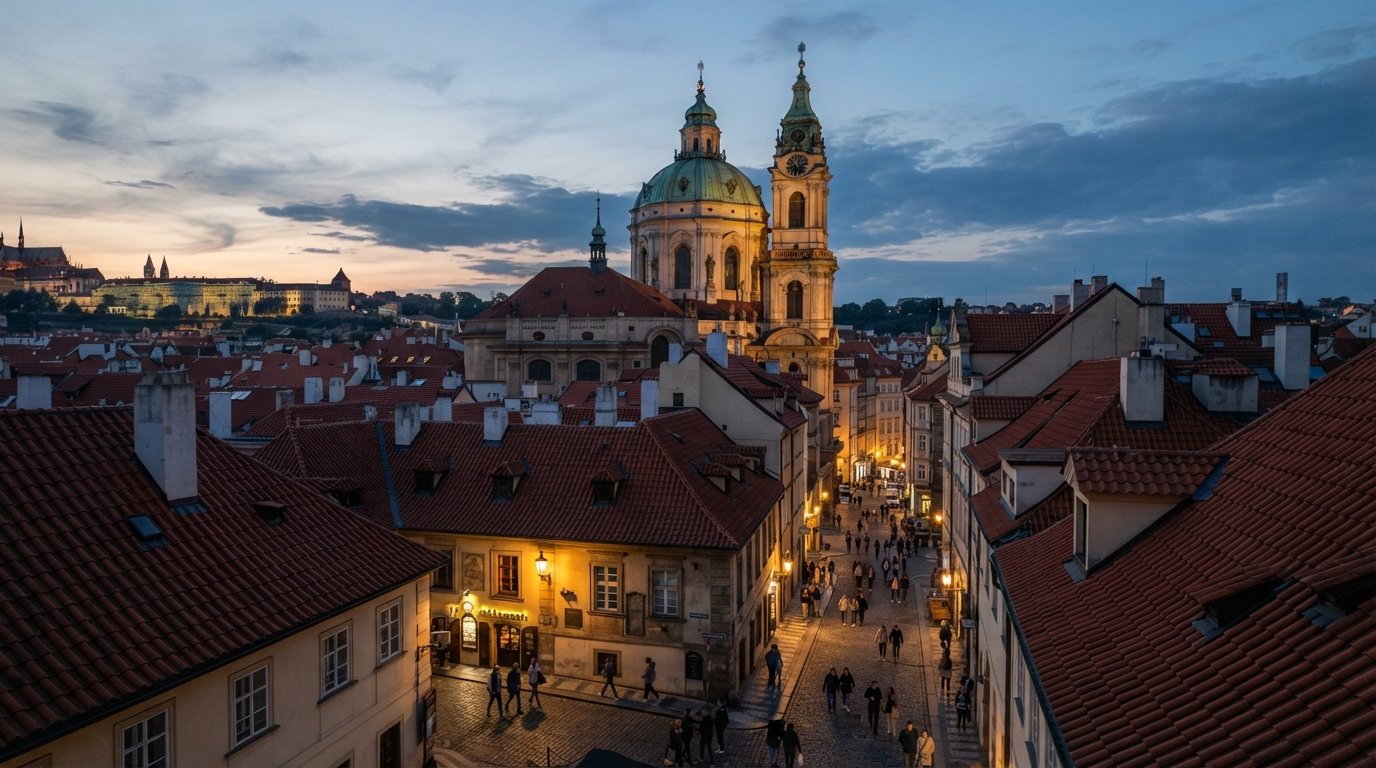
Prague neighbourhood guide
Malá Strana, Prague: baroque calm below the castle
A walk through Prague’s Lesser Town, where castle views, garden walls, and the last decent lunch before the bridge crowd make the city slow down.

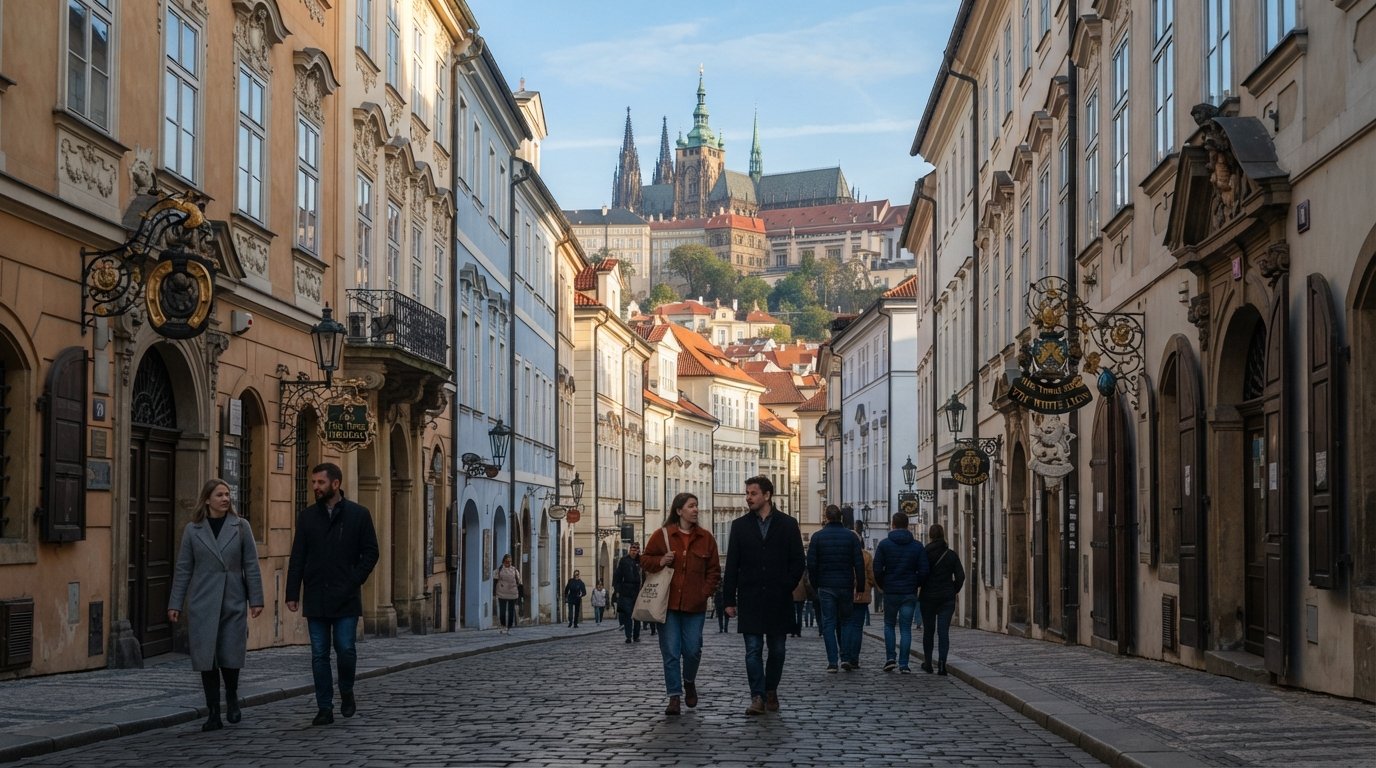
Cross the Charles Bridge from the Old Town and the noise drops away almost at once. Within a hundred metres the suitcases thin out, the pace loosens, and Malá Strana starts doing what it has done for centuries: sitting below the castle like a carefully kept stage set, with people actually living in it. The baroque facades are not shy about their intentions. Nor is the hill. It rises in cobbles and setts toward Prague Castle, with Nerudova and Thunovská pulling you uphill past carved house signs, embassy doors and the occasional courtyard that seems to have forgotten the rest of the city exists.
What Malá Strana is known for
This is Prague’s Lesser Town, though “lesser” is only a matter of map scale and not of atmosphere. The district sits directly beneath Prague Castle and St. Vitus Cathedral, so the skyline is never neutral. You look up for a living. You also look sideways, because the good things here are often hidden just off the obvious route: a frescoed ceiling, a peacock in a wall garden, a canal with a name that sounds like a joke made by a medieval cartographer.
The neighbourhood’s centre is Malostranské náměstí, a square split by the vast green dome of the Church of St. Nicholas. It is one of those churches that does not enter politely. It arrives in full baroque costume, with a bell tower you can climb for a rooftop view over the district. Around it, the square still feels like a place where people meet rather than merely pass through, though the surrounding lanes can be busier than the square itself. That is Malá Strana in a sentence: the main drag is often the least interesting part.
Down by the river, the John Lennon Wall on Velkopřevorské náměstí keeps its peace-and-freedom graffiti, and has done so since the 1980s. It is free and open around the clock, though if you want to see it without the full choreography of tourist selfies, go before 9am. Later in the day it becomes a kind of civic theatre, which may be the point, but it is less moving when you are standing behind three people negotiating lens flare.
Then there is Kampa Island, separated from the mainland by the narrow Čertovka canal, Prague’s own “Little Venice”. The island holds a riverside park, David Černý’s crawling bronze Babies, the illuminated yellow penguins on the embankment, and Museum Kampa, whose collection centres on abstract pioneer František Kupka. Above the quarter rises Petřín Hill, a wooded ridge with the Eiffel-styled Petřín Lookout Tower. The effect is not subtle. Gardens, baroque churches and castle views are packed so tightly together that the district feels almost edited down to essentials.
Where to eat & drink
Malá Strana is not where you come to improvise dinner at midnight. It is where you eat well, earlier than you planned, and then wander out into the evening with a sensible amount of wine. The best places know their role in the neighbourhood and do not try to out-shout the view.
For an honest Czech lunch a few steps from the Charles Bridge, Lokál U Bílé kuželky is the dependable answer. It pours tank-fresh Pilsner Urquell and serves svíčková, tripe soup and fried cheese without fuss, which already puts it ahead of a fair number of places on the surrounding streets. It is the Malá Strana sibling of Ambiente’s famous Lokál on Dlouhá, and it earns its keep by staying steady where easy money could tempt others into laziness. Book ahead. That is the price of competence near the bridge.
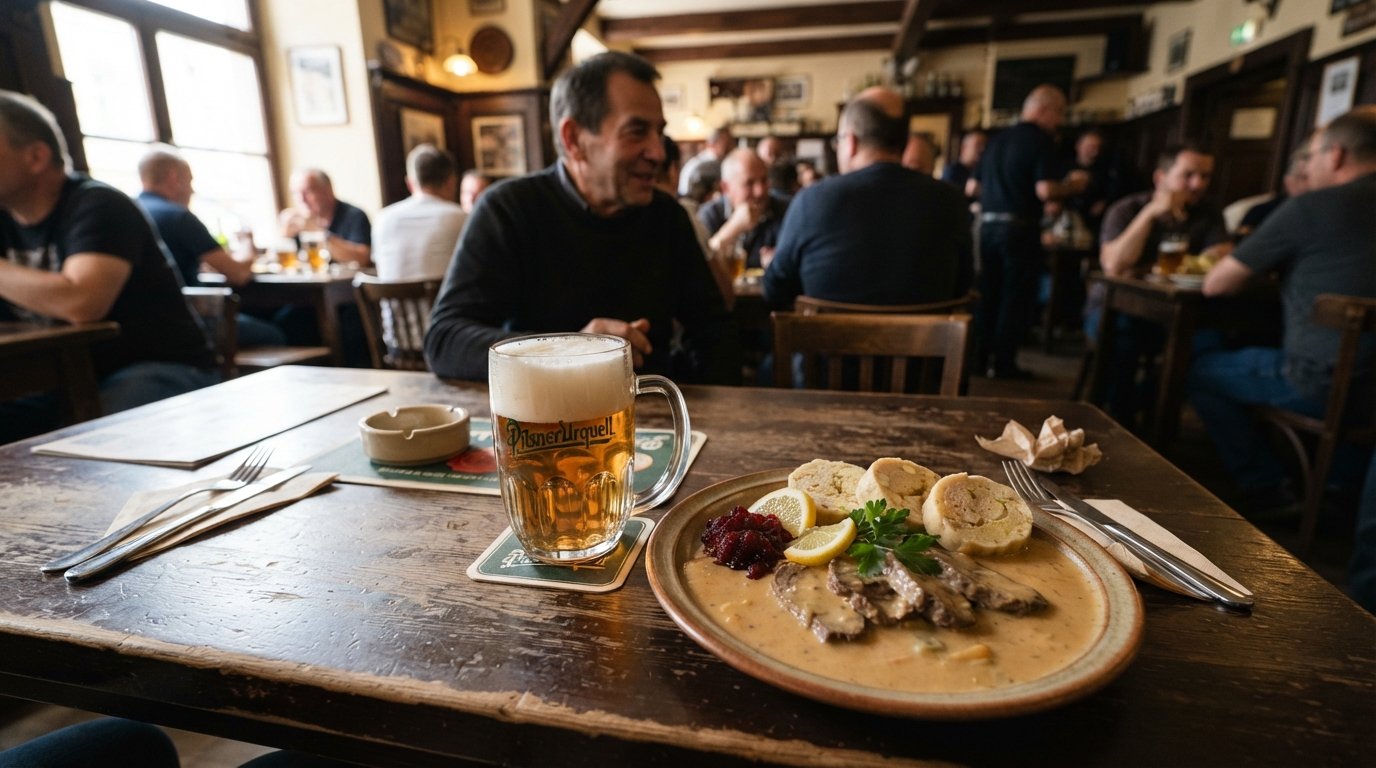
On Malostranské náměstí, Restaurace U Mecenáše does the kind of Czech cooking that belongs to a candlelit vaulted room: game, duck and dumplings, the sort of food that makes sense after a cold walk and a long look at the castle. It has fed diners on the square for generations, which in this district is both a compliment and a warning. Old rooms can coast. This one does not seem to.
For breakfast, or for the sort of afternoon pastry that quietly turns into a second coffee, Café Savoy on Vítězná remains one of Prague’s grand First-Republic cafés. It is famous for its opulent breakfast under a restored neo-Renaissance ceiling and for its own bakery, which is exactly the kind of thing you want a café to take seriously. The room has the calm of a place that has seen more than one generation arrive slightly underdressed for its own plans.
At the other end of the scale, Cukrkávalimonáda on Lázeňská is tiny, romantic and named after a children’s counting rhyme: sugar, coffee, lemonade. It serves homemade pasta, sandwiches and sweet or savoury pancakes beneath painted Renaissance beams. The name is a bit of a wink; the room is not. It is one of those places where a narrow interior and a sensible menu do all the work.
For something more intimate still, U Malé velryby on Maltézské náměstí seats only about sixteen and changes its entirely gluten-free menu daily, with seafood flown from France. The room is small enough to make a reservation feel less like caution and more like common sense. And if the evening wants to become an occasion, Kampa Park sits right on the Čertovka under the bridge arches, with special-occasion fish and wine and a Devil’s-Stream view that is hard to argue with, even if you suspect the bridge above is doing half the marketing.
Going out
Malá Strana is deliberately not the place for clubs. That is not a flaw; it is a design principle. The party quarters are across the river in the Old Town and out in Vinohrady. Here, evening means wine, beer with a view and the castle lighting up above the rooftops like a civic lantern.
Ikona Wine Bar on Míšeňská is the neighbourhood’s low-key star. It leans Italian, with a list that runs from Piedmont to Sicily and a few German Rieslings in the mix, plus cold cuts and cheese. The street terrace near the bridge catches the sunset, which is the kind of small urban privilege people pretend not to care about until they have one. This is where Malá Strana gets on with the business of being romantic without making a speech about it.
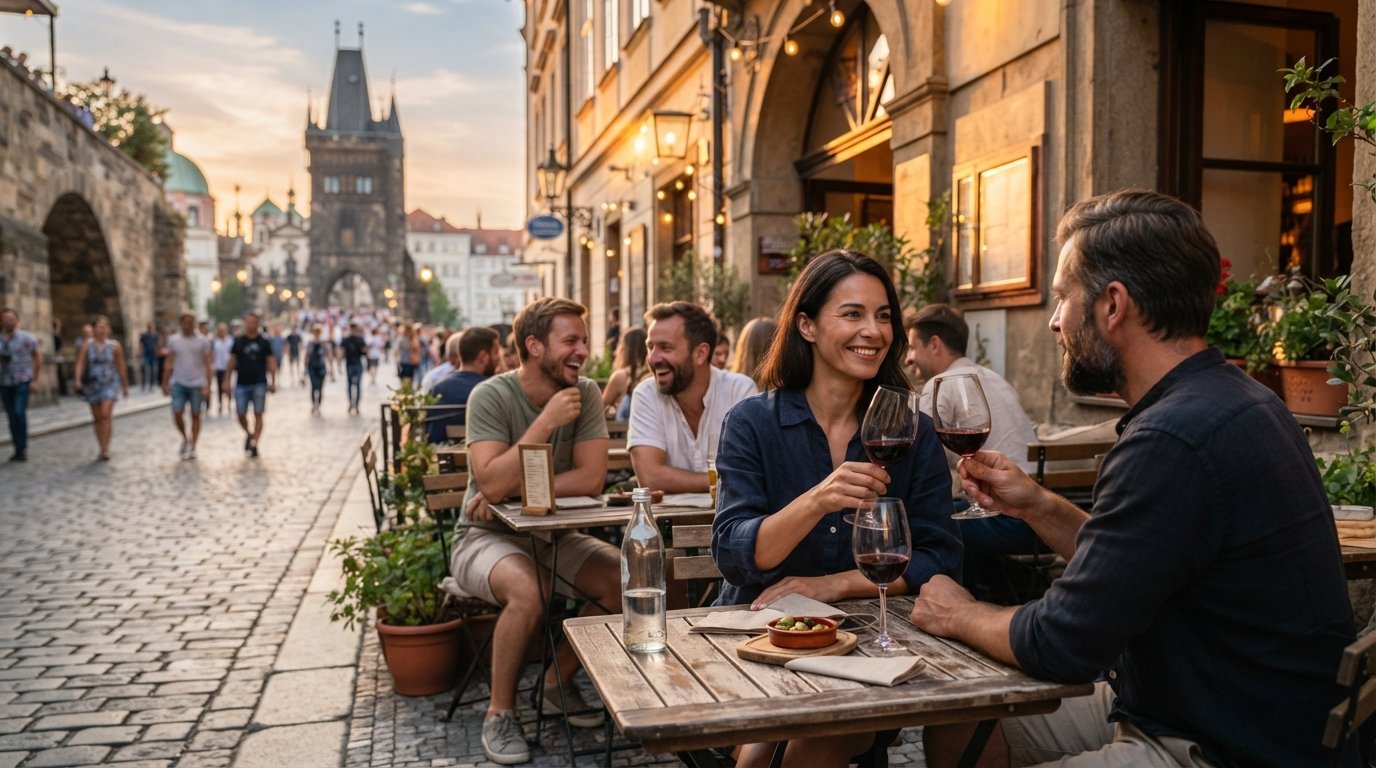
If you want a beer with genuine altitude, head up to Klášterní pivovar Strahov, the monastic brewery just above the district by the castle at Strahov. It pours its own unfiltered St. Norbert amber, dark and IPA in a courtyard garden that opens in summer. There is something pleasingly unshowy about drinking monastery beer above one of Europe’s most photographed quarters. Prague has a talent for making the sacred and the practical share a bench.
And the simplest nightcap is free: cross back onto the Charles Bridge or climb to a garden terrace after dark, when the tour groups have gone and the castle glows gold above the roofs. It is the sort of place that makes you lower your voice without knowing why. That may be the last intact urban luxury.
Things to do / what to see
Start high. Prague Castle and St. Vitus Cathedral are directly above the district, and they repay the early start. Before roughly 9am, the courtyards are calm and the coach groups have not yet arrived in formation. The castle complex is so vast it can feel like a city with a gate, but the approach from Malá Strana gives it drama rather than scale for scale’s sake.
Back down in the district, climb the tower of the Church of St. Nicholas for a close-up over the rooftops. From there the red roofs, domes and lanes of Lesser Town arrange themselves into a view that is both obvious and still worth the effort. The church itself is one of the area’s great baroque signatures, and the tower is the reminder that Prague likes its panoramas with a little vertical discipline.
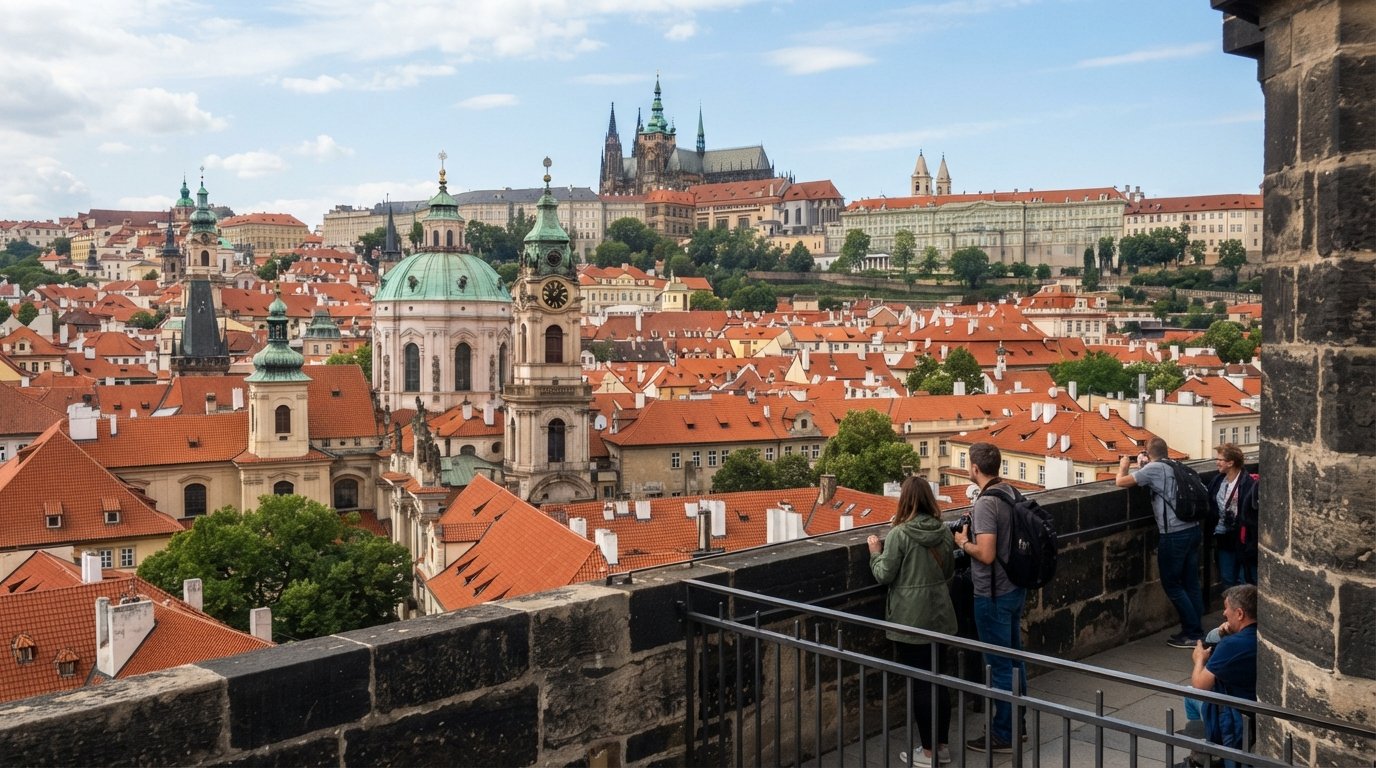
Then trade the crowds for the gardens. The Wallenstein Garden, behind the Senate palace, is free in season and full of bronze statuary, a grotto wall and peacocks. It is one of those places where the city suddenly decides to be quiet on purpose. Vrtba Garden off Karmelitská is smaller, terraced and Italianate, open roughly April to October, and it feels like a baroque secret tucked into the Petřín slope. Vojan Gardens on U Lužického semináře is quieter still: a free, walled refuge where resident peacocks fan their tails and the noise seems to have been left at the gate.
Kampa Island deserves an unhurried loop. The riverside park, the David Černý Babies, the yellow penguins on the embankment and Museum Kampa’s Kupka collection give the island a mix of whimsy and seriousness that suits Prague better than it should. A few minutes away, the John Lennon Wall still draws its stream of signatures and slogans. It is free, open all day and all night, and quietest before 9am, when the paint still feels like a private argument.
Above all of this sits Petřín Hill, the big green lung over the quarter, topped by the Petřín Lookout Tower. The panorama is the reason people keep climbing it, though at the moment it is worth noting that the Petřín funicular from Újezd is closed for reconstruction and is not expected back until summer 2026. So yes, it is a walk up for now. Prague does like to make you earn the view.
Don’t miss in Malá Strana (Lesser Town)
The manicured terraced gardens of the Wallenstein Palace.
The towering dome and bell tower of the Baroque St. Nicholas Church.
The peaceful, canal-side paths of Kampa Island.
Shopping & markets
Malá Strana is not a high-street shopping district, and that is part of the relief. The retail here is small, specialist and browsable. You do not come to tick boxes; you come to drift.
Shakespeare and Sons on U Lužického semináře 10 is the standout: the largest independent English- and French-language bookshop in Prague, with shelves and reading nooks that make it as much a place to linger as to buy. It is a civilised answer to the question of what to do between lunch and the late afternoon light. The bookshop has the right scale for the neighbourhood: intimate, a little labyrinthine, and happy to let you stay longer than planned.

The rest of the district trades in things you carry home rather than fill a suitcase with: Bohemian garnet jewellery, marionettes and puppets, Czech glass and crystal, antiquarian prints. You will find them in the little shops threaded along Nerudova and around Maltézské náměstí and Lázeňská. Prices near the Charles Bridge and along the main castle-bound streets carry a tourist premium, so it pays to step one lane back. That is not cynicism; it is basic urban navigation.
There is no permanent produce market in the quarter. For that, you head over the river to Havelská in the Old Town. Malá Strana’s appeal is different: galleries, bookshops and craft studios between the palaces, with enough room to notice what you are looking at.
Where to stay in Malá Strana
Malá Strana is one of Prague’s most romantic and scenic bases. You are inside the historic core, steps from the castle and the Charles Bridge, and once the day-trippers leave, the streets empty into a quieter version of themselves. It skews upscale. This is a district of converted-palace boutique hotels rather than bargain beds, and the price reflects the postcode as much as the pillow.
The boutique Golden Well high on the slope is famous both as a hideaway and for its rooftop restaurant, Terasa U Zlaté studně, which is annually rated among the country’s best. If you want quiet and views, aim for the streets climbing toward the castle — around Thunovská, Nerudova and the Golden Well’s lane — or the riverside pockets by Kampa and U Lužického semináře. Be honest about the terrain: this is a hill of cobblestones and the occasional flight of steps, with few lifts in the older buildings. Heavy bags and limited mobility will not thank you for romanticising the climb.
The trade-off is straightforward. You wake to castle floodlights, and the bridge is nearly yours at dawn.
Where to stay here
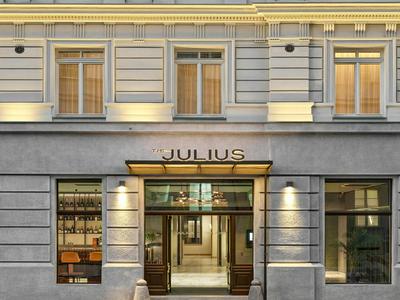
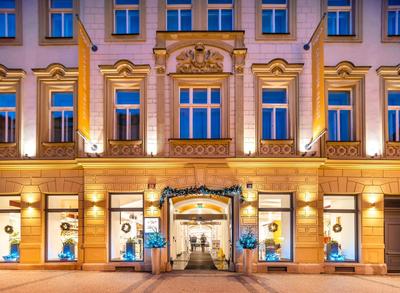
Hotels in Malá Strana (Lesser Town)
Our best-rated stays in this neighbourhood. Prices are approximate “from” rates — confirmed at the provider when you continue. We may earn a commission if you book through our partners, at no extra cost to you.
 In this area
 In this area
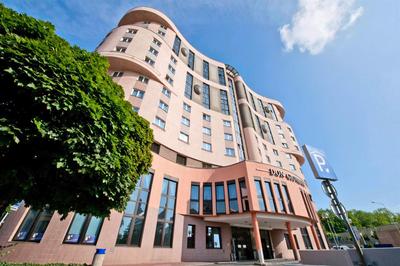
Don Giovanni Hotel Prague - Great Hotels of The World
 In this area
 In this area
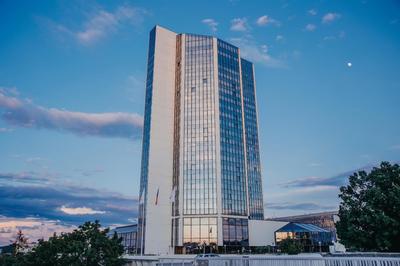
Grand Hotel Prague Towers - Czech Leading Hotels
Getting around
Malá Strana is compact and best walked, but it is a walk uphill on setts, so wear real shoes. The metro stop is Malostranská on green Line A at the district’s northern edge by the river, a short stroll from Lesser Town Square and a useful link to the trams. Tram 22 is the classic line here, threading through Malostranské náměstí, Malostranská and Újezd, then on up to Prague Castle at Pražský hrad and Pohořelec. It is the prettiest ride in the city, which is a strong statement in a city that takes its trams seriously.
The Charles Bridge puts you in the Old Town on foot in about five minutes. Walking from the district to Old Town Square takes roughly 10 to 15 minutes. For the airport, Václav Havel, reckon on about 35 to 45 minutes. The simplest transit route is bus 119 to Nádraží Veleslavín and metro Line A to Malostranská, or a taxi or rideshare in similar time depending on traffic.
Note that the transport authority has flagged tram-track works affecting the castle-side stops from spring into summer 2026, so check current routings. And the Petřín funicular from Újezd remains out of service for reconstruction into 2026, so the hill is a walk for now. In Malá Strana, even the shortcuts have standards.
Cross the bridge, climb a little, and the city changes register. That is the whole trick here.
Good to know
Malá Strana (Lesser Town) — your questions
Is Malá Strana a good area to stay in Prague?
Yes. It is one of the city’s most romantic bases, inside the historic core and steps from Prague Castle and Charles Bridge, with a calmer night-time feel than the Old Town. The trade-off is hilly cobblestones, pricier hotels and fewer conveniences for heavy luggage or limited mobility.
Is Malá Strana walkable, and how do I get to Prague Castle from there?
It is very walkable, but steep. You can climb Nerudova street or the New Castle Stairs from Lesser Town Square, or take tram 22 to Pražský hrad. If you want the calmest visit, go early — before about 9am — and note that the Petřín funicular is closed for reconstruction into 2026.
What should I see in Malá Strana beyond the castle?
The Church of St. Nicholas, the John Lennon Wall, Kampa Island with its Čertovka canal and Museum Kampa, plus the gardens: Wallenstein, Vrtba and Vojan. Petřín Hill and its lookout tower are also a must for the panorama.
Is Malá Strana good for nightlife?
Not for clubs or late bars. It is better for wine, beer with a view and an early, scenic evening. Ikona Wine Bar and Klášterní pivovar Strahov fit the district’s rhythm much better than a party crawl.
Gallery