Prague neighbourhood guide
Karlín, Prague: where the city eats, drinks and quietly reinvents itself
A post-flood Prague neighbourhood of bakeries, taprooms and restored industry, Karlín is where locals go to eat well without the Old Town theatre.

Twenty-odd years ago the Vltava came through here and made a mess of the place. Now Karlín is where Prague goes when it wants to eat properly, drink properly and still get home without needing a taxi from a velvet-rope queue. The streets are flat, the blocks are tidy, and the ground floors do the work: bread, coffee, beer, wine, dinner. It is one of the few parts of the city where a Michelin-starred room can sit above a bakery and nobody behaves as if this is a moral victory. It is simply Karlín being Karlín.
What Karlín is known for
Karlín began as an industrial suburb in the 19th century, named for Empress Caroline Augusta, and for a long time its life was factories, a customs house and the people who worked in them. Then came the floods of August 2002, which tore through the district and, with the cheerful brutality only water can manage, reset the whole place. The rebuild did not try to turn Karlín into a museum. Brownfields became offices along Rohanské nábřeží, warehouses became lofts, and the old working quarter found a second life in bakeries, taprooms and cafés at street level.
What makes it worth crossing the river for is density. Within a few blocks off Křižíkova and Sokolovská, you can move from specialty coffee to a bakery-bistro to a microbrewery to a natural-wine bar without ever feeling you have left the neighbourhood. That is the trick here: Karlín is not polished in the Old Town sense, where polish often means theatre. It is polished in the practical Czech way, with enough raw concrete and odd surviving repair shop to remind you the district has not been airbrushed into a brochure.
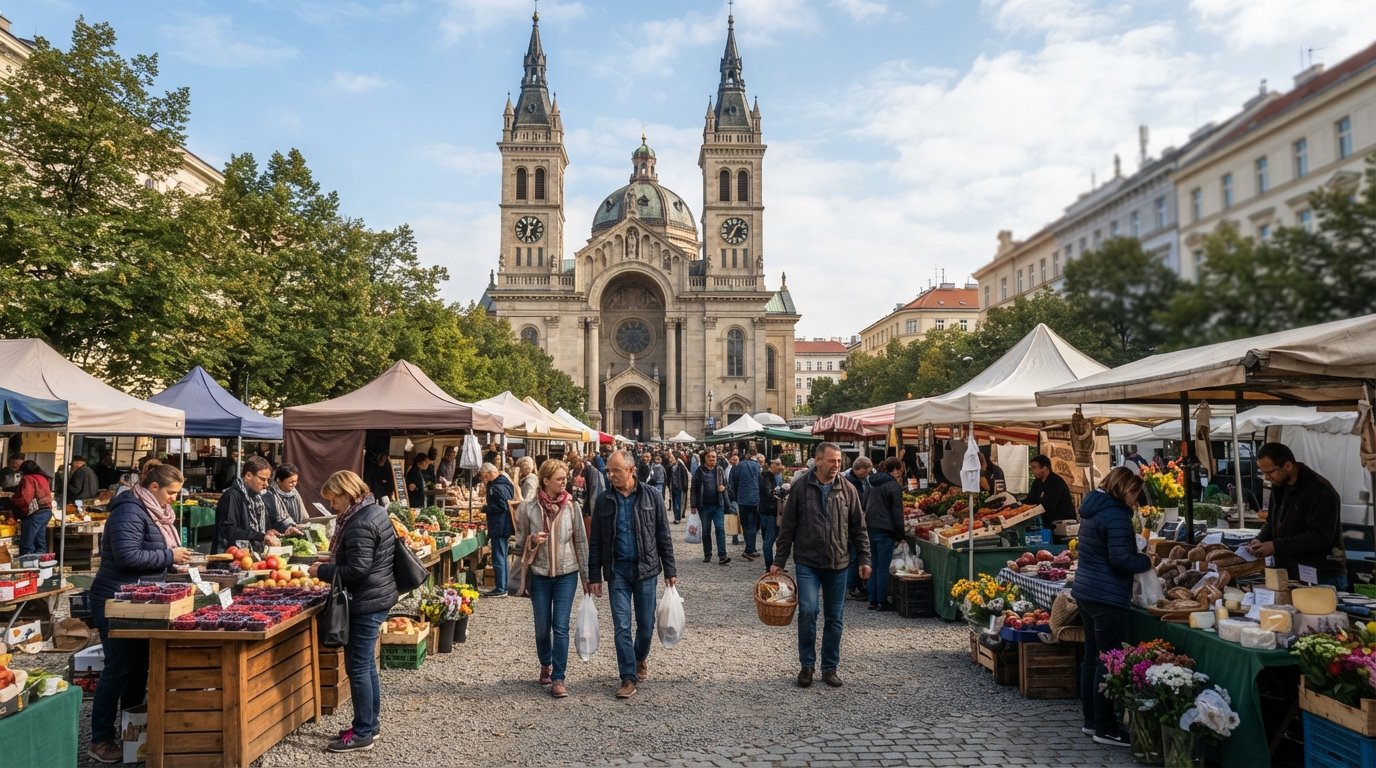
Architecture gives the place its backbone. The neo-Gothic Church of Saints Cyril and Methodius anchors Karlínské náměstí, while the Baroque Invalidovna sits in Kaizlovy sady like a stern lesson in imperial ambition. The Negrelli Viaduct, built in the 1840s, runs along the northern edge in monumental brick arches, and the restored spans are slowly being given back to the city. It is a neighbourhood of straight lines and hard edges, but not a cold one. On Saturdays, the farmers’ market by the church softens the whole square into the kind of scene that makes you briefly forgive Prague for everything else.
Where to eat & drink
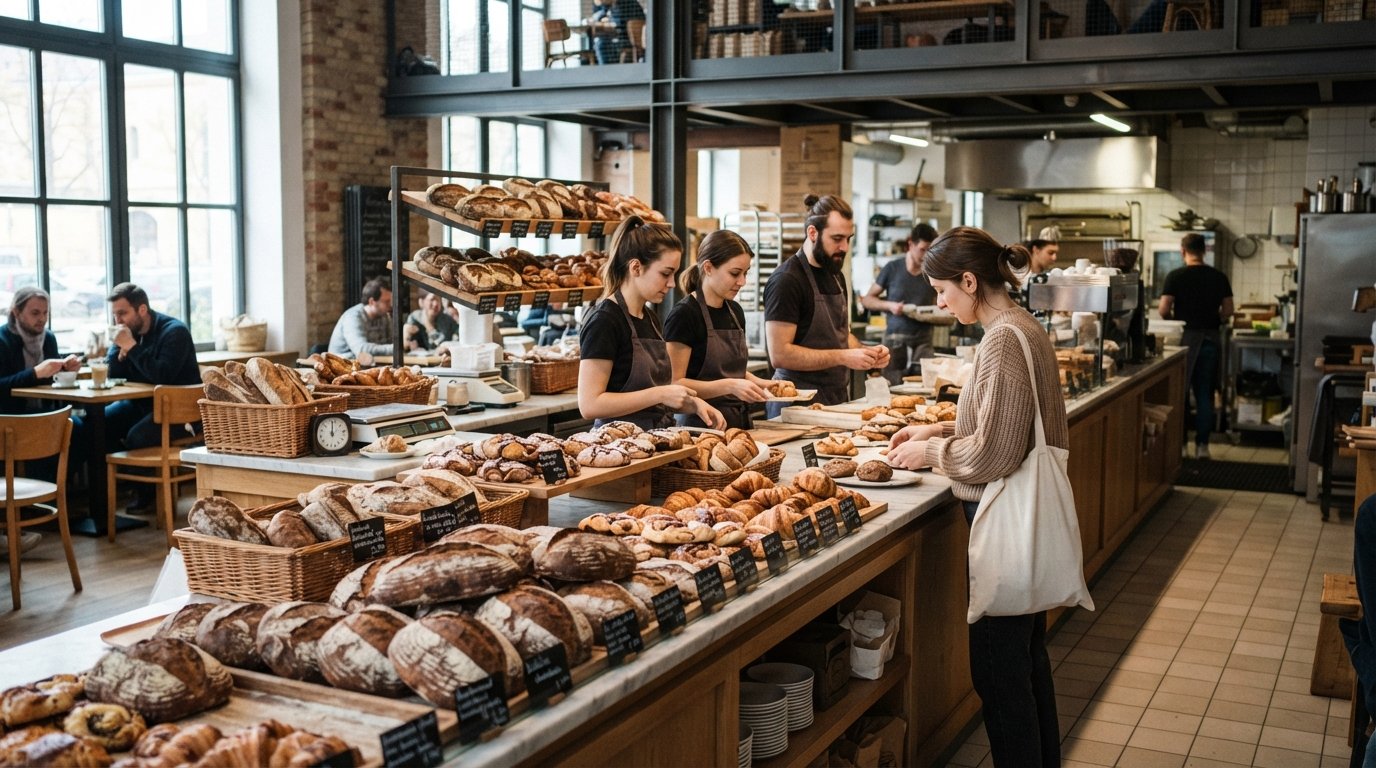
If you want to understand Karlín without listening to a speech about urban regeneration, start at the Eska–Štangl building on Pernerova. Downstairs, Eska is Ambiente’s modern-Czech bakery and bistro, and it has the sort of useful confidence that comes from actually baking bread over beechwood rather than merely writing that on a menu. It holds a Michelin Bib Gourmand, which feels about right: serious enough to matter, relaxed enough that you can walk in and order a proper lunch without pretending it is an occasion. The house specialties include bread baked over beechwood and potatoes cooked in ash with smoked fish, which sounds like a sentence a marketing department would invent until you taste it and realise the kitchen means it.
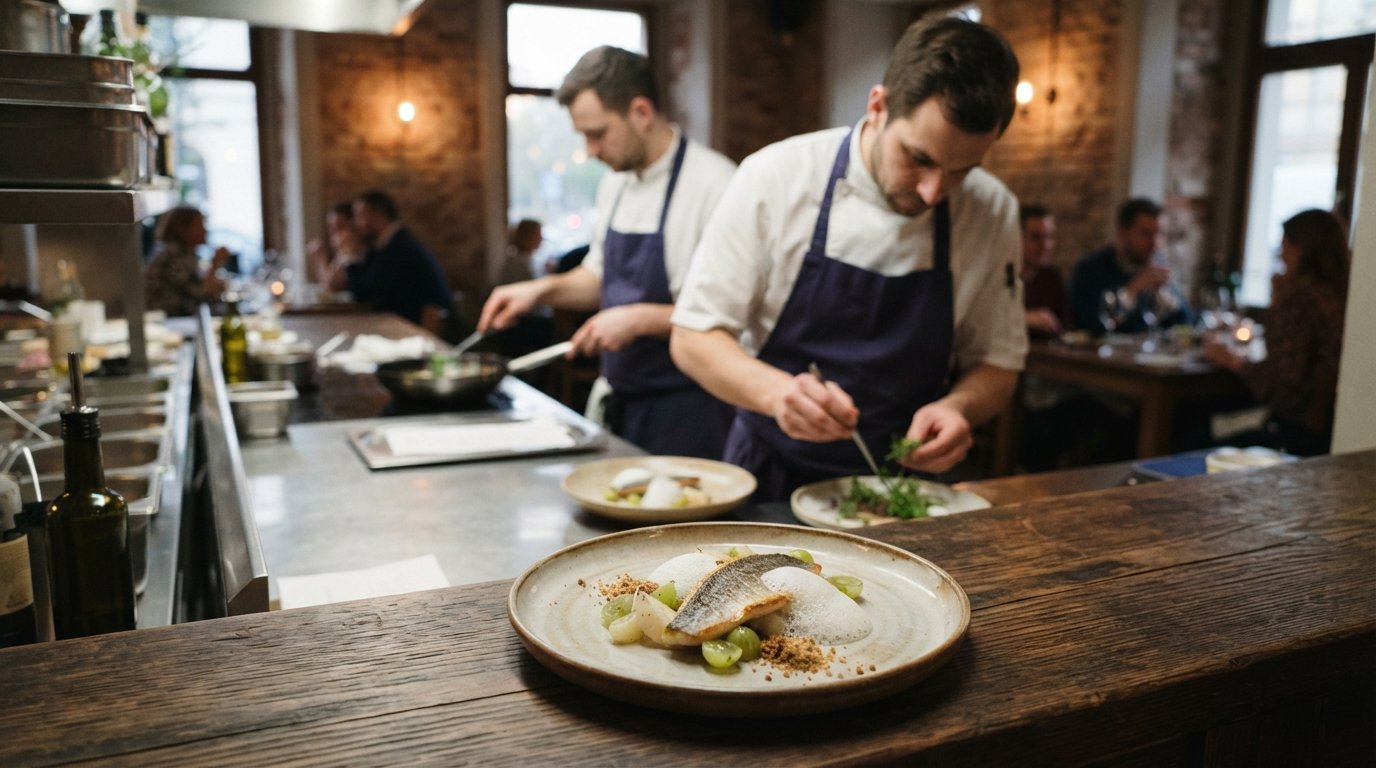
Above it sits Štangl, Martin Štangl’s tasting room, and the mood changes at once. This is the ambitious half: one Michelin star, plus a Michelin Green Star for sustainability, and a three- or five-course seasonal tasting menu served from an open kitchen. Produce comes from small growers and from the restaurant’s own hydroponic farm, which is exactly the sort of detail that can sound smug if the food is not good. Here it is good, and you should book ahead because the room is not pretending otherwise.
For everyday eating, Karlín has the reassuring competence of a district that actually feeds people who live and work here. Krystal Bistro on Sokolovská was one of the first signs that the neighbourhood was turning back toward itself, and it still does polished Czech and French comfort cooking with a burger that has earned its own reputation. Lokál Hamburk, also on Sokolovská, is the classic Czech-pub answer: schnitzels, svíčková and tank Pilsner Urquell kept with proper care in a former customs house. There is no irony here, which is refreshing. A good pub should not need a thesis.
Nejen bistro grills over a Josper and pushes a more ambitious plate without losing the casual tone, while Sugo pasta bar, a 2025 arrival on Sokolovská, handles the modern-Italian craving with pasta and tiramisu. It is useful to have a neighbourhood where the new opening does not need to shout to be noticed.
Coffee is not an afterthought in Karlín, which is one reason the district feels lived-in rather than merely developed. Můj šálek kávy on Křižíkova, run by Doubleshot, is regularly counted among Prague’s best cups, and it has the brunch trade to prove it. Kafe Karlín on Sokolovská is the opposite in scale and just as useful: a tight espresso counter, a few mini cheesecakes, and the sort of quick stop that saves a morning.
Going out
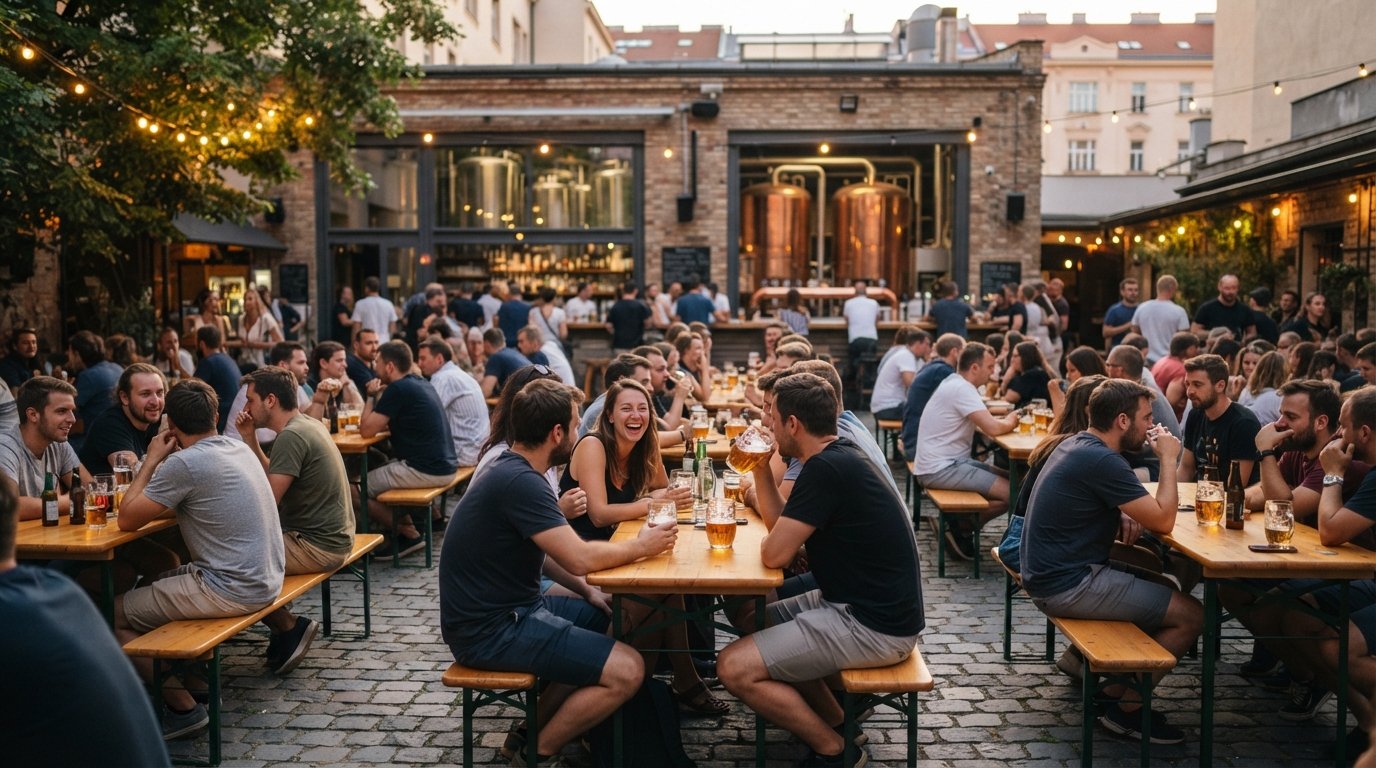
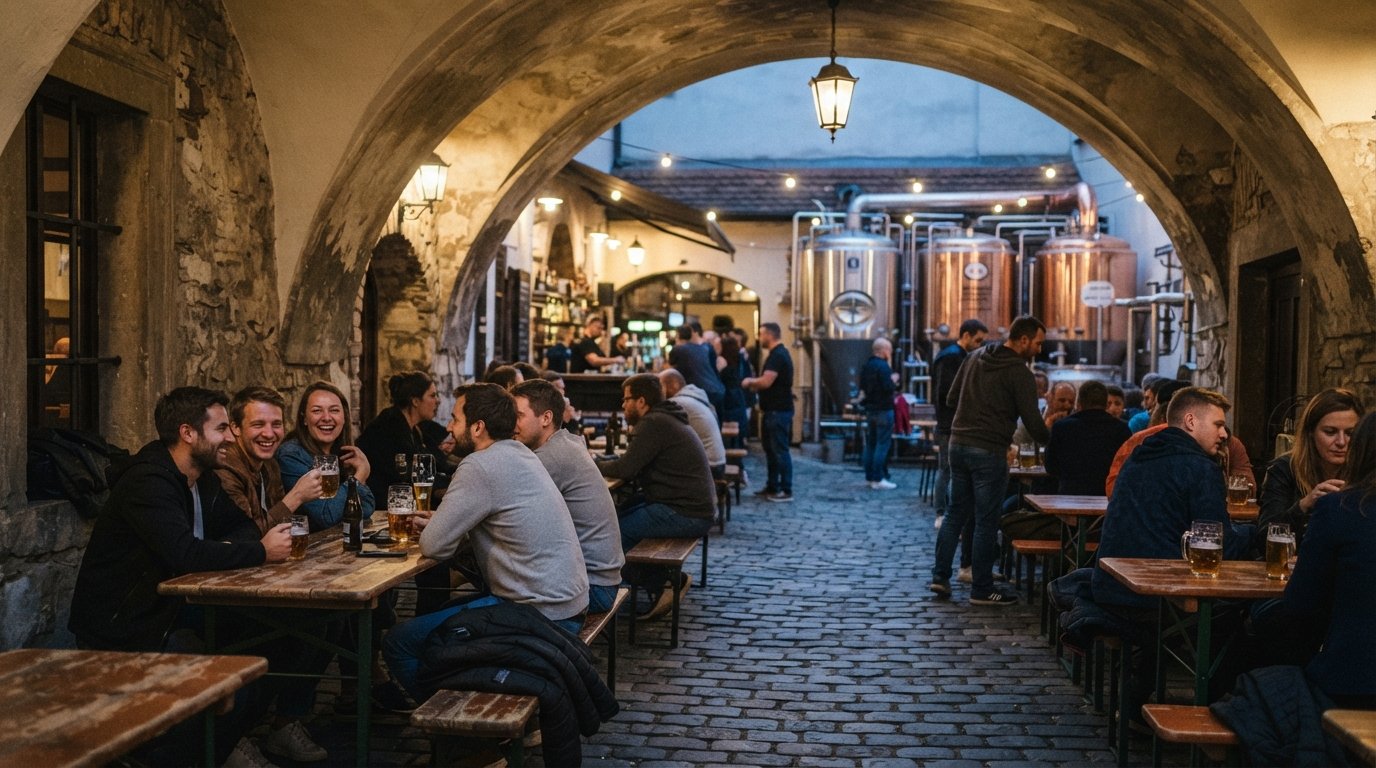
Karlín’s evenings are built on beer, wine and cocktails rather than the heroic nonsense of all-night clubs, which is a mercy. The signature stop is Dva Kohouti on Sokolovská, a joint venture between Ambiente and brewer Adam Matuška, where the working microbrewery pours an unpasteurised local lager alongside Matuška favourites like the Desítka pale lager and the California APA. It hides behind an archway and opens into a big cobbled courtyard beer garden, lively in the way only a place with actual regulars can be lively. Food comes from Grils, the rotisserie in the yard, so you can linger without having to pretend beer counts as dinner.
If you want beer without quite so much of a scene, Pivovarský klub on Křižíkova is the long-running multi-tap pub with an extensive bottle list, the sort of place that rewards curiosity without turning it into homework. Bad Flash Bar serves a rotating dozen taps, which is enough to keep the Untappd crowd occupied and the rest of us politely sceptical. For wine, Veltlin on Křižíkova is the serious little natural-wine bar with a very specific rule: only wines from the former Austro-Hungarian lands. No oceans crossed, no grandstanding. It is a narrow brief and a good one.
Then there is Liquid Office, the design-led cocktail bar from a team with Prague pedigree. The room is slick; the drinks are creative and well made; the atmosphere says grown-up without becoming dull. That is about as much as one can ask from a bar in a neighbourhood that already has enough personality to spare.
Things to do
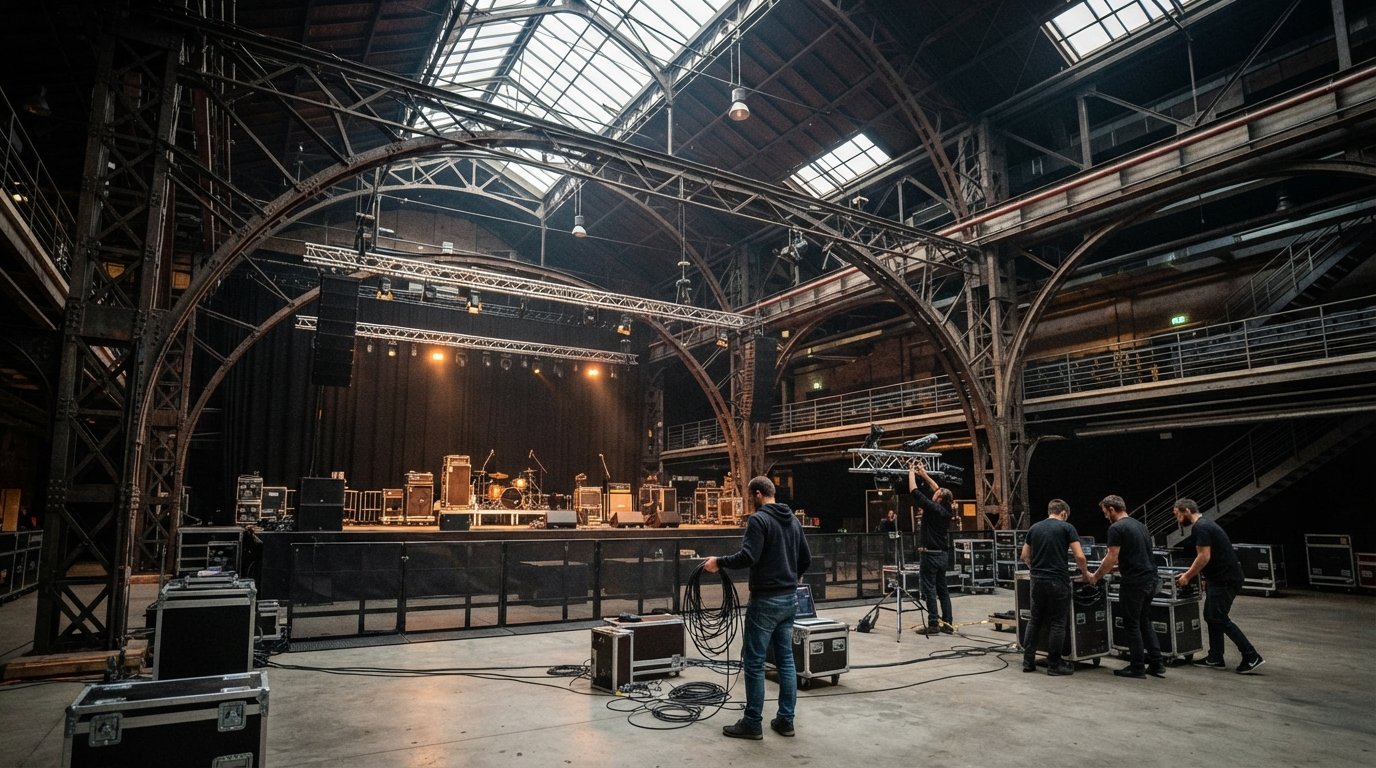
Karlín rewards wandering more than ticking boxes. Forum Karlín, a 3,000-capacity hall inside a former boiler factory, is the district’s big cultural draw. Concerts, congresses and one-off events happen under industrial ironwork, which is a better use of a steam-boiler factory than many cities manage. Check what is on before you go; the building is part of the attraction, but not the whole point.
Nearby, Kasárna Karlín is the scruffier, cooler counterpoint: a former barracks turned alternative cultural space with a courtyard café, gallery and summer cinema. It has the useful quality of places that know exactly what they are and do not over-explain it. You can spend an afternoon there without feeling you have joined a programme.
For a quieter hour, Lyčkovo náměstí is the sort of square that makes you slow down without asking permission. It is leafy, Belle Époque and built around an Art Nouveau primary school that people often call the prettiest of its kind from the old empire. That is a dangerous claim in Prague, where everybody has a favourite façade, but this one earns the pause. Sit there for a while and watch the district do ordinary life properly.
Kaizlovy sady offers a different register: a pond, trees and the Baroque bulk of the Invalidovna, the veterans’ home modelled on Les Invalides in Paris. It is one of those Prague scenes where the city’s imperial vanity and its civic melancholy stand side by side without needing an introduction.
Along the northern edge, the Negrelli Viaduct runs its long brick line across the district. Built in 1846–49, it was for years the longest bridge in Europe, and the restored arches are gradually reopening as cultural and commercial spaces. The structure is enormous in the way only 19th-century infrastructure can be enormous: not decorative, not apologetic, just there, carrying the city over itself.
Don’t miss in Karlín
The neo-Romanesque Church of Saints Cyril and Methodius on Karlínské Náměstí.
The Forum Karlín, a modern concert and cultural venue.
The pedestrian tunnel connecting Karlín directly to Žižkov.
The riverside along Rohanské nábřeží is less a single sight than a habit. Locals run and cycle it toward Holešovice and the islands, which is probably the best endorsement a promenade can get. In a district as flat as this one, movement feels easy, and that matters. Karlín does not demand effort before rewarding you. It lets you drift.
Shopping & markets
Karlín is not where you come for a shopping spree, and that is part of its charm. The retail is small, independent and usually edible. Saturday mornings bring the Karlín farmers’ market to the square by the Church of Saints Cyril and Methodius, where growers, bakers and cheesemakers set up, except during the coldest winter weeks when even markets have the good sense to take a break. It is the kind of market that reminds you neighbourhoods are built from habits, not slogans.
Tea Mountain is the other stop worth making: a minimalist tea room and shop widely rated the best in a very tea-friendly city. It is a quiet place to buy loose-leaf tea or sit down for a cup and recover from the belief that all cities must sell the same things in the same way.
Beyond that, shopping in Karlín means drifting past bakeries, design-minded cafés, wine merchants and the odd concept store along Křižíkova and Sokolovská, with the newer office developments adding a few practical everyday shops. For edible souvenirs, the district is unusually well set up: coffee beans from Doubleshot, Czech wine, market cheese. You could do worse than leaving Prague with something you can actually consume.
Where to stay in Karlín
Karlín makes a smart base if you care more about food, transit and a local feel than about stepping straight from your door onto a postcard. It is usually better value than the Old Town or Malá Strana for what you get, which is not a revolutionary insight so much as a useful one. The sweet spot is the grid between Křižíkova, Sokolovská and Pernerova, where you are walking distance from the best restaurants and taprooms and only a couple of minutes from the metro. The streets are quiet, residential and mercifully free of souvenir shops trying to sell you a medieval-looking magnet.
Closer to Florenc, at the western edge, you get maximum transport convenience, including the major metro interchange and the bus station. It is a little more workaday, but that is part of its charm if your idea of luxury is not having to think about connections. Toward the river on Rohanské nábřeží and Pobřežní, the newer developments lean corporate and modern, handy for the promenade and cycle path.
Expect modern mid-range hotels, apartment-style stays and a few design-led boltholes rather than grand historic palaces. Karlín is not performing heritage accommodation for your benefit. It is giving you a decent room in a neighbourhood that knows how to live.
Where to stay here
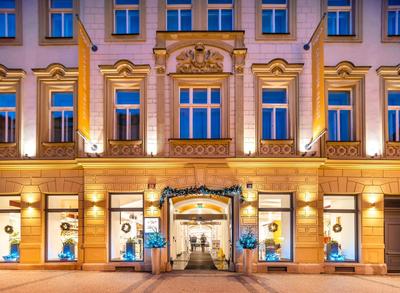
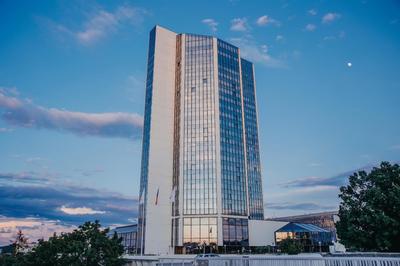
Hotels in Karlín
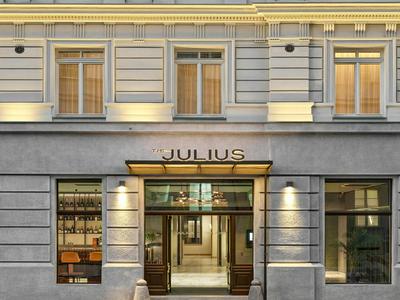
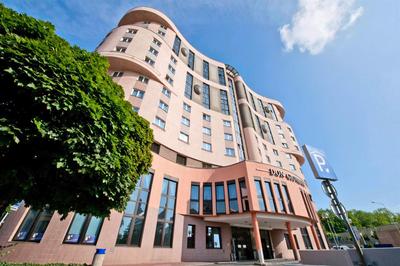
Our best-rated stays in this neighbourhood. Prices are approximate “from” rates — confirmed at the provider when you continue. We may earn a commission if you book through our partners, at no extra cost to you.
Getting around
Karlín is exceptionally easy to move through, and that is part of why it works so well as a base. Metro Line B runs through it with three stops — Florenc, Křižíkova and Invalidovna — and Florenc also connects to Line C and the main intercity bus station. From Křižíkova, it is only a couple of stops on Line B to Náměstí Republiky on the edge of the Old Town, roughly five to ten minutes door to platform; walking into the historic centre takes about 20 to 25 minutes along the river.
Trams 3, 8 and 24 thread down Křižíkova and Sokolovská, and the district is flat enough that walking and cycling are genuinely pleasant rather than merely possible. The riverside cycle path along Rohanské nábřeží makes the whole edge of the neighbourhood feel open. For Václav Havel Airport, there is no direct metro; the usual route is Line B or C to a connecting point and then the airport bus, or a taxi or ride-hail of roughly 30 to 40 minutes depending on traffic. Inside the city, a standard Prague public-transport ticket covers metro, tram and bus, which is one of the few administrative pleasures the city offers without complaint.
Karlín works because it is not trying to be the centre of Prague. It has enough history to give the streets weight, enough new life to keep them moving, and enough good places to eat and drink that you stop noticing the old tourist map in your pocket. That is a better trick than it sounds.
Good to know
Karlín — your questions
Is Karlín a good area to stay in Prague?
Yes, if you care about eating and drinking well, easy transport and a real neighbourhood feel rather than stepping straight onto the tourist trail. It has one of Prague’s strongest concentrations of restaurants, taprooms and specialty coffee, sits on Metro Line B a few minutes from the Old Town’s edge, and usually costs less than the historic centre. It is less ideal if you want Charles Bridge outside your door.
Is Karlín safe?
Very. It’s a busy residential and business district with families, offices and a lively evening scene, and it doesn’t have the pickpocket density of the tourist core. Use normal big-city sense late at night, but there are no notable no-go areas.
Where should I eat and drink in Karlín?
For food, Eska and the Michelin-starred Štangl are the headline acts, with Krystal Bistro, Lokál Hamburk and Nejen bistro as strong everyday choices. For drinks, Dva Kohouti is the signature beer stop, backed by Pivovarský klub and Bad Flash for beer, Veltlin for natural wine and Liquid Office for cocktails.
How do I get from Karlín to the Old Town?
From Křižíkova, it’s only a couple of stops on Metro Line B to Náměstí Republiky, roughly five to ten minutes door to platform. Walking takes about 20 to 25 minutes along the river, and trams also run down Křižíkova and Sokolovská.
Gallery