Prague neighbourhood guide
Holešovice, Prague: the city’s rough-edged creative quarter
A post-industrial Prague 7 district where slaughterhouses became markets, factories became galleries, and the night still belongs to bass, beer and the occasional good carbonara.

Holešovice begins with brick, iron and a certain refusal to be polished. Stand by the old market halls on Bubenské nábřeží and you can feel the district’s original use still clinging to the air: slaughterhouse, freight yard, mill, workshop. Prague did not so much erase this place as repurpose it, which is why the neighbourhood has the useful quality of looking like itself. In one ten-minute walk you can move from a Bib Gourmand kitchen to a butcher’s counter, from a functionalist palace full of modern art to a club built like a machine that has learned to smoke. That is the pitch, and unlike many Prague pitches, it is not a lie.
What Holešovice is known for
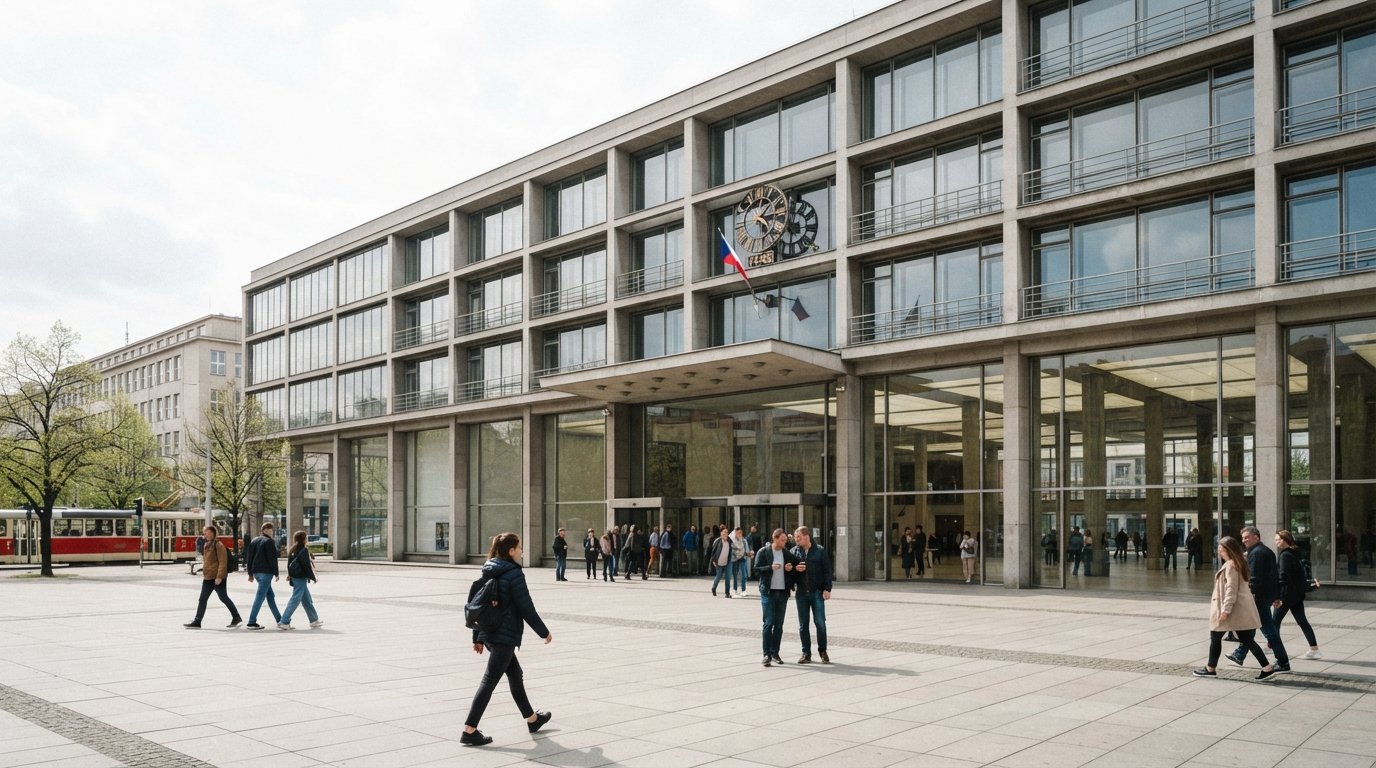
Two forces made Holešovice: heavy industry, and the afterlife that followed it. The Central Slaughterhouse opened here in 1895, the Trade Fair Palace (Veletržní palác) rose in 1925 as a grand functionalist exhibition hall, and the riverbanks were once lined with mills and freight sidings. Almost all of that has been kept, converted or folded into something else rather than swept away. The district’s charm, if that is the word, lies in the fact that it never bothered to become decorative.
That industrial inheritance is still visible everywhere. The brick facades of Vnitroblock, the tram-shed geometry of the Trade Fair Palace, the cast-iron halls of the old slaughterhouse grounds — none of it pretends to be romantic. It is more convincing than that. Holešovice sits on a peninsula wrapped by the Vltava, just far enough from the tourist centre to keep its own rhythm. The streets are wide and a little rough — Komunardů, Dělnická, Bubenské nábřeží — with mismatched shopfronts, galleries tucked into former workshops, and the occasional empty lot that has not yet been improved to death. That last part matters. Prague can be very tidy when it wants to be; Holešovice prefers to look as if work is still going on.
Today the district’s headline act is contemporary art. The Trade Fair Palace is now the largest site of the National Gallery Prague, and inside its cathedral-like functionalist interior you get the kind of collection that makes you slow down whether you planned to or not: Kupka, Mucha’s monumental Slav Epic, Picasso, Monet, van Gogh and Klimt. It is the sort of building that reminds you functionalism can have drama if you let it.
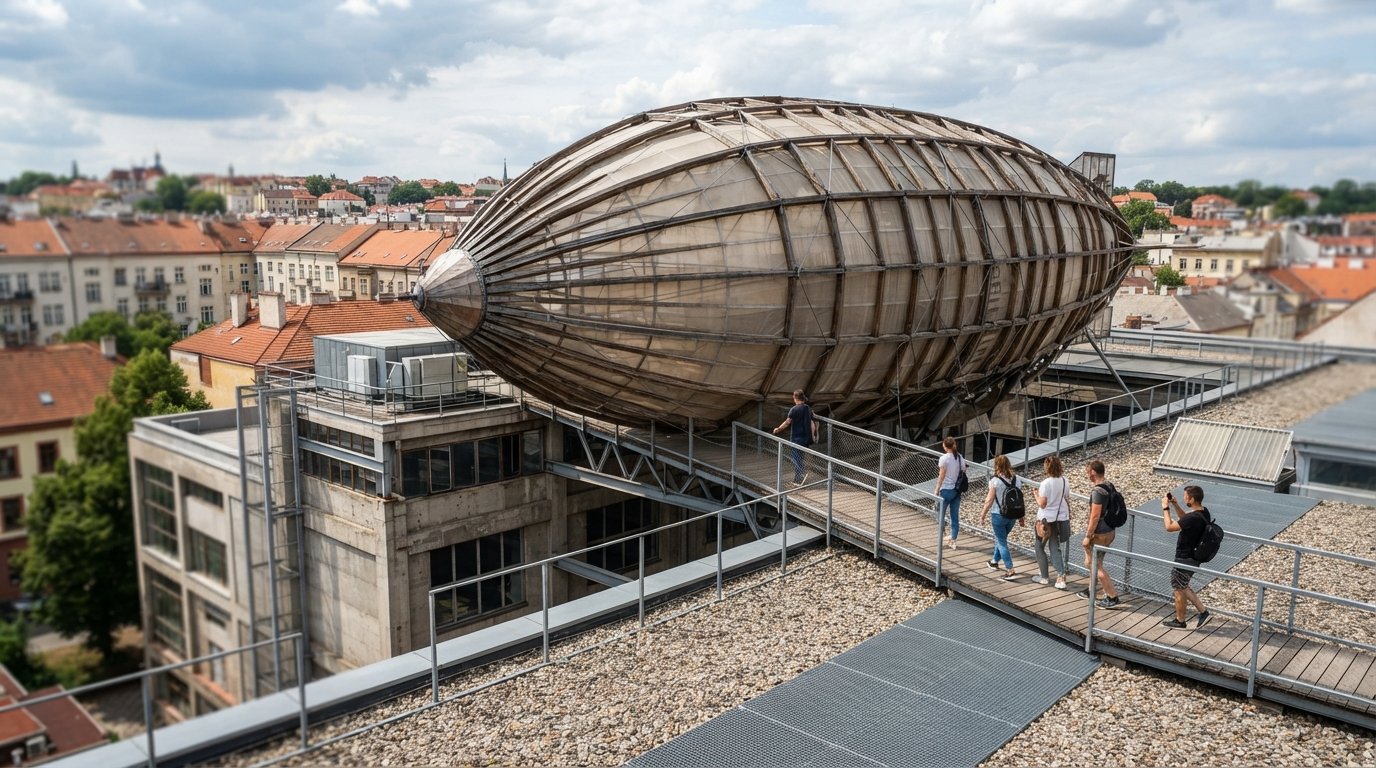
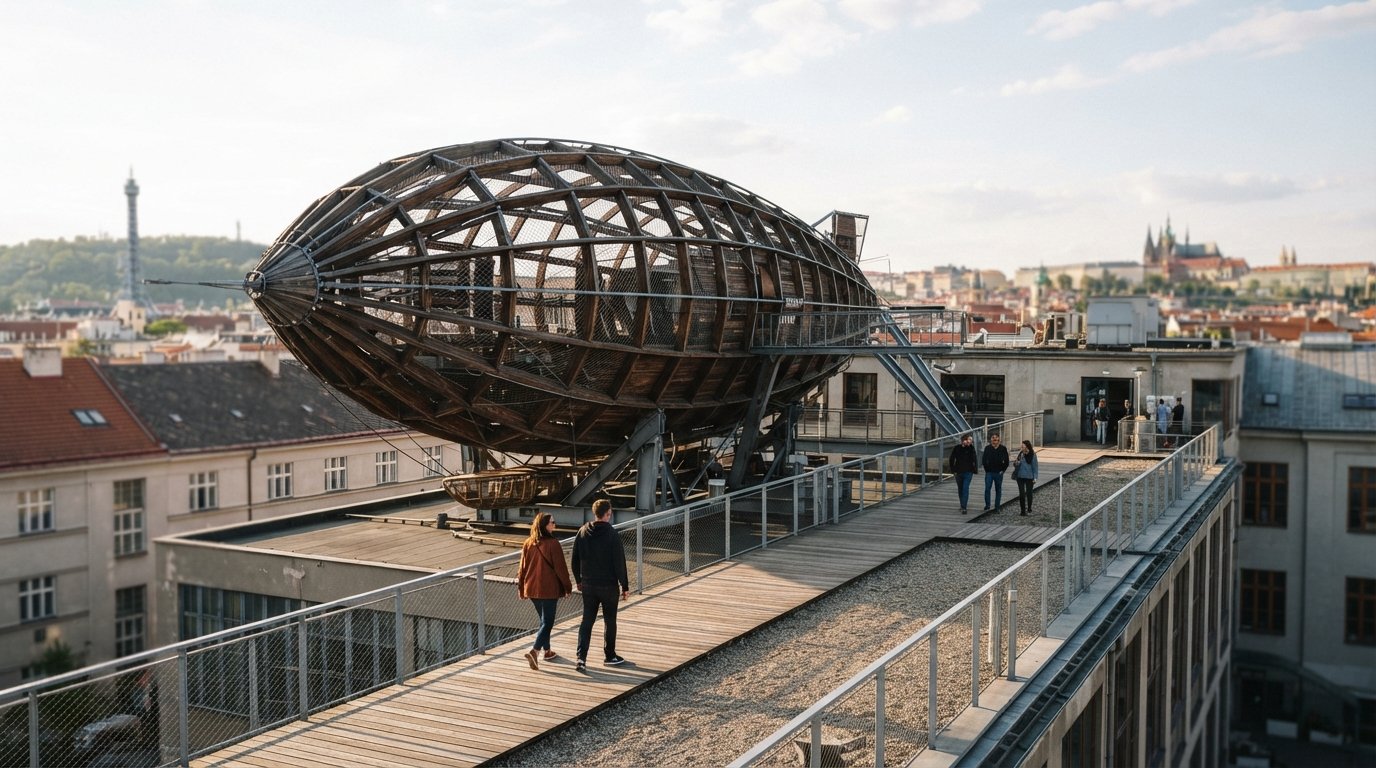
A short walk north, DOX Centre for Contemporary Art occupies a converted factory and is the largest private contemporary-art institution in Czechia. Since 2016 it has been crowned by the Gulliver Airship, a 42-metre wooden-and-steel blimp bolted to the roof and used for literary events. It sounds absurd in the abstract, which is usually a good sign in Prague; on the roof it looks exactly as improbable as it should.
The third anchor is the reborn Holešovická tržnice (Holešovice Market), the old slaughterhouse grounds now filling with food, craft and culture halls. On weekends it feels like the neighbourhood’s central nervous system: traders, coffee cups, children, dogs, people carrying meat, flowers, pastries, vinyl, opinions. Add Stromovka on the western edge — Prague’s largest park, once a royal hunting ground — and you have art, food and green space in one Prague 7 loop. Not pretty in the baroque-postcard sense. Interesting, and it knows it.
Where to eat & drink
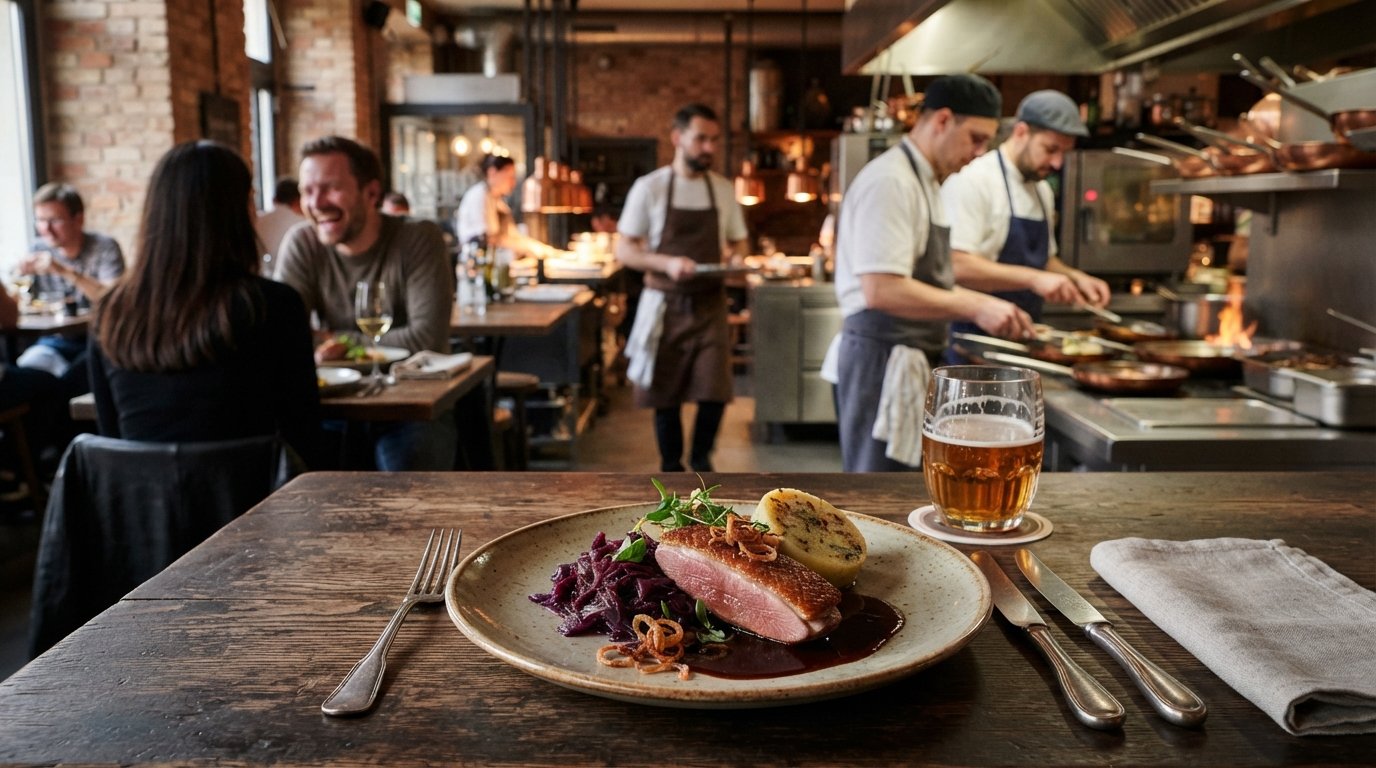
Holešovice, with neighbouring Letná, has become one of Prague’s real food quarters, which is to say it has a market, a butcher, a few serious kitchens and enough cafés to keep the design crowd upright. The most reliable table is The Eatery on Přístavní, where chef Pavel Byček — who spent years defending a Michelin star at Alcron — cooks a modern Czech, seasonal menu from an open kitchen. The restaurant carries a MICHELIN Bib Gourmand, and the dishes mentioned in the kitchen’s orbit are the sort of things you actually want to eat in Prague rather than merely photograph: duck breast with pumpkin, braised beef with celeriac.
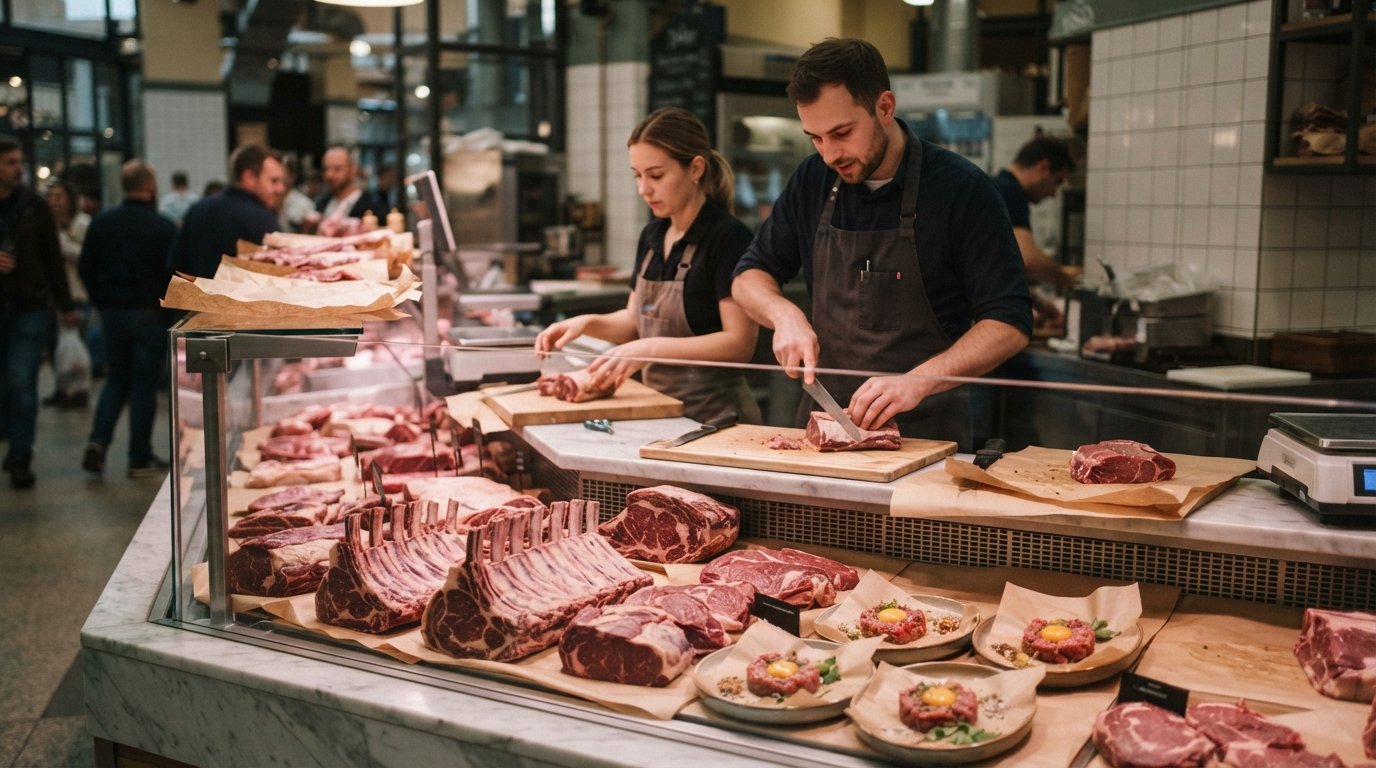
Inside the Holešovická tržnice, the Ambiente group has built a little food courtyard worth crossing town for. Naše maso is a nose-to-tail butcher’s counter where Czech Fleckvieh beef and Přeštice pork sit behind marble, and the point is not to admire them from a distance. You can buy a burger, a meatloaf sandwich or the famous steak tartare and eat standing up like someone who has places to be. Next door, Skô is a Slovak wood-fire grill from chef Tomáš Valkovič, doing slow-smoked meats, langoše and lokše. It opened late in 2025, which in Prague counts as early enough to still have a little buzz around it. Myšák handles the sweet end of the market with tortes, cream-filled classics and specialty coffee. It is the kind of pastry shop that makes you briefly believe in civic order.
For a sit-down dinner, SaSaZu on Bubenské nábřeží is the old hand: a long-running pan-Asian restaurant on the market grounds with a MICHELIN Bib Gourmand. It has the advantage of knowing exactly what it is. Down a quieter side street, Mensa is a husband-and-wife Italian osteria turning out fresh pasta; the Roman carbonara with guanciale and pecorino is the one to order unless you have a stronger argument. For coffee, Vnitroblock does specialty roasts amid design studios, and Bar Cobra on Milady Horákové works as a café by day and a cocktail-and-DJ bar by night, with rotating art on the walls and the useful ability to change the mood without changing the room.
Going out
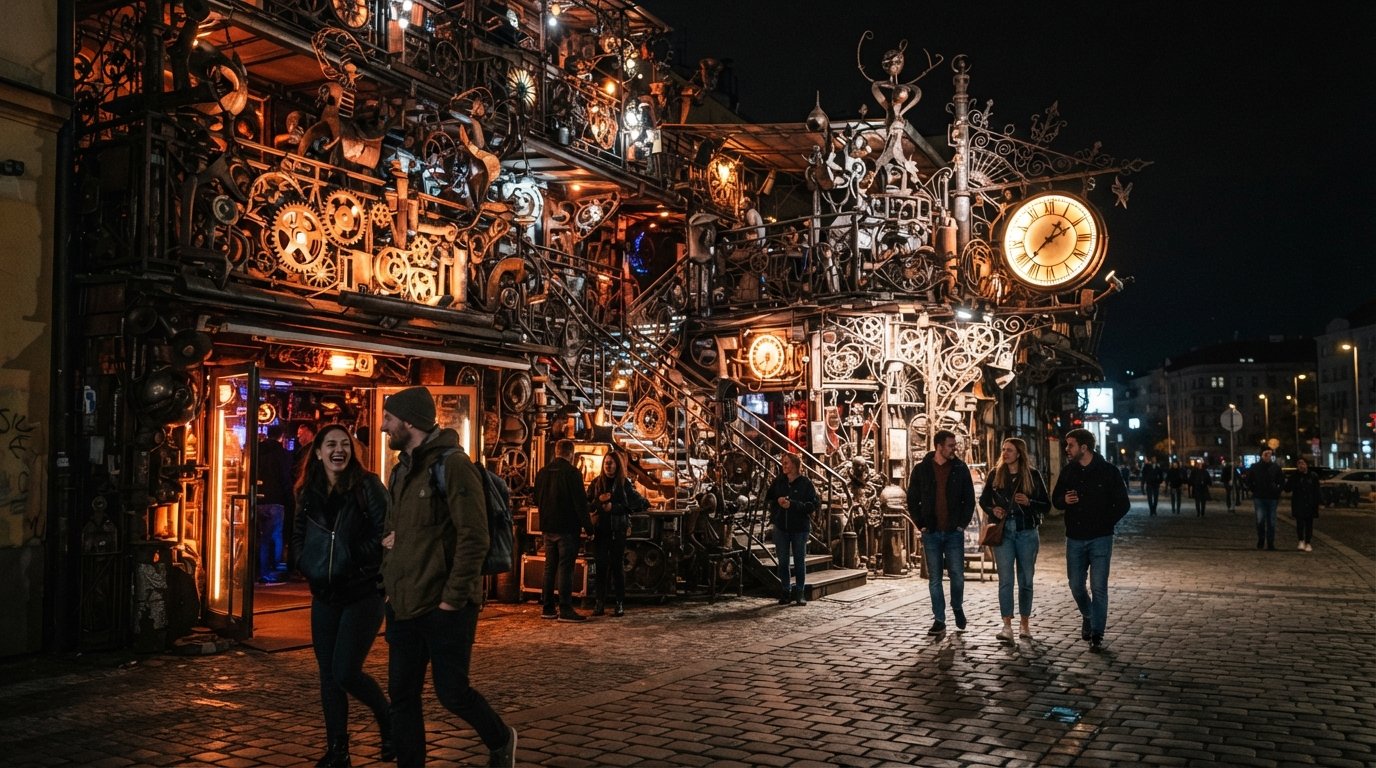
This is where Holešovice earns its reputation as Prague’s home of alternative and electronic nightlife. The signature venue is Cross Club on Plynární, a labyrinth of rooms wrapped in a hand-built steampunk interior of moving, hissing, repurposed industrial parts. Two floors of programming swing from techno and drum-and-bass to reggae and live bands. By day it is a café and restaurant; by night it becomes the sort of place where the bass seems to have been bolted into the walls. It is not subtle. That is the point.
For harder, more underground sounds, Fuchs2 over on Štvanice island is the bunker in the story: a no-frills space with a serious custom sound system and a music-first booking policy leaning into techno and experimental electronica. It is the sort of club that does not waste time on decorative ideas about itself. Bar Cobra is the lower-key option, good for cocktails, craft beer and regular DJ nights when you want the evening to stay horizontal for a while. Across the district, Vnitroblock and the market halls host one-off parties and screenings, which is how Holešovice keeps its evenings slightly unpredictable without becoming chaotic about it.
The nightlife here feels grittier and more local than the pub-crawl circuit around Wenceslas Square. Come for the room, the music and the energy, not for bottle service. Prague has enough places pretending to be glamorous already.
Things to do / what to see
Start at the Trade Fair Palace, because it tells you almost everything you need to know about Holešovice in one building. The National Gallery Prague’s modern and contemporary collection lives here, and the list is serious: Mucha’s Slav Epic, František Kupka, Picasso, van Gogh, Klimt. General admission runs around 250 CZK and the museum is closed on Mondays, which is as good a reminder as any that Prague still believes in the concept of a day off.
A few blocks on, DOX Centre for Contemporary Art stages socially engaged shows in a converted factory and lets you climb inside the rooftop Gulliver Airship. It is one of those places that makes sense only if you allow a city to be experimental in public. The art is often contemporary in the proper sense — awake to the world, suspicious of easy answers — and the building gives it enough rawness to breathe.
For performance, Jatka78 occupies halls 7 and 8 of the old slaughterhouse and is the home stage of the acclaimed new-circus company Cirk La Putyka. The work here ranges across contemporary circus, dance and non-verbal theatre, which is useful if you want culture without needing to parse every line. The old abattoir setting gives it just enough grit to stop the whole thing from floating away into artsy vapour.
Film people should find Bio Oko on Františka Křížka, a much-loved 1940 arthouse cinema famous for its beach chairs, bean bags and even a car body among the seating. It has a bar as well, because of course it does; Prague likes its cinemas with a sidecar. When you need air, Stromovka spreads across the district’s western edge with lakes, cafés and a planetarium. It is Prague’s largest park, and after a day of concrete and galleries it feels almost indecently roomy. Across the river sit the Prague Zoo and Troja Château, which makes Holešovice a useful base if your idea of a good day includes both a museum and an actual tree.
Don’t miss in Holešovice
The DOX Centre for Contemporary Art, housed in a former factory.
Stromovka, the city's largest and most historic public park.
Vnitroblock, a multi-functional creative space and cafe.
Shopping & markets
The centre of gravity for browsing is Vnitroblock, a former factory on Tusarova that combines the Signature café with a gallery of young Czech and Central European designers, a sneaker store, workshops and a tiny basement cinema. It is probably the single best place in the district to buy independent fashion and homeware, which is to say things that look like they were chosen by a human with opinions.
The Holešovická tržnice (Holešovice Market) is the other draw: a sprawl of halls where fresh-produce stalls, the Ambiente food courtyard and rotating cultural events mix under 19th-century roofs. It is a working market rather than a polished tourist bazaar, and better for it. Hall 22 is closed for refurbishment roughly January to March 2026, with traders moved to Hall 13, which is the kind of practical detail that tells you this is a live place, not a themed one. Beyond those two hubs, the streets around Dělnická and Komunardů hide vintage boutiques, cheese and wine shops, record stores and specialty-coffee roasters. Come on a weekend for the fullest market atmosphere and the best sense of the district’s low-key, self-made retail life.
Where to stay in Holešovice
Holešovice is a value-led base, which is one reason people who have been in Prague before keep drifting back here. Prices sit well below the Old Town, and you trade a slightly longer metro ride for a more local, creative address on the red line. The quieter, more residential pockets around Letná and the leafy streets near Stromovka and the Trade Fair Palace suit couples and repeat visitors who want calm plus good coffee. Closer to Nádraží Holešovice and the market, you are in the thick of the food-and-nightlife action — lively, handy for Cross Club and the tržnice, but worth booking with a little care if you sleep lightly and have no interest in hearing the city’s bassline at 2 a.m.
Budget and social travellers are well served by Sir Toby’s Hostel, a long-running, sociable hostel in a converted Holešovice warehouse near Vltavská, with an on-site bar and shared kitchen. Overall, the neighbourhood skews toward mid-range boutique hotels, aparthotels and design-minded hostels rather than five-star grandeur. That feels right. Holešovice is not trying to impress you with chandeliers.
Where to stay here
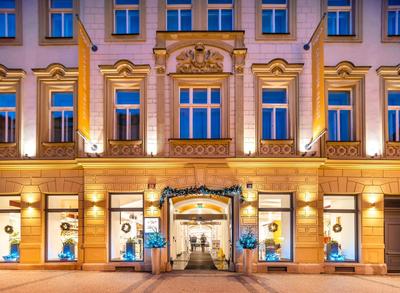
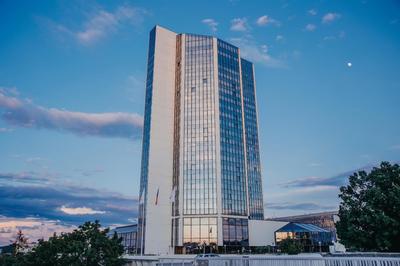
Hotels in Holešovice
Our best-rated stays in this neighbourhood. Prices are approximate “from” rates — confirmed at the provider when you continue. We may earn a commission if you book through our partners, at no extra cost to you.
Getting around
Holešovice sits on Metro Line C (red) with two stations — Vltavská, closest to Letná and the Trade Fair Palace, and Nádraží Holešovice, by the market, DOX and Cross Club. From Nádraží Holešovice it is roughly 5–7 minutes on the metro to Muzeum at the top of Wenceslas Square, so the tourist core is genuinely close despite the different feel. Nádraží Holešovice is also a main railway station, useful for day trips and international trains.
Trams knit the district together. Lines 6, 12 and 17 are the workhorses, with 17 running along the river past Výstaviště and Stromovka, and 6/12 serving Ortenovo náměstí near DOX. The neighbourhood is flat and walkable within each pocket, but the pockets are spread out, so pair walking with a tram hop rather than pretending you are in the Old Town and can solve everything on foot. For the airport, take Metro C to the transfer point and then the Airport Express or bus; budget around 45 minutes to an hour door to door. A 24-hour or 72-hour transit pass is the easy, cheap way to cover it all.
Holešovice is generally safe and residential, though scruffier and more industrial-looking than the polished centre, so it can feel edgier at night. Use the usual big-city sense around the station and on late tram rides after a night out. That is less a warning than a reminder that this part of Prague still has a pulse.
Good to know
Holešovice — your questions
Is Holešovice a good area to stay in Prague?
Yes, if you want value and a local, creative feel over being next to the landmarks. It has major art venues, market-hall food and alternative nightlife, cheaper hotels than the Old Town, and a quick metro ride into the centre on Line C.
Is Holešovice safe?
Holešovice is generally safe and residential. It feels scruffier and more industrial than the polished centre, so use normal big-city sense around Nádraží Holešovice and on late tram rides after club nights.
What is Holešovice known for?
A post-industrial makeover: old slaughterhouses, mills and factories turned into contemporary-art venues, the Holešovice Market, circus and theatre at Jatka78, and electronic-nightlife spots such as Cross Club, all beside Stromovka.
What should I not miss in Holešovice?
The Trade Fair Palace, DOX and its Gulliver Airship, the Holešovice Market food courtyard, The Eatery, and at least one late-night stop at Cross Club or Fuchs2 if that is your kind of evening.
Gallery