
Prague has thrown its own leaders out of windows three times across six hundred years, and each fall changed the course of the city, and sometimes of Europe. This trail follows the drop points from Charles Square to the Castle, then eats and drinks in the taverns that watched it happen: a walking history of a city that settled its arguments with gravity rather than debate.
The two defenestrations of 1419 and 1483
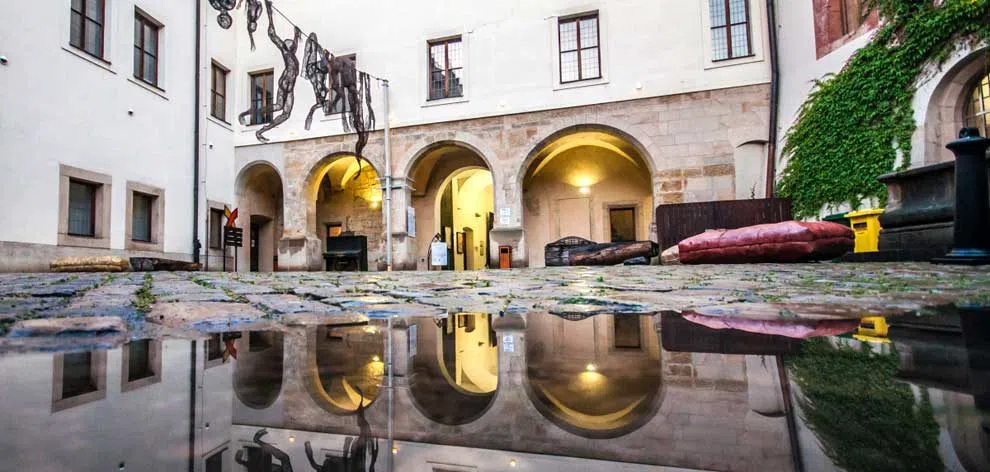
The trail's first stop is New Town Hall (Novoměstská radnice), on Charles Square, the enormous plaza that was once the horse market and cattle fair of medieval Prague, long before it was a park with a tram stop. On 30 July 1419, a crowd of Hussite reformers marched on the council chamber, demanded the release of prisoners held for their faith, and, when refused, threw the judge, the burgomaster and several councillors from the windows onto the pikes and spears waiting below. It's usually called the First Defenestration, and it's the event that put the word into European history in the first place: the Hussite Wars that followed reshaped Bohemia for a generation and turned Prague into a byword for religious upheaval a full century before Luther. The tower is open to visitors from 21 March to 14 December 2026, a ticket runs roughly CZK 100-150, and there's a café at ground level where you can sit with a coffee and look up at the windows in question. Large groups are welcome and the tower takes them in an orderly, timed rotation, which makes this an easy stop to build a tour around.
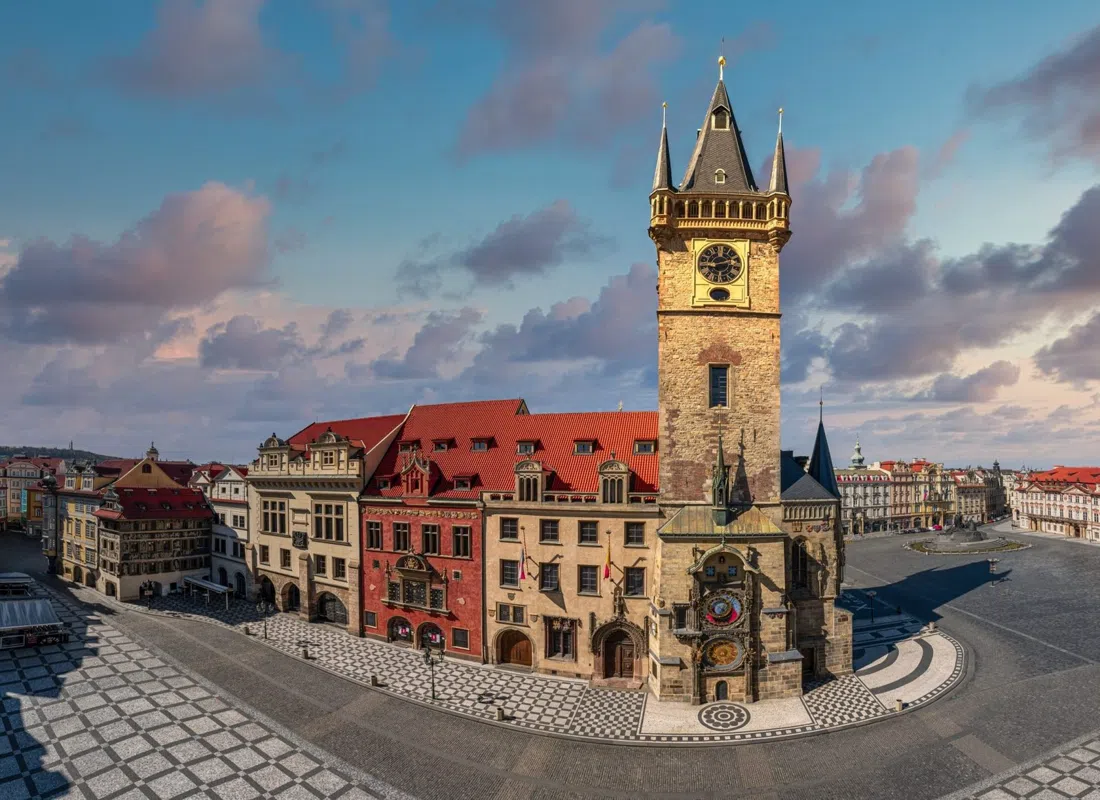
Walk twenty minutes north-west and you reach Old Town Hall (Staroměstská radnice), on Old Town Square, the Gothic town hall with the astronomical clock that every visitor to Prague photographs without necessarily knowing what else happened there. On the same calendar day of the year, 64 years later, in 1483, the Old Town's own burgomaster went the same way as his New Town counterpart, a coordinated uprising against both councils that is generally filed as the Second Defenestration, though it gets far less attention today than the clock upstairs. A combined tower-and-hall ticket runs about CZK 300, tickets are timed, and Prague City Tourism's official guides can be booked in advance if you'd rather have the defenestration folded into a proper narrated visit than pieced together from a plaque. This is the point on the trail worth pausing at to notice the pattern: both 15th-century defenestrations were popular uprisings against a council seen as illegitimate, not palace intrigue. The Castle killing that comes next is a different animal entirely.
The window that started a European war
From the Old Town it's a walk across the river (more on that below) up to Prague Castle, where the trail's best-known and most consequential stop waits inside the Old Royal Palace & Bohemian Chancellery, at Prague Castle itself. On 23 May 1618, Protestant nobles stormed into the chancellery, put two Catholic governors and a secretary on trial on the spot, and threw all three out of the same window. They survived the fifteen-metre drop (Catholic accounts credited the Virgin Mary, Protestant ones a dung heap), but the political fallout was fatal: the incident lit the fuse of the Thirty Years' War, one of the deadliest conflicts in European history before the twentieth century, fought largely over the argument that started in this room. The chamber itself is the anchor of the entire trail, and it is not a plaque or a reconstruction, it's the literal room, included on the standard Castle Circuit A/B ticket (roughly CZK 250-450) with timed entry. If you want the history properly narrated rather than read off a laminated sign, book a licensed guide in advance; the Castle absorbs large groups without difficulty, but the chancellery room itself is small enough that a guide's timing matters more than usual.
Two more Castle stops round out this stretch, both essentially free extensions of the same ticket. St Vitus Cathedral, sharing the same courtyard as the chancellery, is the obvious next move: the nave is free to enter, or covered by the circuit ticket if you want the choir and crypt too, and its scale after the relatively modest chancellery room is a useful reminder of how much wealth and authority were staked on an argument that got settled by a window. Golden Lane (Zlatá ulička), the row of tiny 16th-century houses tucked against the Castle's fortification wall, is a five-minute detour that bookends this leg of the walk: atmospheric, but genuinely congested with big tour groups around midday, so aim for first thing in the morning or the last hour before closing if you're moving with more than four or five people.
The long climb to the Castle
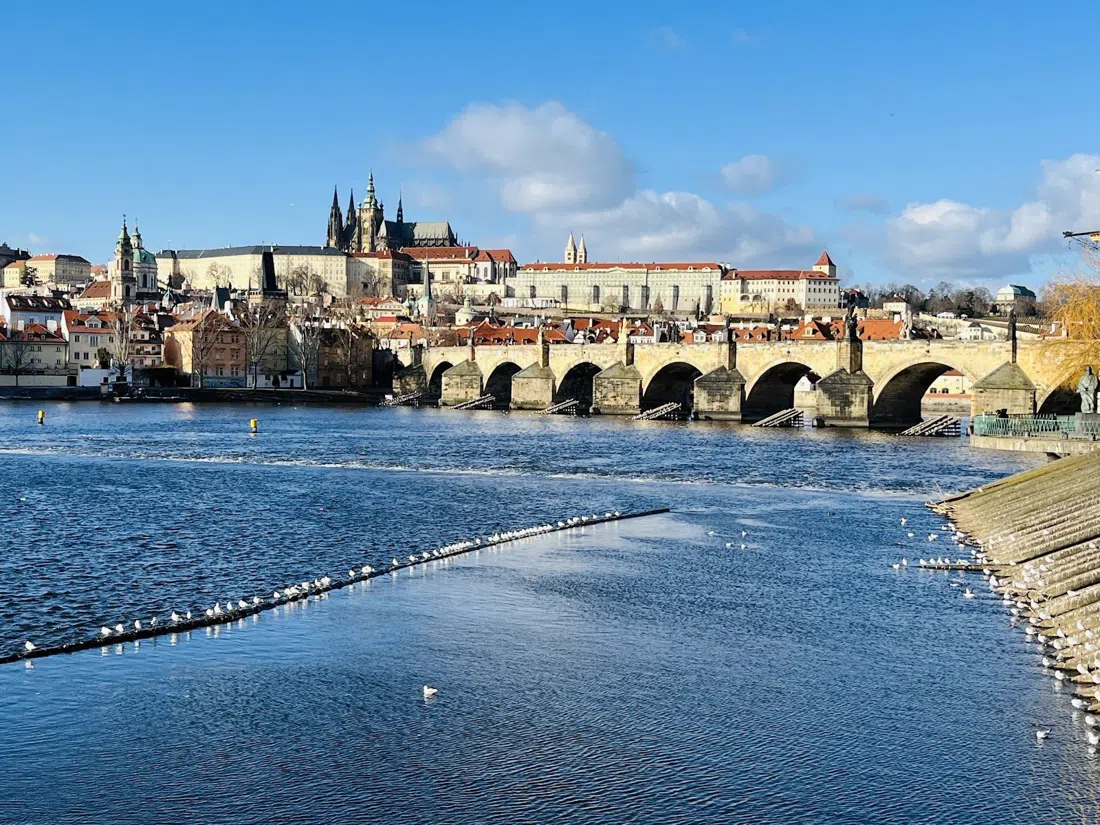
The route between the Old Town and the Castle deserves its own paragraph, because how you cross the river shapes the whole day. Charles Bridge, linking the Old Town to Malá Strana, is the only sensible way to do it on foot, and it's the physical link that carries the trail from the two medieval defenestrations up to the 1618 one, a genuinely moving stretch if you take it slowly rather than treat it as a photo-stop. It's free, open to any group size, and utterly overrun by mid-morning; go at first light if you want to actually see the statues rather than the backs of other people's heads. For the wider context of the city beyond this trail, the Prague guide covers the rest of what's worth doing.
On the Malá Strana side, as the streets start to climb toward the Castle gate, you pass Malostranská beseda, by St Nicholas Church, a third historic town hall on the route worth including for what didn't happen there: its councillors were never thrown out of anything. It's a deliberate beat on the trail (proof the pattern wasn't universal, that most of Prague's town halls had entirely ordinary careers), and today it's a working pub and event venue with live music and theatre upstairs, open to groups, budget-to-mid prices, a sensible spot to catch your breath and a beer before the final climb.
The death that ended the illusion
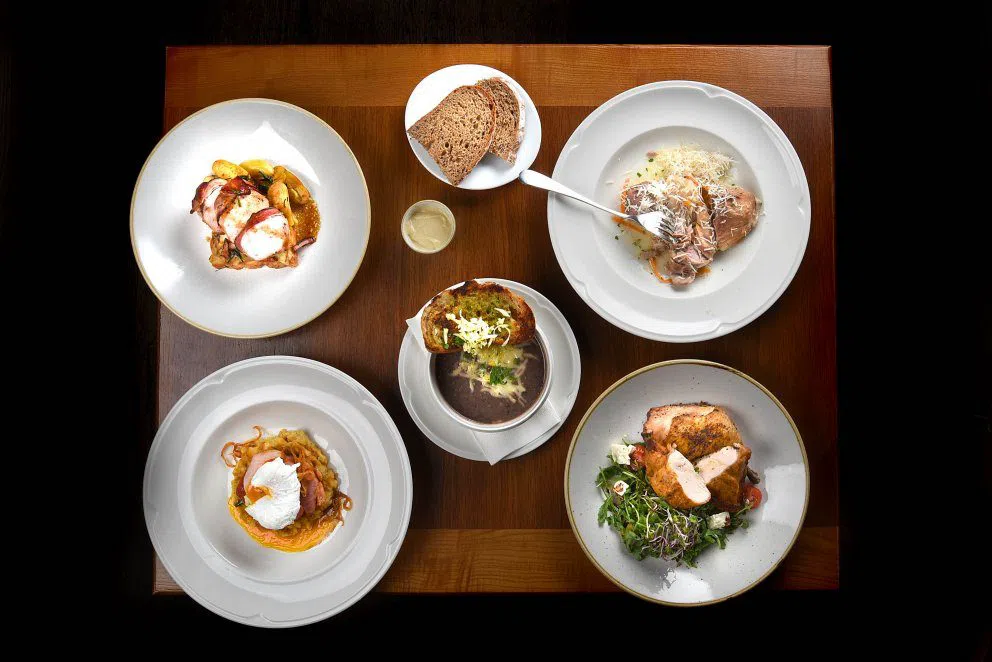
The trail's last and darkest stop isn't medieval at all. Černín Palace, on Loretánské náměstí a short walk from the Castle, is where Jan Masaryk (son of the republic's founding president, foreign minister of the postwar government) was found dead in the courtyard below his bathroom window on 10 March 1948, weeks after the Communist coup. Whether he jumped, fell or was pushed has never been settled to general satisfaction, and Czech historians still argue over the evidence today; it's usually called Prague's "last defenestration," the dark irony fully intended, and it marks the moment any illusion of a soft transition to Communist rule died with him. The palace is a working Foreign Ministry and the interior is not open to visitors, so this stop is the square and the exterior only, free, any group size, and honestly more affecting for being unstaged: no ticket booth, no guide script, just the building and the drop.

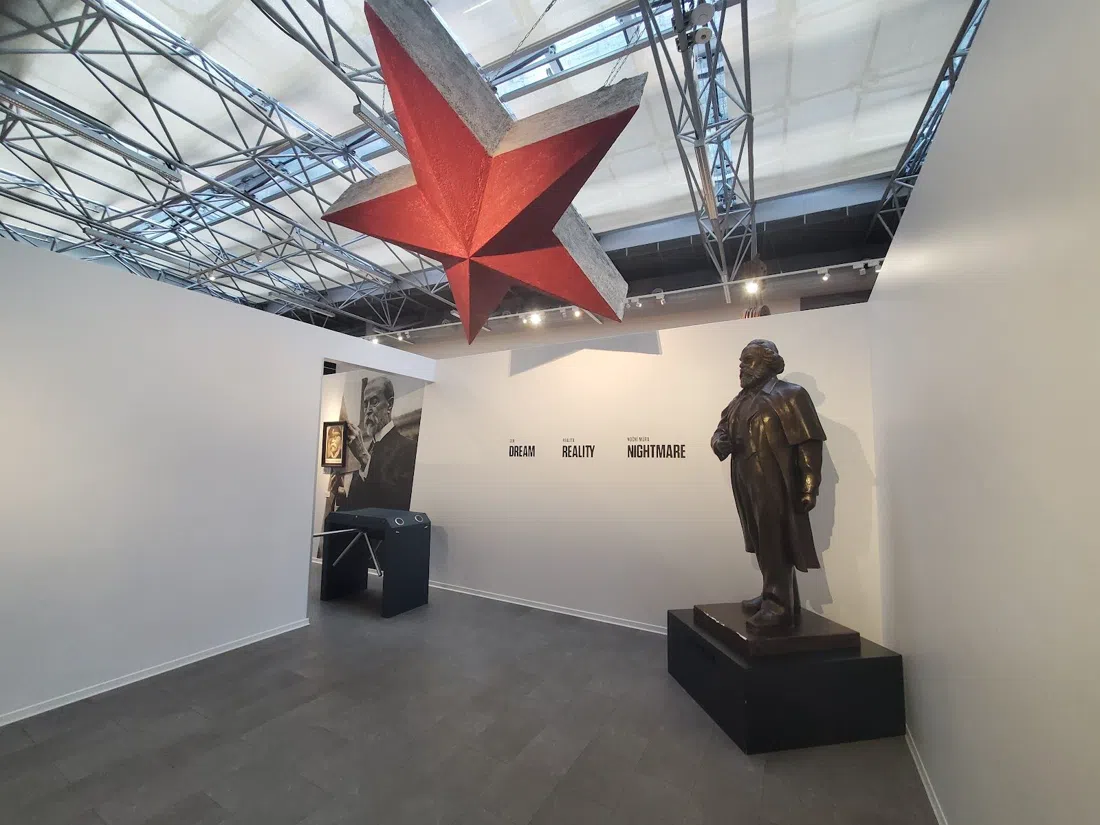
To understand what the 1948 death actually opened the door to, the Museum of Communism, back toward the New Town, is the right next stop. It isn't a defenestration site itself, but it's where the trail's most recent chapter gets its context: the show trials, the surveillance state, the four decades that followed Masaryk's fall. Guided group tours run in English, German and French and are bookable in advance; an adult ticket is around CZK 350.
Where to eat and drink along the trail
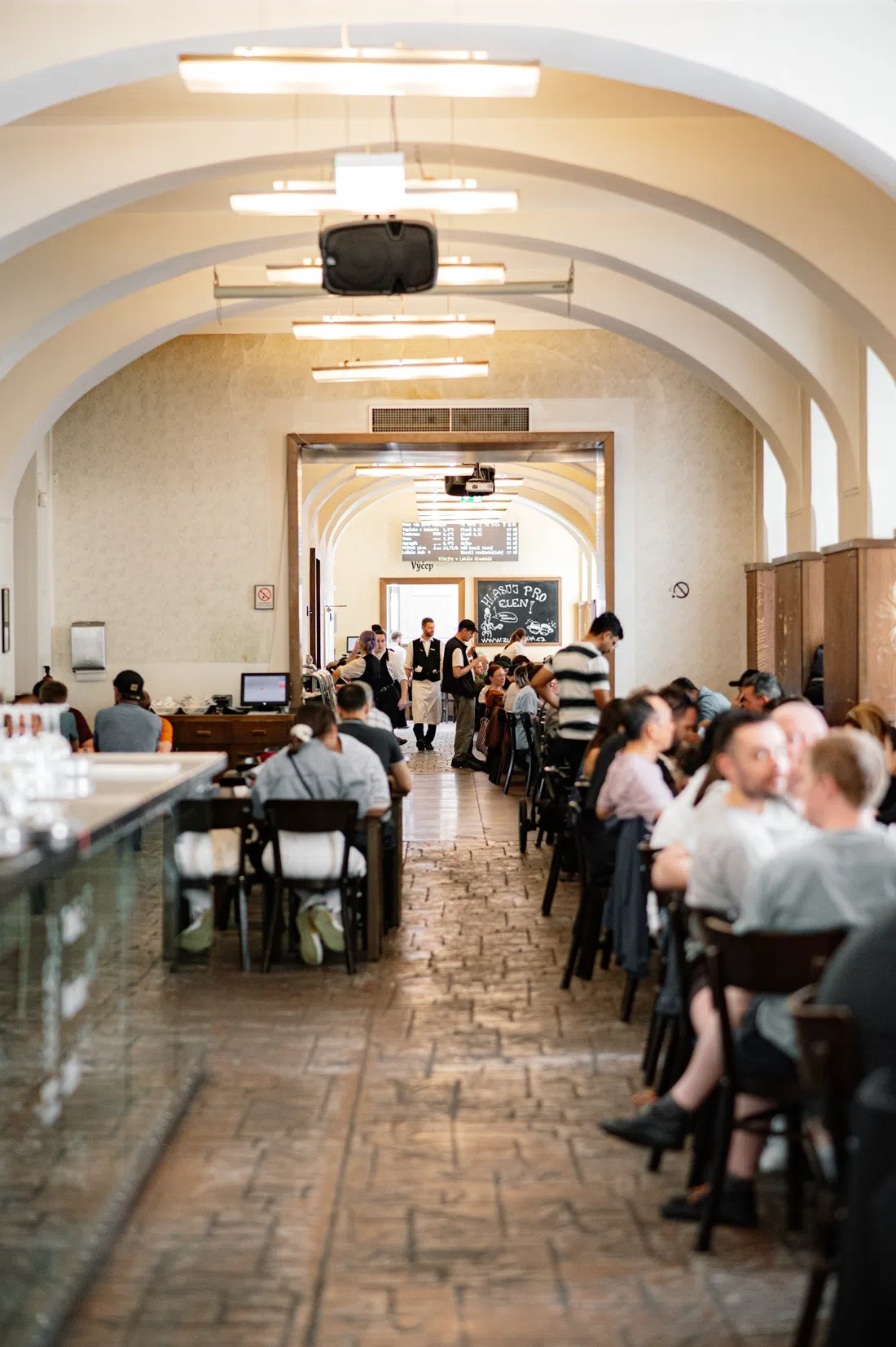
Break the walk up rather than trying to do it all on an empty stomach. Between the two 15th-century stops, Lokál Dlouhááá, five minutes off Old Town Square, does honest Czech pub food (goulash, svíčková, tank beer) on communal long tables that suit a group of any size; book two to three weeks ahead if you want an evening table, mains run CZK 150-250.
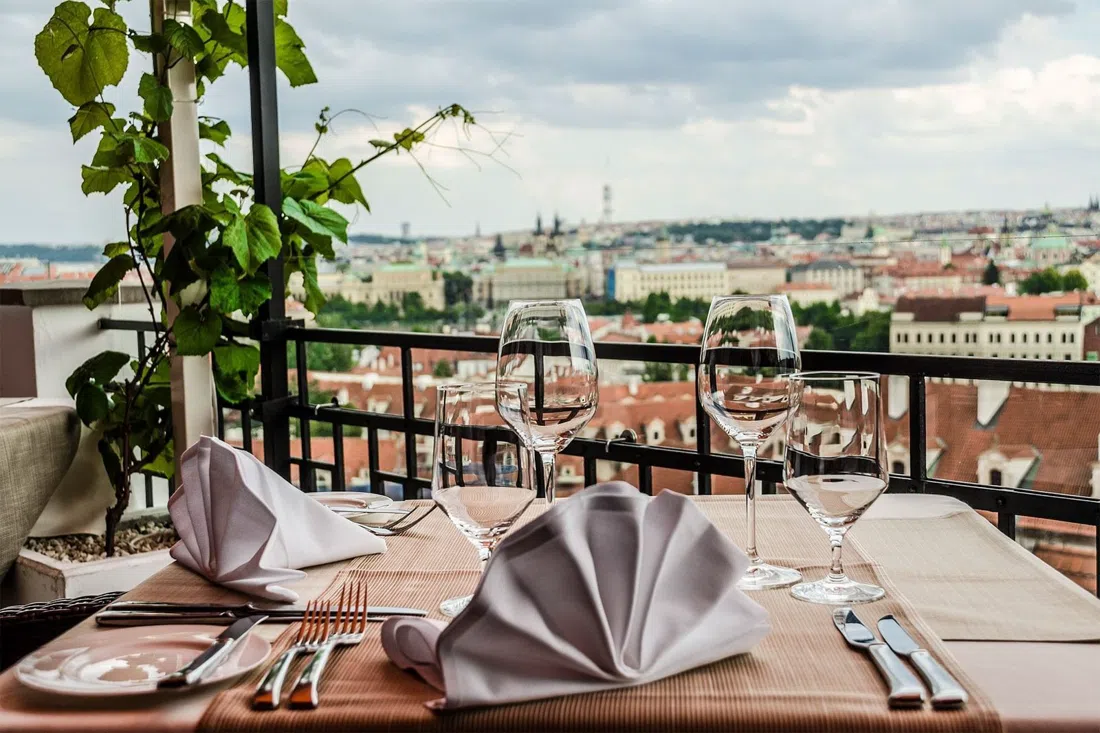
At the end of the day, near the Castle, there are two very different ways to close it out. U Fleku, in the New Town, Prague's oldest continuously operating brewery pub, is the group option: 1,200 seats across eight halls, its own dark lager brewed on site since the 15th century, and parties of ten or more can book a brewery tour and dinner together. Beer runs about CZK 99, mains CZK 200-400, and it is loud, touristy and completely worth doing once. For something quieter, Terasa U Zlaté Studně, sitting almost literally below the chancellery window where the trail's central event took place, is the finale for a couple rather than a coach party: private terrace and gazebo dining, reservations essential, tasting menus from CZK 2,000. Book it if you want the day to end on a view rather than a beer hall bench.

If you would rather follow a guide
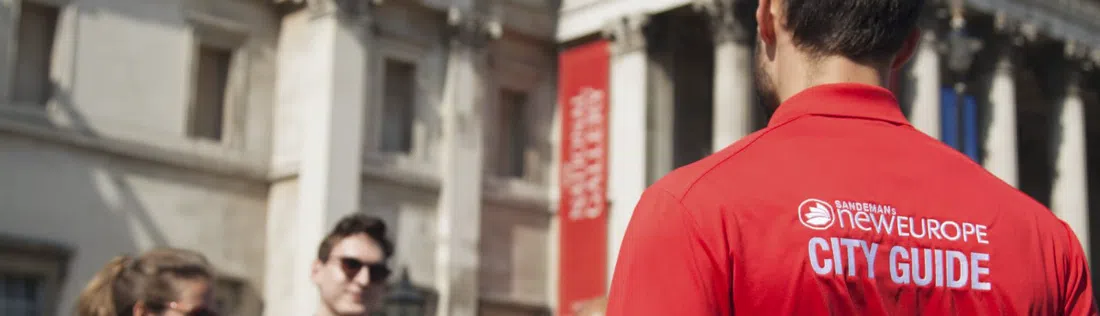
None of this requires doing it alone with a map. SANDEMANs New Europe Prague, departing from the Old Town, runs a tip-based Free Walking Tour that already covers this exact route and narrates the defenestrations as it goes, plus bookable private tours for groups from around EUR 100. It's the sensible option for a family, a work trip, or anyone who'd rather listen to a trained guide's timeline than piece together three separate centuries from plaques.
Practical notes
The whole trail, Charles Square to the Castle, covers about 3.5km on foot and is comfortably done in four to five hours including the museum and one proper meal; add the U Fleku stop and it's a full day out. Prague's public transport (trams and metro, tickets from vending machines or the PID Lítačka app) covers every leg of this if your feet give out, and a 24-hour ticket costs a few hundred CZK. Czechia is not on the euro. Carry crown (CZK) cash for smaller stops and market stalls, though every venue on this list takes cards. Go early: the Castle and Charles Bridge are both dramatically better before 9am, and the chancellery room in particular is worth timing around a quieter slot if you can book one. Budget roughly CZK 1,500-2,500 per person for tickets, one sit-down meal and a couple of beers, more if you add the tasting menu at Terasa U Zlaté Studně. If you're staying over to spread the walk across two days, start your planning with a Prague hotel search.