Prague does not so much preserve Franz Kafka as keep replaying him: the narrow lanes he complained about in his diaries, the courtyards that turn back on themselves, the castle that looms rather than welcomes. He never left the city for long, and the city has never quite let him go either. This trail follows his life in order — birth, school, family flat, the office desk, the writing room, the grave — and along the way it picks up two small pieces of 21st-century Prague that have folded his image into their own strangeness, so the walk ends up saying almost as much about how a city keeps a writer as about the writer himself.
Where the Story Begins: The Old Town Streets of His Childhood
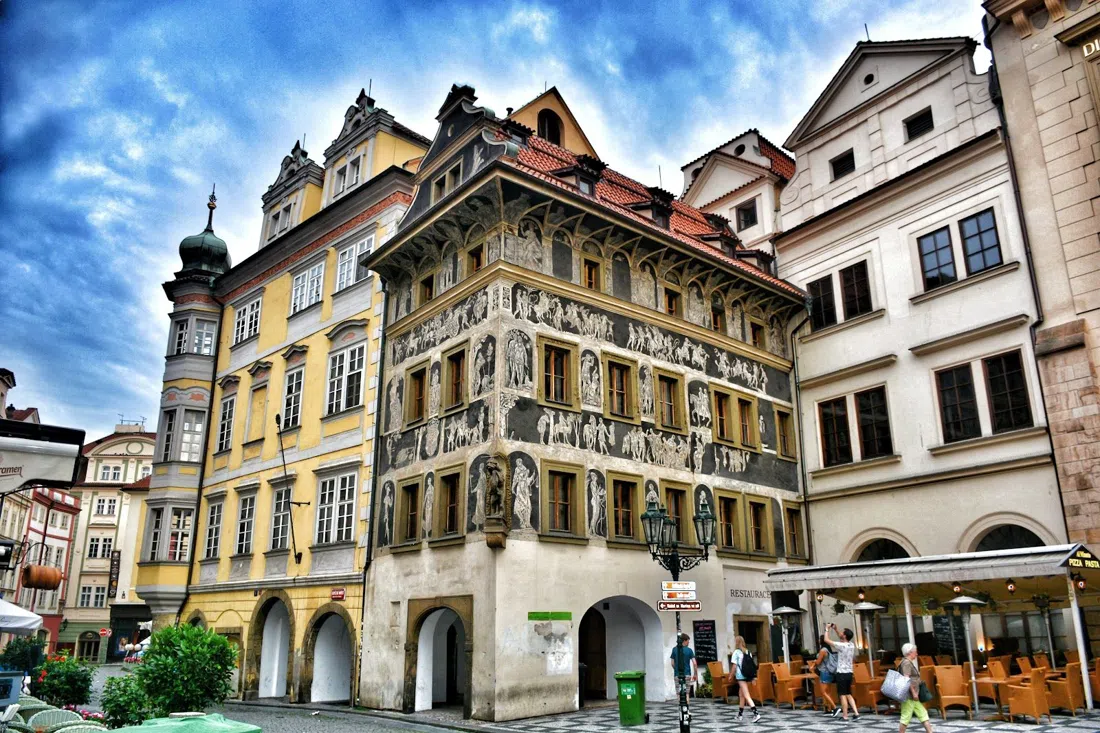
Start at House at the Minute (Dům U Minuty) (Old Town), the Renaissance house on the corner of Old Town Square where Kafka's family lived from 1889 to 1896. It's exterior only — there's no interior to book, no ticket to buy, so any size group can stop here at any hour. The draw is the sgraffito: dense black-and-white scratched reliefs of biblical and classical scenes covering the whole facade, put there long before the Kafkas moved in but still the reason the building earns a second look. Kafka was five when his family arrived and eleven when they left for a flat closer to his father's shop — young enough that the house shaped more of his early sense of the city than any single later address.
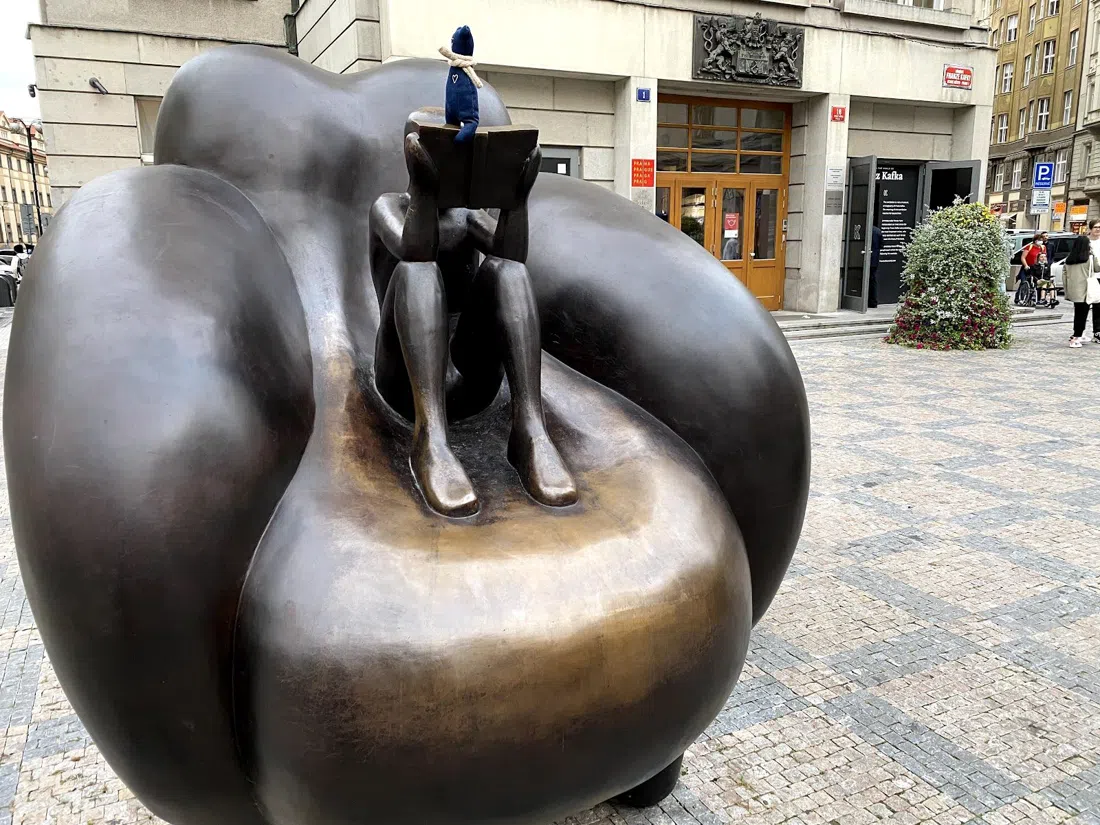
A short walk away, inside the Old Town Hall, is World of Franz Kafka (birthplace exhibition, Old Town Hall) (Old Town), a small basement room marking the actual site of his birth in 1883 — the original building burned down and was rebuilt, but the location is fixed. It's a low-footfall space, easy for small groups to move through without queuing, and admission runs roughly CZK 150–200. Outside, a block from the exhibition entrance, is the real reason most people come this far: a stone portal with a bust of Kafka set into it, marking the birth-site itself. It's free, unguarded, and open around the clock, so if a group's schedule doesn't allow for the paid exhibition, the portal alone is worth the detour.
The Anchor Stop: Franz Kafka Museum and the Statue Outside It
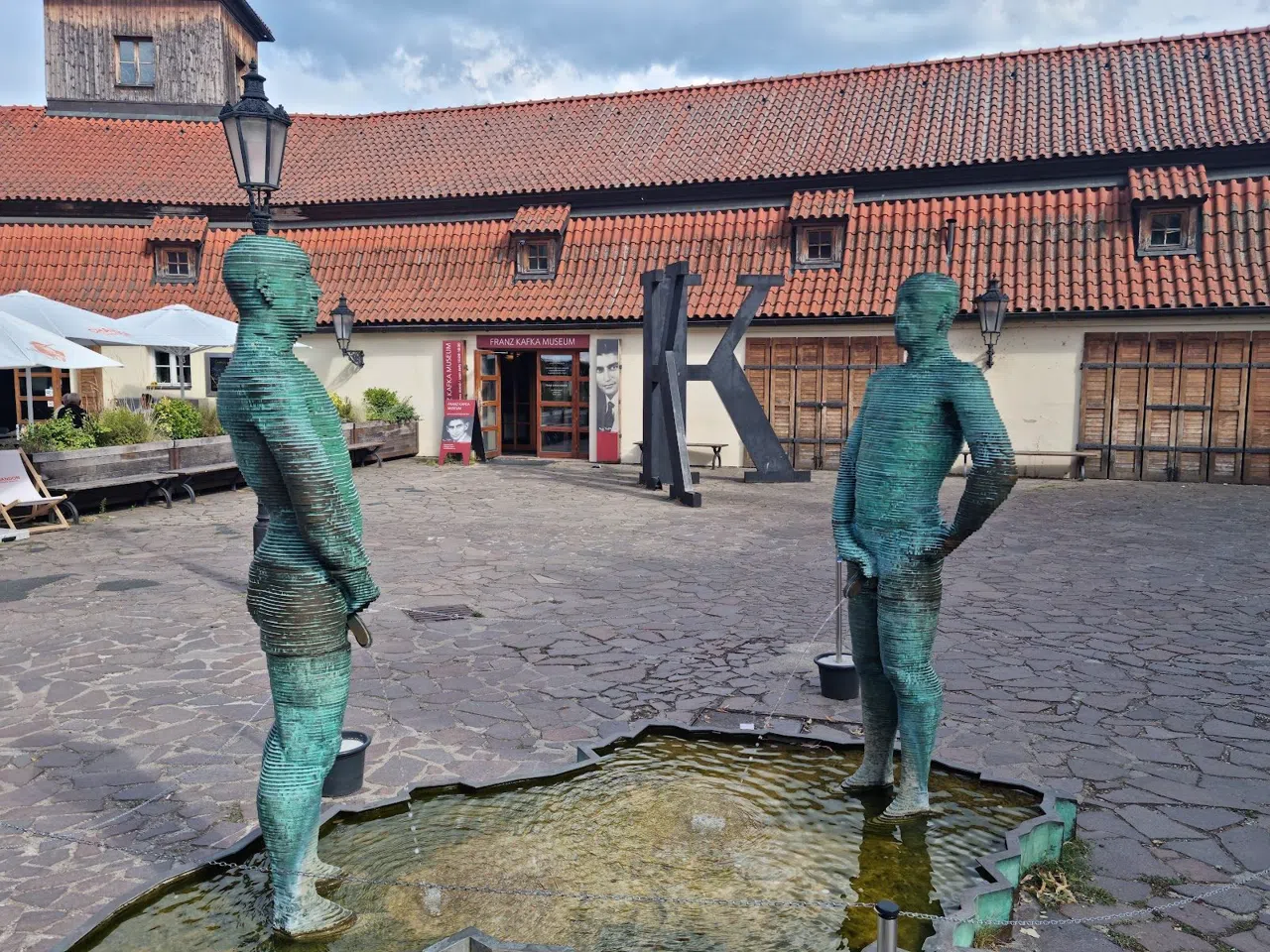
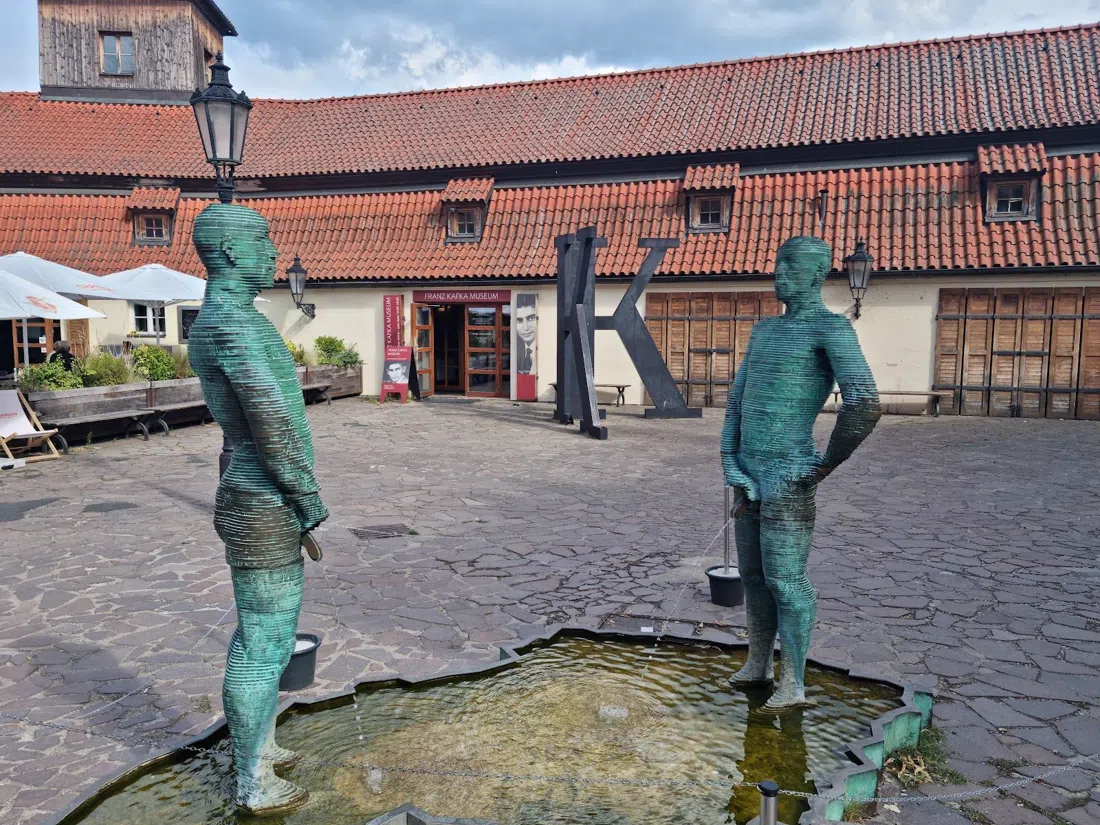
Cross the river to Malá Strana for the Franz Kafka Museum (Malá Strana), the trail's centre of gravity and the one stop worth building a schedule around. It sits at the base of the hill below the Castle, and its exhibition design — dim lighting, unsettling audio, black corridors that echo the bureaucratic mazes of The Trial — is expressionist rather than academic, closer to walking through one of his stories than reading about one. Timed entry is standard and pre-booking is recommended for groups; adult admission runs roughly CZK 300–400. Give it an hour at minimum, longer if anyone in the party wants to read the wall texts properly rather than skim them.
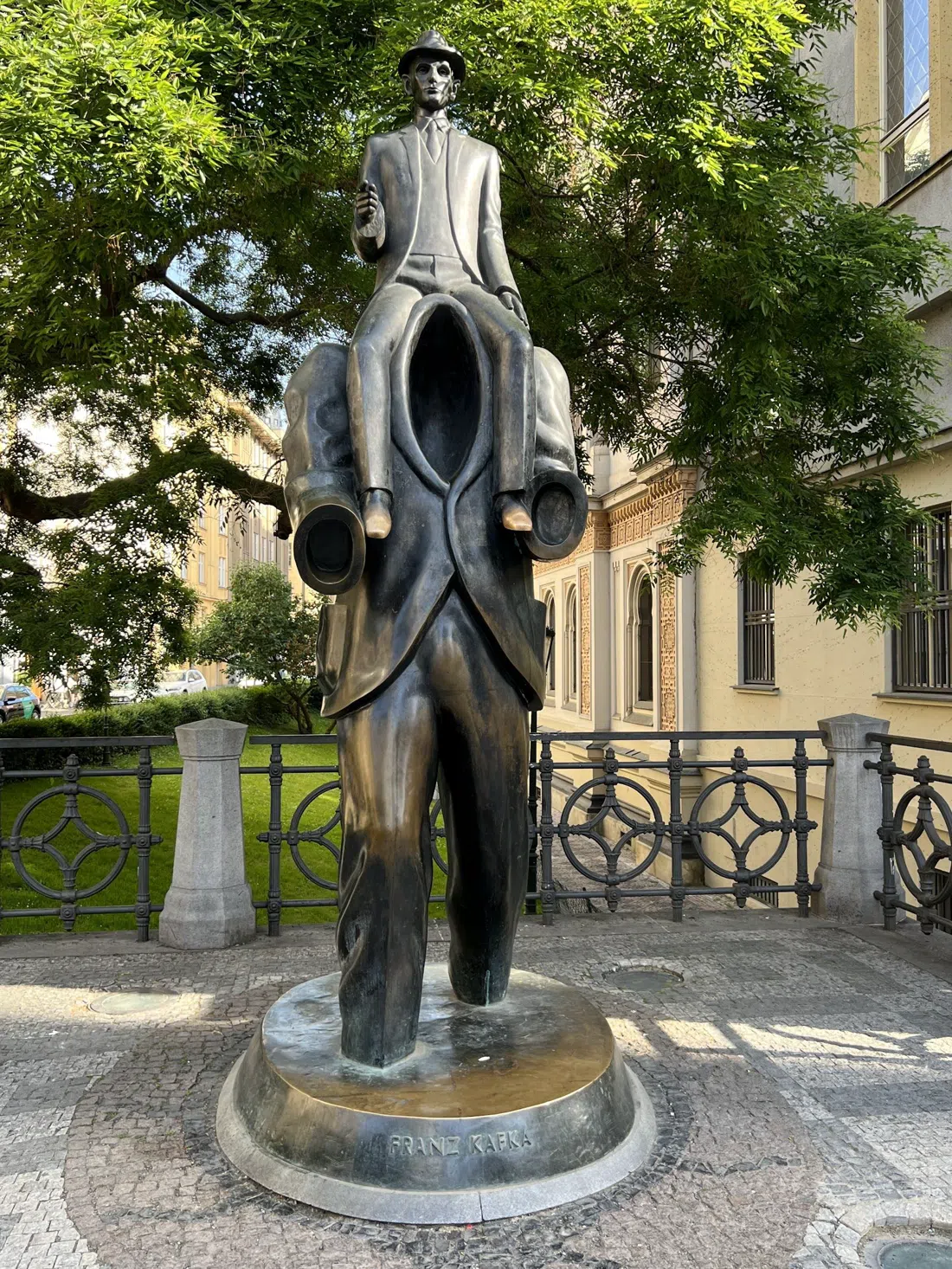
Nearby, in Josefov close to the Spanish Synagogue, stands the Statue of Franz Kafka (Jaroslav Róna) (Josefov) — a bronze figure riding on the shoulders of an empty suit, lifted directly from an image in Kafka's Description of a Struggle. It costs nothing, has no opening hours to work around, and takes groups of any size without booking, which makes it the easiest photo stop on the whole route. It's also the most purely surreal object on the trail — no biography needed to feel the vertigo of it, just the image itself.
Up to the Castle: The Room Where He Wrote at Night
The climb up to Golden Lane, House No. 22 (Prague Castle) (Hradčany) is the trail's one genuine piece of exertion, and it's worth it for the smallest room on the list. In the winter of 1916–17, Kafka's sister Ottla rented this narrow blue cottage in the lane behind the Castle's fortifications, and he used it as a private writing room in the evenings after his day job at the Workers' Accident Insurance Institute — quiet, cold, and far enough from his family's flat to get work done. During Castle opening hours it's included in the standard Circuit B ticket (around CZK 450 for the full castle complex), but after 16:00 or 17:00, once the paid circuits close, the lane itself reopens for free — a detail worth timing a visit around if the budget for the day is tight. Groups move through as part of the general Castle circuit without any special booking.
Josefov: The Jewish Quarter's Ghosts
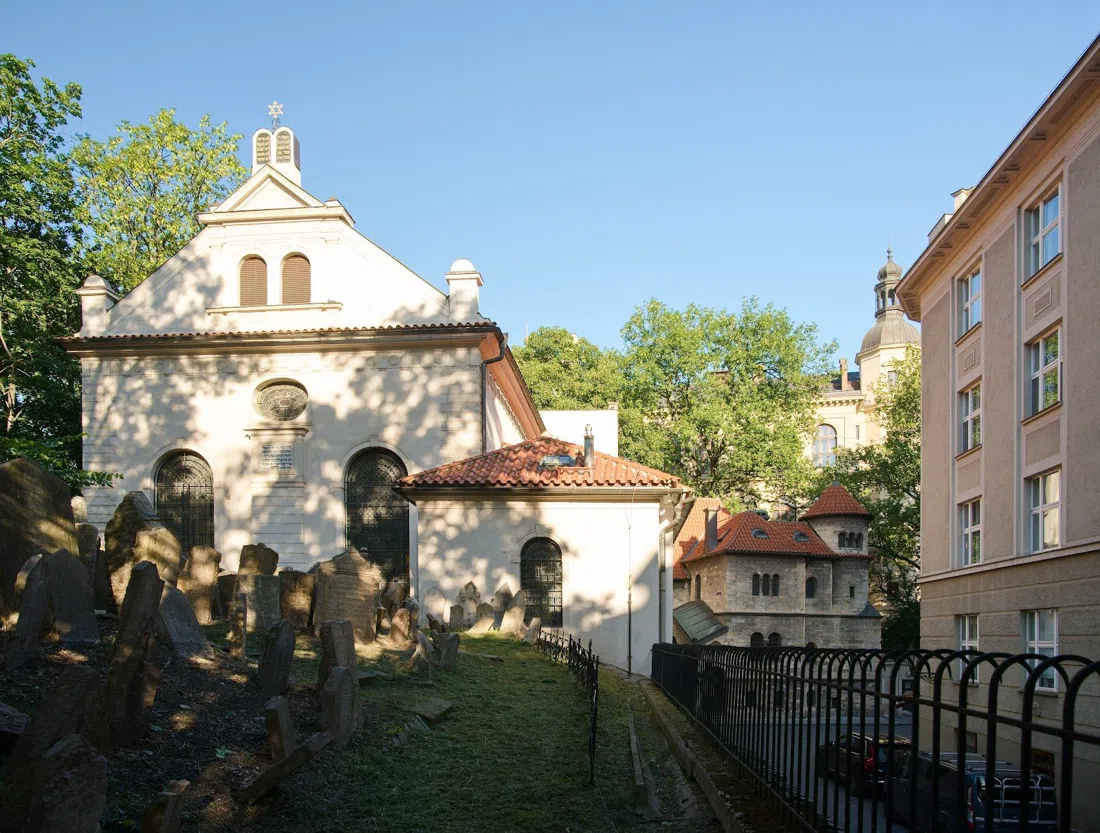
Kafka was born into Prague's Jewish community at a moment when Josefov was still recognisably itself — narrow, crowded, and shadowed by the ghetto history that had only recently been cleared for redevelopment. The Old Jewish Cemetery / Jewish Museum (Josefov circuit) (Josefov) is the most physically strange corner of the district: a single small plot used for burials for centuries, so graves are stacked in layers and headstones lean into each other at angles that look almost sculptural. It's covered under the combined Jewish Town ticket, around CZK 600 for adults, which also gets you into the synagogues on the circuit. Groups are accommodated, but note the cemetery and museum sites close on Saturdays and on Jewish holidays — a scheduling detail that trips up more visitors here than almost anywhere else on the trail.
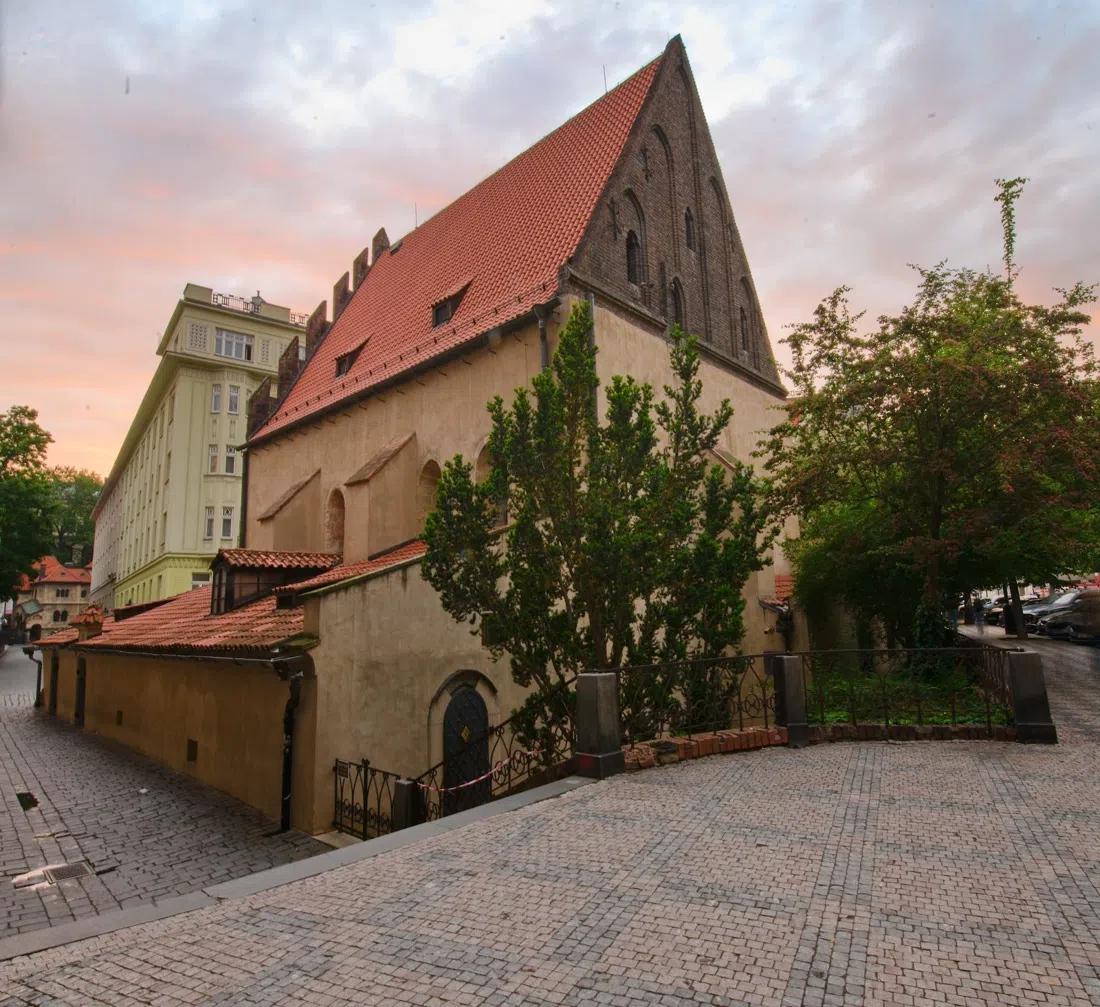
On the same ticket is the Old-New Synagogue (Staronová synagoga) (Josefov), in continuous use for roughly 750 years and still an active place of worship rather than a museum piece. Modest dress and head-covering for men are expected, and groups are welcome as part of the circuit. Its significance to Kafka is more atmospheric than biographical: the synagogue is bound up with the legend of the Golem, the clay figure said to be stored in its attic, and that story — of an artificial creature animated by rules it can't quite escape — sits close to the anxieties Kafka wrote into figures like Gregor Samsa and Josef K.
The Cafés: Where He Argued Philosophy and Watched the River
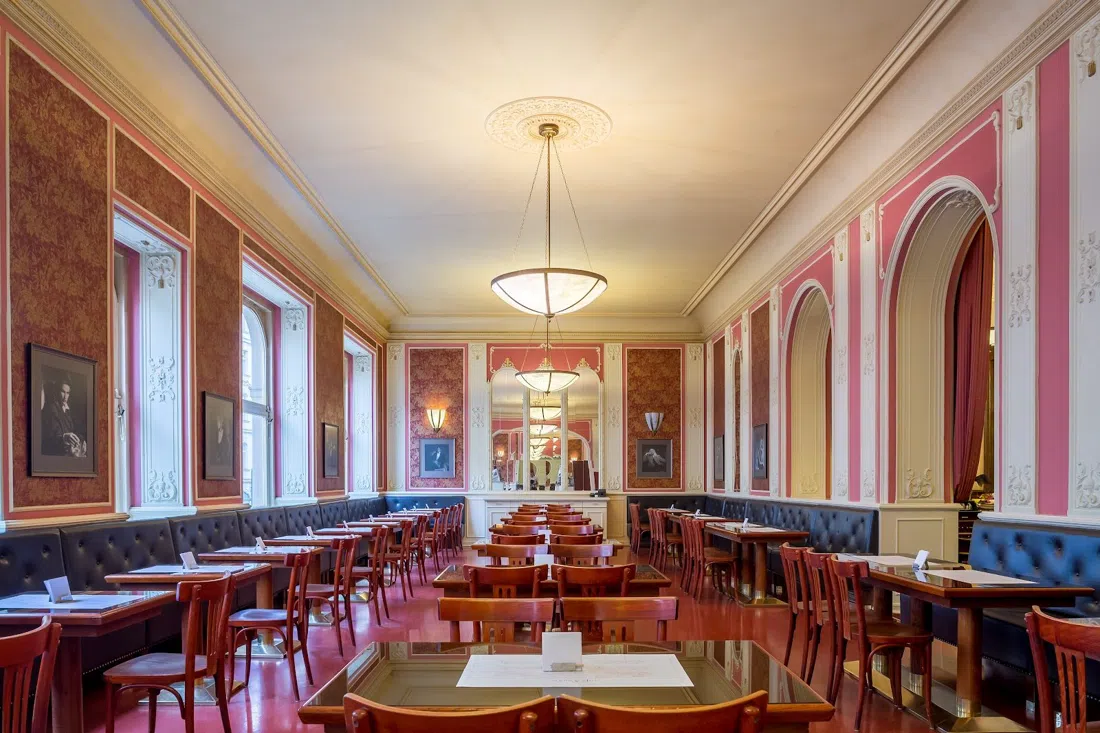
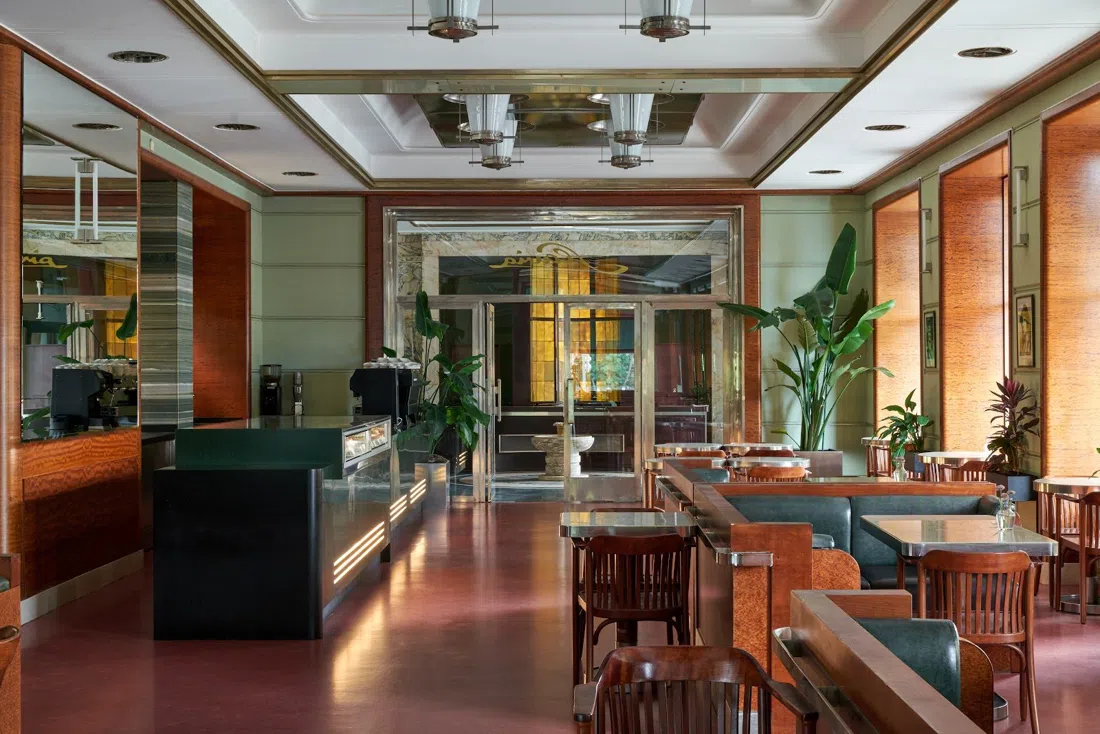
Two cafés on the trail are still working rooms rather than shrines, and both take reservations, which matters if the group is more than a couple of people. Café Louvre (Nové Město), on Národní třída, was the regular meeting point for what became known as the Louvre Circle — a loose group of philosophers and writers, including Kafka, who gathered here to argue. The room retains its early-20th-century proportions and grandeur, and a coffee or light meal runs roughly CZK 100–400, so it works equally well as a mid-walk pause or a sit-down lunch.
Kavárna Slavia (Nové Město), across from the National Theatre on the riverbank, was frequented by both Kafka and Rilke and remains one of the city's defining literary cafés. Its river-and-theatre view makes it a natural place to end the walk rather than pass through it — a spot to sit with a coffee at the same price range as Louvre and let the day settle before moving on to dinner or the next stop.
A Modern Surrealist Footnote
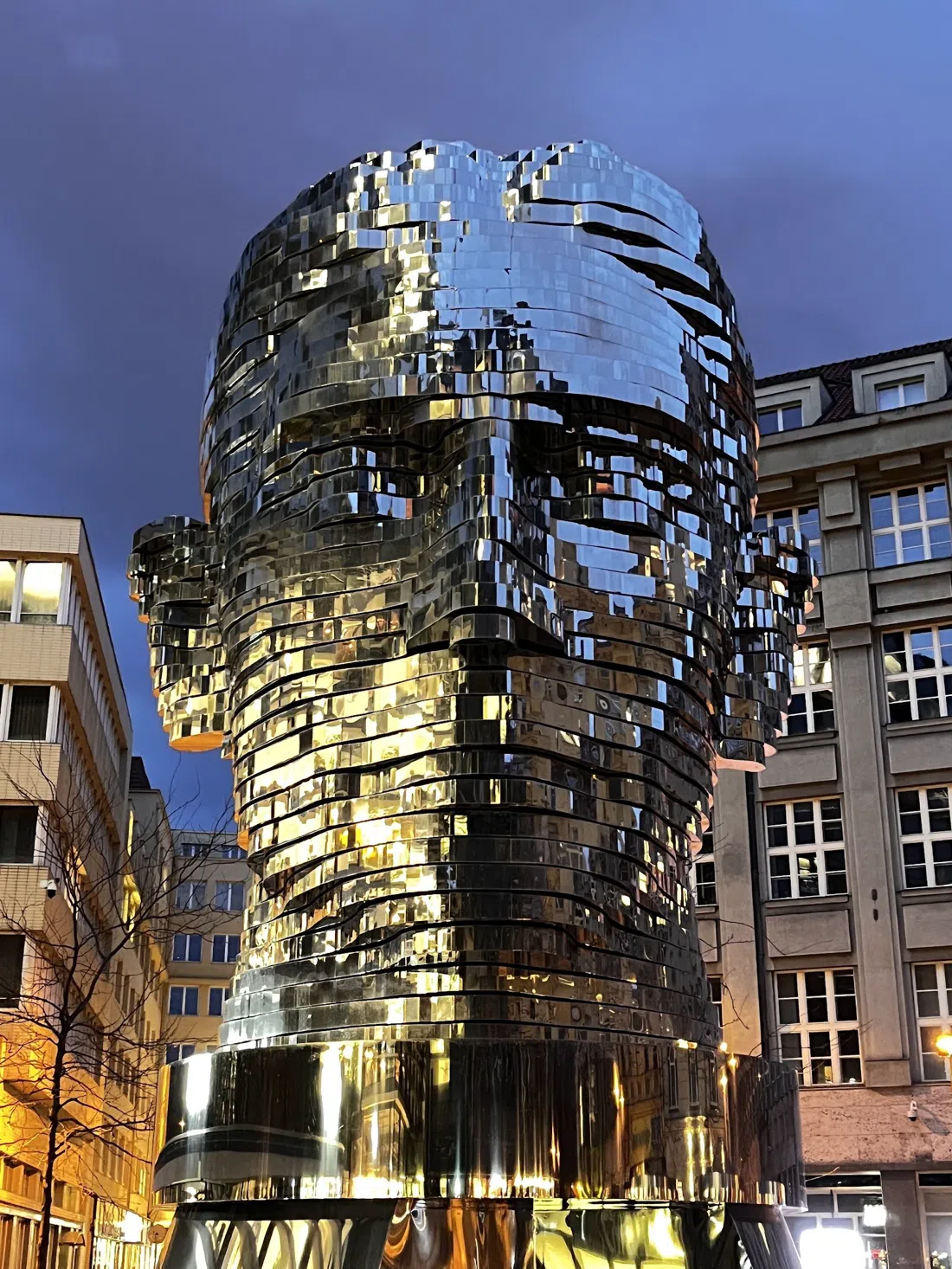
Not everything on this trail is from Kafka's lifetime. The Head of Franz Kafka (rotating sculpture, Quadrio) (Nové Město), David Černý's kinetic steel bust near the Quadrio shopping centre, is a 21st-century response to the writer rather than a historical site — mirrored steel layers that rotate independently, aligning into a recognisable face on the hour before dissolving again. It sits in an open, free plaza with no restriction on group size, and it rotates from 8am to 9pm. Worth timing the walk to arrive close to the hour, since the moment of alignment is brief and the piece looks like abstract stacked metal the rest of the time — a fitting coda for a trail about a writer whose most famous work is about identity coming apart under bureaucratic pressure.
The Ending: Kafka's Grave in Žižkov
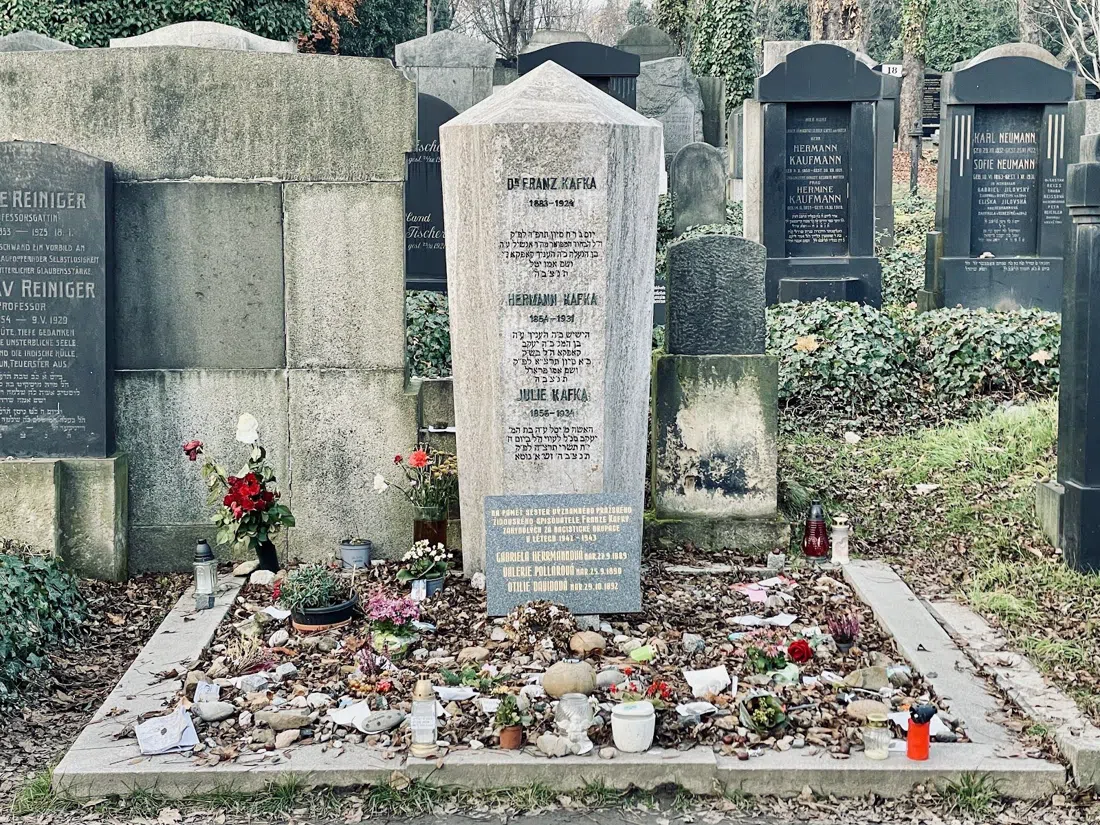
The trail's natural endpoint is out of the historic centre, in the Grave of Franz Kafka, New Jewish Cemetery (Žižkov), a short tram ride east. Kafka died of tuberculosis in 1924, aged 40, and is buried here with his parents under a plain, angular headstone that has become a place of quiet pilgrimage rather than a tourist stop — expect other visitors reading or standing rather than photographing. Entry is free and the cemetery takes groups, but head covering is expected for men, and like the Old Jewish Cemetery, it closes on Saturdays. Given the distance from the centre, it's worth treating this as a deliberate final stop rather than an add-on — the tram ride out and back gives the day a natural close.
If You'd Rather Be Guided Than Wander Alone
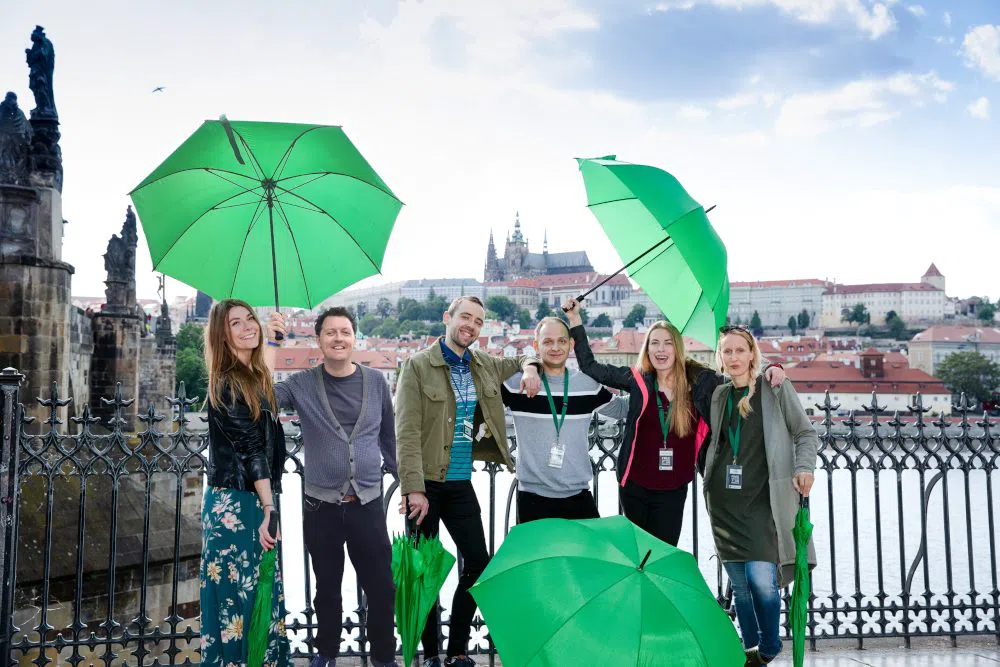
For readers who want the history narrated rather than pieced together from plaques and museum wall text, Compact Prague — Franz Kafka Walking Tour (private guided tour) runs a private version of essentially this same route over about three hours. Pricing is per group rather than per head — CZK 3,350 for one to five people, CZK 3,600 for six to ten, with larger groups quoted separately — and because it's private rather than one of the city's mass 'free tour' groups, there's no competing for space with forty strangers at each stop. It suits travellers who want context delivered in real time, or anyone visiting with people who won't sit still for a self-guided museum crawl.
Planning the Walk: Transport, Cash, and Timing
The whole trail is walkable end to end except for the final leg to Žižkov, which is a short tram ride from the centre — Prague's public transport runs on a flat-fare ticket system, and a single ticket bought from a machine or app covers trams, metro, and buses within the validity window, so there's no need to buy separately for each leg. Most sites take cards, but keep some cash on hand for the smaller sites and cafés, where card minimums or slow terminals still turn up. Split the walk across two days rather than one if the group wants time at both cafés and the Castle without rushing — the Old Town and Malá Strana cluster comfortably into a single day, with Josefov as a natural half-day on its own given the Saturday closures, and Žižkov best saved for a quieter final morning. Budget for entry tickets alone runs from roughly CZK 1,300 to CZK 1,900 per adult across the paid sites — the Museum, the birthplace exhibition, the Castle circuit, and the Jewish Town combined ticket — before food, transport, or a guide. Anyone building a longer stay around this trail should start with a Prague guide for the wider city context, and sort accommodation early: central Old Town or Malá Strana keeps every stop on this list within walking distance, and a Prague hotel search is the place to start comparing options before the trip.